Ford F-150 Transfer Case Shift Motor: Identification by Model Year
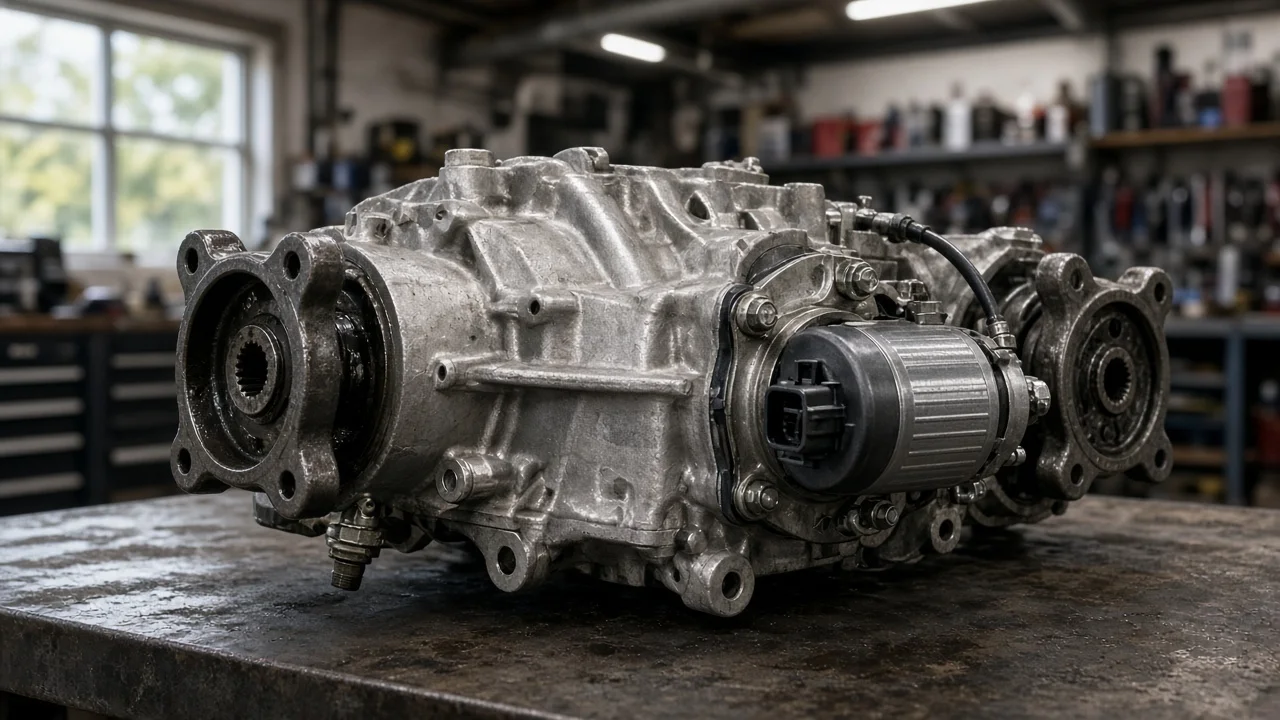
On a 2010 F-150 with electronic shift-on-the-fly four-wheel drive, the transfer case shift motor is the electric actuator that moves the transfer case between 2H, 4H and 4L when you turn the dashboard selector. Choosing the right replacement depends on the truck's exact vehicle configuration, not just its model year. This guide explains how to identify the correct motor for a 2010 truck, how the part differs across F-150 generations from 1997 onward, and what to check before you buy one.
The Short Answer for a 2010 F-150
A 2010 F-150 belongs to the generation built from 2009 through 2014. If your 4x4 truck has a rotary 4WD selector on the dash, it has an electric shift motor bolted to the transfer case. Parts catalogs often group 2011, 2012, 2013 and 2014 trucks with the 2010 because they share a generation. A shared generation does not prove a shared part number, though. Identify the motor in three ways: read the part number on the existing motor's housing, check the identification tag on the transfer case, and have a Ford parts counter look up the part by your VIN. When all three agree, you have the correct part.
Some F-150s have no shift motor at all. Two-wheel-drive trucks have no transfer case. Four-wheel-drive trucks with a floor-mounted transfer case lever shift mechanically. If your truck has a floor lever, a shift motor will not fix a shifting problem.
How the Shift Motor Works
When you turn the selector, you send a request to the four-wheel-drive control module rather than moving anything in the transfer case yourself. The module checks whether conditions allow the shift. Low range typically requires the truck to be stopped or nearly stopped with the transmission in neutral. Your owner's manual gives the exact procedure for your truck. If the conditions are met, the module powers the shift motor. The motor rotates a shaft that moves the internal shift mechanism into the requested range. A position sensor reports the motor's position back to the module, which uses that signal to confirm the shift and set the dashboard indicator.
On 2004 through 2014 trucks, the front wheels are connected to the front axle by vacuum-operated integrated wheel ends. This front hub system is separate from the transfer case shift motor. A shift complaint on these years can come from either system, so it matters which one has actually failed.
What Changes the Answer: Model Year and Configuration
Each F-150 generation used its own transfer case and shift control hardware. Do not assume that parts interchange between generations: 1997–2003 trucks (and the 2004 F-150 Heritage, which carried over the older body) were offered with either an electronic shift or a manual lever, depending on the build. The 2004 F-150 was a redesigned truck, so a 2004 shift motor may belong to either the Heritage design or the new 2004–2008 generation. Confirm which body your truck has before ordering. 2009–2014 trucks, including the 2010, form their own group. 2015 and later trucks, such as a 2017, use different hardware again. Some later trucks offer an automatic 4WD mode, which uses a different type of transfer case than a part-time system. Their shift motors are not interchangeable with part-time units.
Several other factors can change the correct part within one model year: The transfer case variant. Part-time and automatic-mode cases use different motors. Mid-year production changes. The truck's service history. A previous owner may have installed a used or remanufactured transfer case from another truck, so the part on your vehicle may not match what the VIN lookup says. Inspect the actual part. Operating conditions. Trucks driven on salted roads often develop corrosion at the motor connector and harness, which can cause symptoms that look like a failed motor.
What the Owner Can Check Before Buying a Motor
Start by noting exactly what happens. Check whether the 4x4 indicator lights or flashes, whether the truck shifts into some ranges but not others, and whether you hear the motor run. Then read stored trouble codes with a scan tool that can communicate with the four-wheel-drive module. Basic engine-code readers often cannot see that module. Also check the fuses and relays listed for the 4x4 system in your owner's manual, and inspect the motor connector for corrosion, bent pins or a damaged harness.
Check whether the front hubs are the real problem. If the indicator shows 4x4 engagement but the front wheels are not driving, or you hear grinding from the front wheels, the vacuum-operated wheel ends are a likely cause. In that case, the shift motor may be working correctly, and replacing it will not help.
If the motor is the confirmed fault, compare the part number on the old unit with the replacement before you install it. During installation, the new motor must be in the same position as the transfer case's current range. Do not force the shaft to align it. Follow the service information for the mounting bolt torque and any module procedure required after replacement.
Limitations and Next Step
The model year alone is not a reliable way to identify this part, and this guide cannot confirm the configuration of your specific truck. Some symptoms that look like a motor failure come from inside the transfer case, such as a worn shift mechanism or other internal damage. These faults require removing the case or professional diagnosis. The shift motor is not a scheduled maintenance item, so no universal replacement interval applies. Transfer case fluid service follows the manufacturer's maintenance schedule for your truck.
Before you buy anything, collect your VIN, the stored trouble codes, the part number from the existing motor and the transfer case tag information. If a new motor does not fix the problem, or the codes point to the control module or the case's internal parts, take the truck to a shop with Ford-capable diagnostic equipment for an inspection.