2010 Chevy Equinox 2.4 Crankshaft Position Sensor Location
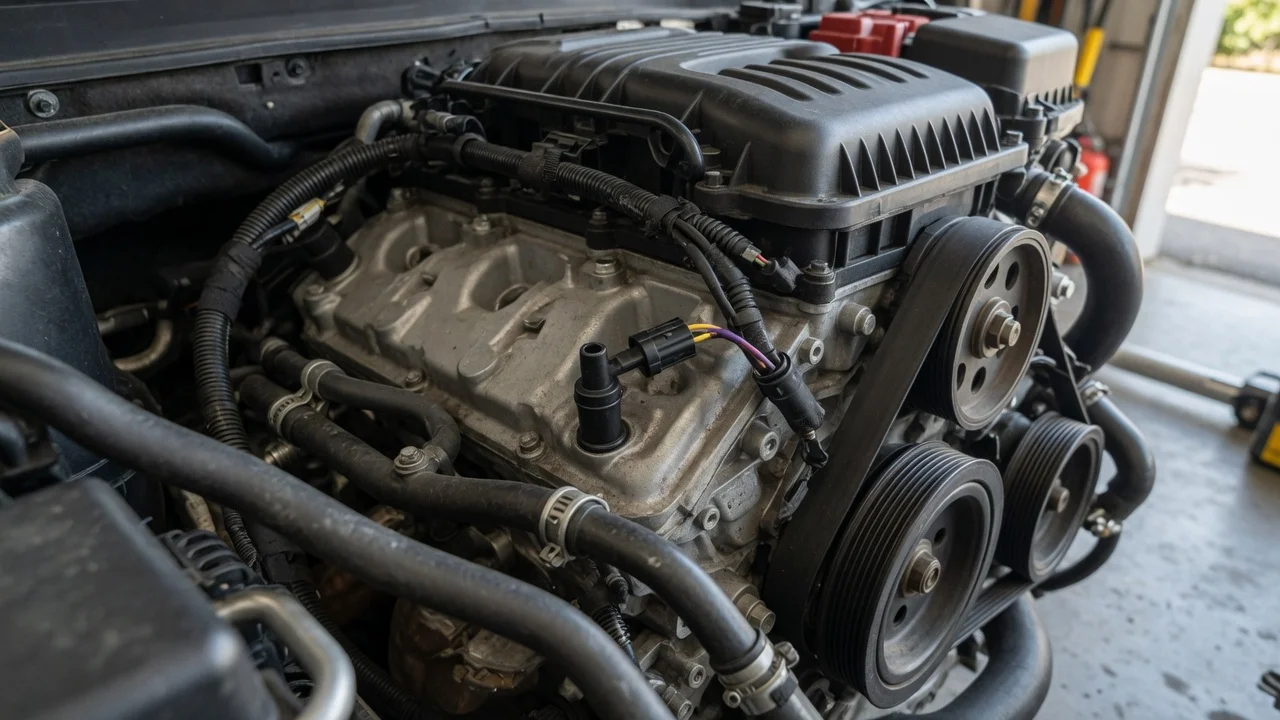
Direct answer: where the sensor is located
On a 2010 Chevrolet Equinox with the 2.4L four-cylinder engine, the crankshaft position sensor is mounted on the engine block near the rear of the engine, close to the transmission bellhousing area. It reads a reluctor wheel attached to the crankshaft, which is why the sensor is positioned in line with the crankshaft rather than at the top of the engine.
The exact access point can be tight on this vehicle. The sensor is typically reached from above or below the rear driver-side area of the engine bay, depending on available clearance. Because the 2.4L engine is installed transversely, the rear of the engine faces the firewall, which can make direct visual confirmation difficult without a light or mirror.
A material qualification applies to the engine configuration: this location description is specific to the 2.4L four-cylinder. A 2010 Equinox equipped with the 3.0L V6 may position its crankshaft position sensor differently, so the engine type should be confirmed from the underhood label, build information, or VIN before beginning work.
How to recognize the sensor and avoid confusion
The crankshaft position sensor on the 2.4L Equinox is a small cylindrical or block-style electronic component with an electrical connector and a single mounting bolt or retaining fastener. It has no mechanical cable or linkage, which helps distinguish it from nearby actuators or brackets.
It can be confused with other sensors near the rear of the engine, particularly the knock sensor or an engine-speed-related component. The most reliable identifying cue is that the crankshaft position sensor points toward the crankshaft area near the transmission mating surface, rather than toward a cylinder head, intake manifold, or accessory drive component.
Because published service diagrams for this exact model-year configuration are not supplied with this guide, the specific fastener orientation and connector routing should be confirmed against the applicable service information for the vehicle before disconnecting or removing the sensor.
Typical replacement considerations
Replacement may require disconnecting the battery, raising the vehicle for lower access, or removing nearby splash shielding or brackets to gain a clear line to the sensor. The sensor is usually secured by one bolt, but access to the bolt can be the more time-consuming part of the job on this transverse-mounted engine.
The connector should be inspected for damaged locking tabs, corrosion, or oil contamination before a new sensor is installed. If the old sensor removal leaves debris or the mounting area is dirty, cleaning the seating surface can help the new sensor seat consistently.
Because this guide is based on the applicable engine configuration rather than a documented teardown of a specific vehicle, exact torque values, connector pinouts, and approved removal procedures should come from the service manual for the 2010 Equinox 2.4L engine. Any claim that a particular aftermarket sensor position is identical for every build would be an unsupported assumption, and variant-dependent details should be qualified by the vehicle's actual equipment.