2010–2014 Ford F-150 4WD Actuator Fitment
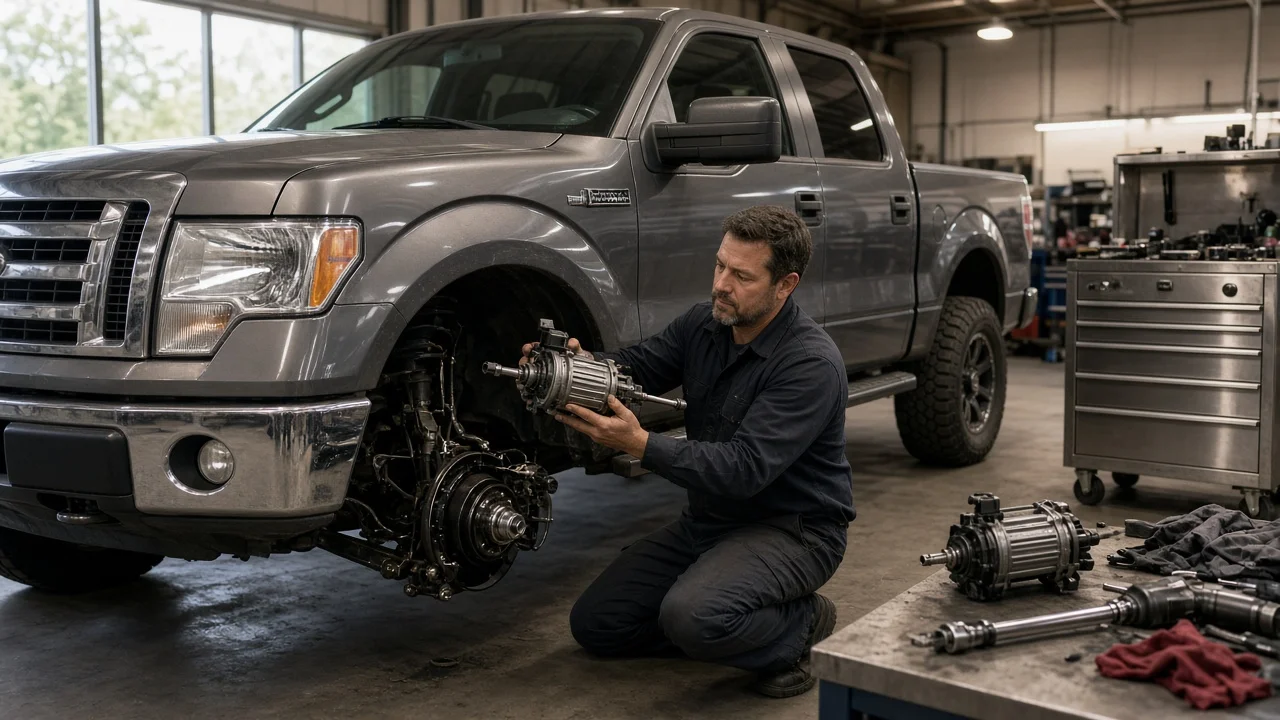
Buying a 4WD actuator for a 2010 to 2014 F-150 starts with one question: which actuator does your truck need? On this generation the term can mean the vacuum-operated hub actuators at the front wheels, the solenoid that controls their vacuum, or the electric shift motor on the transfer case. Each is a separate part with its own fitment rules. Identify the component before you start matching model years.
Short answer on fitment across 2010–2014
Parts for this F-150 generation are often listed for a range of model years rather than a single year. A 2010 Ford F-150 4WD actuator and a 2013 or 2014 part may therefore appear in the same listing. That overlap is a starting point, not a guarantee. Fitment depends on which component you are replacing, the engine, cab and drivetrain combination, and in some cases production changes within a model year. To match the part to your vehicle configuration reliably, use the VIN. Where possible, also check the part number stamped or printed on the component you are removing.
Knowing only the model year leaves out details you need. A 2014 F-150 4WD actuator listed for all 4x4 models may still exclude certain trims or transfer case types. Aftermarket listings also sometimes claim wider fitment than the manufacturer specifications support. Confirm any year-range claim before you order.
How the 4WD engagement system works
Most four-wheel-drive F-150s of this era use an integrated wheel end, or IWE, system at the front hubs. Each front wheel end has a mechanism that connects or disconnects the axle shaft and the hub. In two-wheel drive, engine vacuum routed through a solenoid and a set of hoses holds the hubs disengaged. When the driver selects 4WD, the solenoid releases the vacuum and the hubs engage. Because vacuum is what keeps the hubs disengaged, a leak usually shows up as grinding or ratcheting from the front wheels in 2WD. It typically does not cause a failure to engage 4WD.
Trucks with a dash-mounted 4WD selector also have an electric shift motor on the transfer case. This motor moves the transfer case between 2H, 4H and 4L in response to the selector and the control module. It is a different part from the hub actuators and is mounted under the truck at the transfer case. Its failure symptoms are also different. Typical signs are a transfer case that does not change modes or a 4WD indicator that does not match the selected mode.
What changes the answer
Several details of the vehicle configuration can change which part is correct. The engine matters because the 2010 lineup differs from the 2011–2014 lineup. Vacuum supply routing is not necessarily the same across those engines, so a vacuum-side part or hose assembly that fits one truck may not fit another directly. Trim and special models also matter, because performance or specialty versions may use different drivetrain hardware from a standard 4x4.
The way 4WD is selected is another dividing line. A truck with a dash selector uses the electric transfer case shift motor. A truck with a floor-mounted lever does not use that motor. Production-date splits within a model year and earlier repairs with non-original parts can also affect what fits. Check the service history: if the hubs, solenoid or vacuum lines were replaced before, the parts on the truck may no longer match the original build.
What the owner can do before ordering
Start by narrowing down the symptom. Grinding, clicking or ratcheting from the front wheels in 2WD usually points to the vacuum side. Likely causes are a cracked hose, a loose connector, a faulty solenoid or a leaking hub actuator. If the truck will not engage 4WD or the indicator does not match the selection, the cause could be the solenoid, the hub actuators, the transfer case shift motor, or the wiring and control module. Note when the problem happens, for example only when cold, after rain or after a recent repair. Operating conditions like these can expose a weak vacuum seal or connector.
Begin the inspection with what you can see. Follow the vacuum lines from the engine bay to the front hubs, and check the solenoid, its connector and the hose ends at each wheel. Look for cracked, chafed or disconnected hoses, especially where they pass suspension parts that move. You can use a hand vacuum pump to check whether each section holds vacuum, following the factory service procedure. Stored diagnostic trouble codes in the 4WD-related module can point to an electrical fault in the shift motor or solenoid circuit.
When you order, give the VIN to the parts supplier. Compare the new part with the old one side by side, and check connector shape, mounting points and hose fittings before installing it. If a seller lists one part for every year from 2010 through 2014, ask whether the listing was checked against the VIN or only against the model year.
Limitations and next step
This guide explains how the system is usually arranged and how to approach fitment. It cannot confirm the exact part for a specific truck. Part numbers, superseded components and service bulletins are tied to specific builds. Only a VIN-based catalog, the factory service information or a dealer can confirm them. Torque values and installation steps for hub components should come from the manufacturer specifications. These parts have no universal replacement mileage. Check your maintenance schedule and service history, and replace parts based on diagnosis.
Consider a professional if the symptom continues after a vacuum repair, if codes point to the shift motor or control module, or if the front wheel end needs to be taken apart. The IWE assembly sits inside the front hub area, and correct reassembly affects both 4WD function and the condition of the wheel bearing. A shop with Ford diagnostic equipment can command the system and read module data. That lets it confirm whether the actuator, the vacuum supply or the electronics is at fault, so you don't replace a part that was working.