Choose Brake Fluid for a 2009 Hyundai Sonata
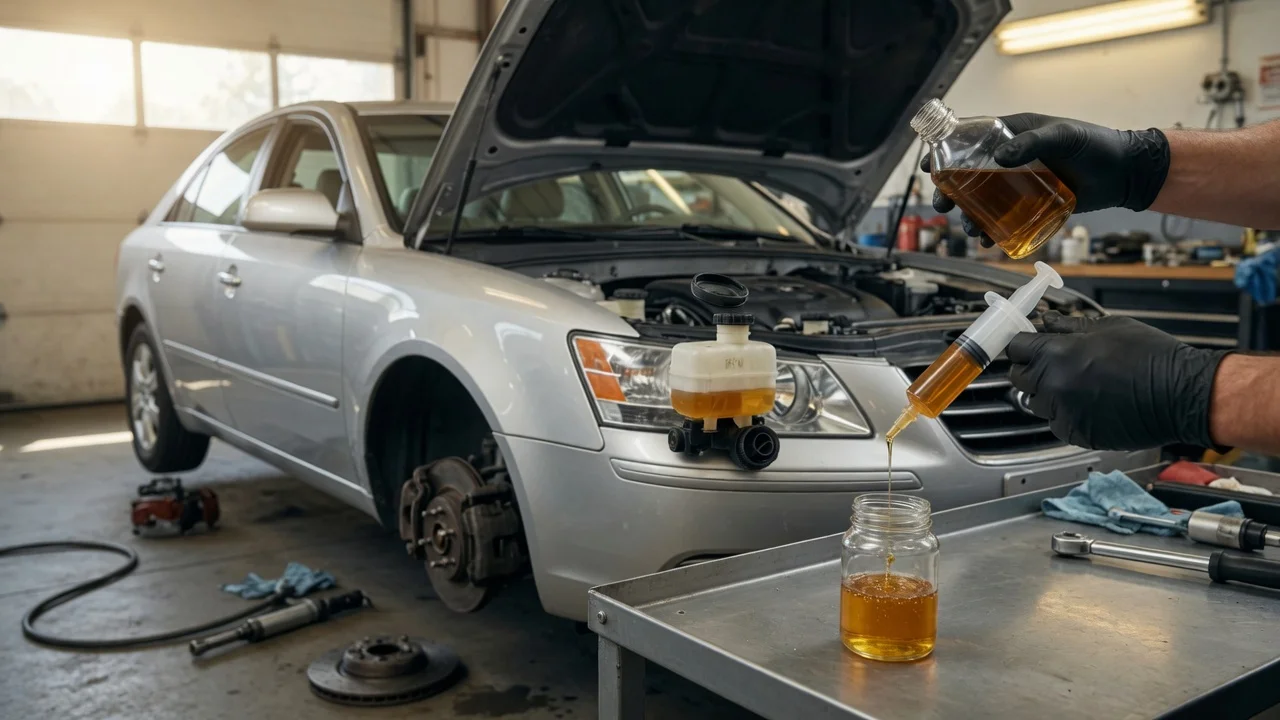
The short answer
The 2009 Hyundai Sonata, part of the NF generation sold from the 2006 to 2010 model years, uses a conventional glycol-based brake fluid. Hyundai's owner information for this generation calls for fluid meeting the US federal standard FMVSS 116 at the DOT 3 or DOT 4 grade. Either grade from a sealed, reputable container is suitable. Before buying, confirm the grade printed on the brake fluid reservoir cap or in your owner's manual. A replacement cap, a market-specific vehicle or a previous owner's changes could make your car differ from the general specification.
This guide does not include an owner's-manual excerpt or a Hyundai service bulletin for the 2009 Sonata. The specification above therefore reflects how this generation is commonly documented, and the cap or manual should take precedence. The source information also does not include the system's fluid capacity or Hyundai's replacement interval for this model year. Check those figures in the owner's manual or the factory service information instead of relying on generic numbers.
What the DOT ratings mean
DOT ratings come from FMVSS 116, which sets minimum performance requirements for brake fluid. The most practical difference between grades is boiling point. Fluid that boils in a hot caliper forms vapor bubbles, and vapor compresses, so the pedal can go soft or sink.
The standard sets two boiling-point minimums for each grade. The dry figure applies to fresh fluid. The wet figure applies after the fluid has absorbed a set amount of water, roughly 3.7 percent. The wet figure matters because glycol-based fluids are hygroscopic, meaning they draw moisture from the air through seals and hoses and each time the reservoir is opened. As fluid ages, its boiling point drops toward the wet figure.
Grade | Base chemistry | Minimum dry boiling point | Minimum wet boiling point | Suitable for a 2009 Sonata; DOT 3 | Glycol ether | 205 °C (401 °F) | 140 °C (284 °F) | Yes, per Hyundai specification; DOT 4 | Glycol ether with borate esters | 230 °C (446 °F) | 155 °C (311 °F) | Yes, per Hyundai specification; DOT 5.1 | Glycol ether with borate esters | 260 °C (500 °F) | 180 °C (356 °F) | Chemically compatible, but not listed by Hyundai for this car; DOT 5 | Silicone | 260 °C (500 °F) | 180 °C (356 °F) | No, not compatible with this system
These figures are the regulatory minimums. Individual products often exceed them, and each manufacturer publishes its own ratings. Compare products by the figures printed on the container rather than by grade alone.
DOT 3 or DOT 4: which fits your priorities
Both grades are within Hyundai's specification, so the choice comes down to how the car is driven and what is easy to buy. The comparison below combines the documented minimums above with editorial judgment. It is not based on brake testing of this vehicle.
DOT 3 is a sensible default for typical commuting and highway driving. It meets the specification, is widely sold and is usually the cheapest option. DOT 4 has higher minimum boiling points, both fresh and after absorbing moisture. That margin helps if the car often tows within its rated limits, carries heavy loads, descends long grades or sees repeated hard stops. Regular fluid replacement does more for heat resistance than choosing a higher grade and then leaving the fluid in for years. A fresh DOT 3 fill can outperform a badly aged DOT 4 fill. Some DOT 4 formulations are thicker at very low temperatures than DOT 3. The standard allows DOT 4 a higher maximum viscosity at minus 40 degrees. Drivers in very cold climates can check the product's low-temperature viscosity or choose a low-viscosity DOT 4 if the container lists one.
For most 2009 Sonata owners, either grade will work. If you are doing a full flush and the price difference is small, DOT 4 adds heat margin at little cost. If you are only topping up, matching what is already in the system keeps the fluid consistent.
Mixing grades and fluids to avoid
DOT 3, DOT 4 and DOT 5.1 are all glycol-based and chemically compatible, so topping up one with another will not damage the system. The blend's performance falls somewhere between the two fluids, so adding DOT 4 to a DOT 3 system does not upgrade it. To get the full benefit of a higher grade, flush out the old fluid completely.
Do not put DOT 5 silicone fluid in this car. Despite the similar name, it does not mix with glycol fluids and is not intended for systems designed around them. Also avoid fluid from an opened container that has been stored for a long time, because it may already have absorbed moisture. Never add power steering fluid, engine oil or any other non-brake fluid to the brake reservoir. Petroleum products can make the rubber seals swell and fail.
Checking and topping up
The brake fluid reservoir sits on top of the master cylinder, at the back of the engine bay on the driver's side. It is translucent and marked with MIN and MAX lines. Keep the level between them. The level normally drops slowly as brake pads wear, because the caliper pistons extend and hold more fluid. Avoid overfilling a system with worn pads. When new, thicker pads go in and the pistons are pushed back, that fluid returns to the reservoir and can overflow.
Clean the cap and the area around it before opening, so dirt cannot fall into the reservoir. Add fluid only from a sealed or recently opened container of the specified grade. Replace the cap promptly to limit moisture exposure. Wipe up spills right away. Glycol brake fluid can damage painted surfaces. If the level drops quickly, or keeps dropping without matching pad wear, look for a leak and have the brakes inspected rather than just adding more fluid.
Replacing the fluid
Because brake fluid absorbs moisture over time, periodic replacement is part of normal maintenance even when the level is correct. The supplied information does not include Hyundai's interval for the 2009 Sonata, so use the owner's manual schedule. For a quick check of fluid condition, many shops use moisture test strips or electronic boiling-point testers.
A full replacement means bleeding fresh fluid through each brake line until clean fluid comes out. Shops commonly start at the wheel farthest from the master cylinder, but follow the order in the service information for this car. The Sonata's anti-lock braking system adds a caveat. If the reservoir runs dry or air gets into the ABS unit during the job, bleeding the system may need a specific procedure or a scan tool. The service details for this model were not part of the supplied information. If you are unsure, have a qualified technician perform the flush. A soft or sinking pedal after any brake work means the car should not be driven until the problem is fixed.