Identifying a 2009 Dodge Ram 1500 Transmission Shift Solenoid
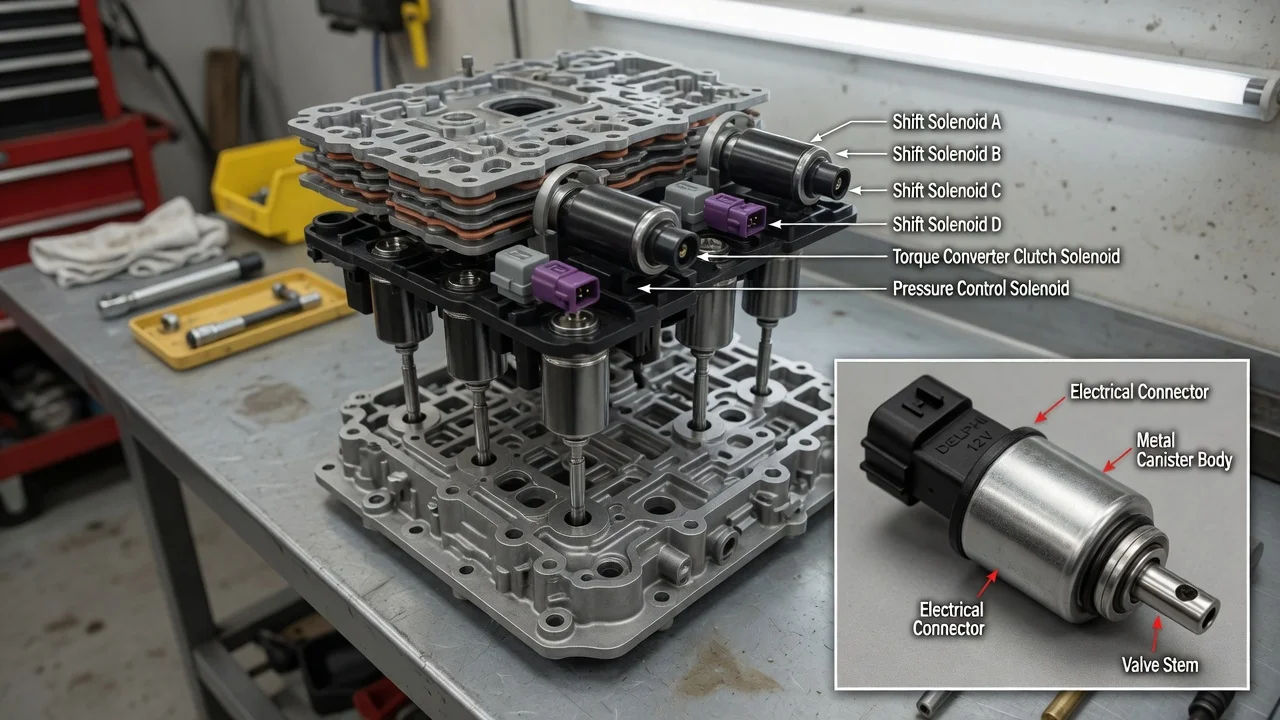
On a 2009 Dodge Ram 1500, the shift solenoids are not separate parts you can replace one at a time. They are built into a single solenoid and pressure switch assembly, and the version your truck uses depends on which automatic transmission it came with. This guide covers how to identify the transmission type, what the solenoid assembly does, how shift behavior and diagnostic codes relate to it, and when the evidence points to a different problem.
The short answer: it is an assembly, not a single solenoid
Most 2009 Ram 1500 trucks with an automatic use one of two Chrysler transmissions. The 4.7-liter and 5.7-liter V8 trucks typically have the five-speed 545RFE. The 3.7-liter V6 was generally paired with the four-speed 42RLE. In both designs, the solenoids that control shifting and clutch application are combined in one unit with the pressure switches that report back to the controller. So when a repair calls for a shift solenoid, the part you actually buy is normally the whole assembly. Parts sellers often list it as a solenoid pack or solenoid block.
The two transmissions put the assembly in different places. On the 545RFE it is attached to the valve body inside the transmission pan, so the pan has to come off and the fluid is drained during the repair. On the 42RLE it is mounted on the outside of the case and can usually be reached without dropping the pan, although you should still expect to lose some fluid. The two assemblies are not interchangeable, so confirm which transmission you have before ordering.
How the solenoids control shifting
These transmissions shift electronically. The transmission control module reads vehicle speed, throttle position, input and output shaft speeds, and the selected range. It then energizes specific solenoids, which send hydraulic pressure to the clutch packs. Each gear uses its own combination of applied clutches. The pressure switches confirm that each hydraulic circuit actually responded to the command. If a solenoid circuit reads open or shorted, or if the commanded state and the switch feedback disagree, the controller stores a diagnostic code. It may also put the transmission into a protective default mode, where it stays in one fixed gear.
The solenoid assembly sits between the electronics and the hydraulics, so a similar symptom can start on either side. Worn clutch packs, a sticking valve, low or degraded fluid, damaged wiring, or a poor connector can all cause shift complaints that look like a solenoid failure. A harsh shift, a flare between gears, or a truck stuck in one gear tells you something is wrong. It does not, by itself, identify the failed part.
What changes the answer for your truck
The transmission type is the first thing to establish. The engine is a strong clue but not proof. Check the identification tag on the transmission case, the build data decoded from the VIN, or the original window sticker if you have it. Parts catalogs can list more than one revision of an assembly for the same year and model, so confirm fitment against the VIN rather than relying on year and model alone.
Service history also matters. A transmission that was rebuilt or replaced with a remanufactured unit may not have the same internal parts as the original. Previous wiring repairs, a fill with the wrong fluid, or recent work near the transmission harness can create faults that have nothing to do with the solenoids themselves. It also helps to note the operating conditions. A problem that appears only when the fluid is hot, only on cold starts, or only while towing points diagnosis in a different direction than one that is present all the time.
Checks an owner can make before buying parts
Start with the fluid. Both transmissions are specified for ATF+4. Check the level using the procedure in the owner's manual or service information, because fluid temperature and whether the engine is running both affect the reading. Low fluid can cause erratic shifts and pressure switch faults on its own. Dark, burnt-smelling fluid or visible metallic debris suggests internal wear that a new solenoid assembly will not fix.
Next, read the diagnostic codes with a scanner that can reach the transmission controller. Basic code readers may miss manufacturer-specific codes and usually cannot show live transmission data. Write the codes down before clearing anything. Pay attention to the type of code. Circuit codes point toward an electrical problem in a solenoid, a switch, or the wiring. Gear ratio or slip codes point more toward a hydraulic or mechanical cause. Also note the shift behavior: which gear the truck stays in, when the problem started, and whether restarting the engine temporarily restores normal shifting.
Finally, inspect the wiring at the transmission with the engine off and cool. Look for a loose or corroded connector, fluid inside the connector, and harness sections that are chafed against a crossmember or sitting too close to the exhaust. Repairing a damaged connector or harness costs far less than opening the transmission.
Repair options if the assembly is confirmed
Sometimes testing confirms the solenoid assembly is at fault, for example a solenoid circuit with resistance outside the service specification or a pressure switch that does not respond when the circuit is pressurized. In that case, the usual repair is replacing the complete assembly. On the 545RFE, the job involves draining the fluid, removing the pan and filter, and following the service procedure for separating the assembly from the valve body. That procedure may require removing the valve body itself. On the 42RLE, the external assembly is less involved to reach. With either transmission, refill with ATF+4 to the correct level. Then perform the adaptive quick learn with a capable scan tool when the service information calls for it, so the controller can recalibrate clutch application.
Your repair options include an original-equipment or aftermarket assembly, and doing the work yourself or paying a shop. If the fluid shows heavy debris or the codes point to clutch slippage, a solenoid assembly alone is unlikely to solve the problem. In that situation, a rebuild or a replacement transmission may be the realistic choice.
Limitations and when to get professional help
This guide cannot confirm which transmission is in your truck or which part has failed. A diagnostic code identifies a circuit or condition, not a specific failed component. Resistance values, connector pinouts, torque figures, and relearn steps should come from factory service information that matches your VIN. A transmission shop with a full scan tool can command individual solenoids, watch pressure switch status, and check line pressure. Those tests separate electrical faults from hydraulic ones far more reliably than symptoms alone.
A sensible next step is to confirm the transmission type, record the codes and the conditions when the problem occurs, and check the fluid and wiring. With that information, you can decide whether the solenoid assembly is a reasonable repair to try yourself or whether the truck needs professional diagnosis first.