Identifying a 2009 Chevy Impala Pressure Control Solenoid
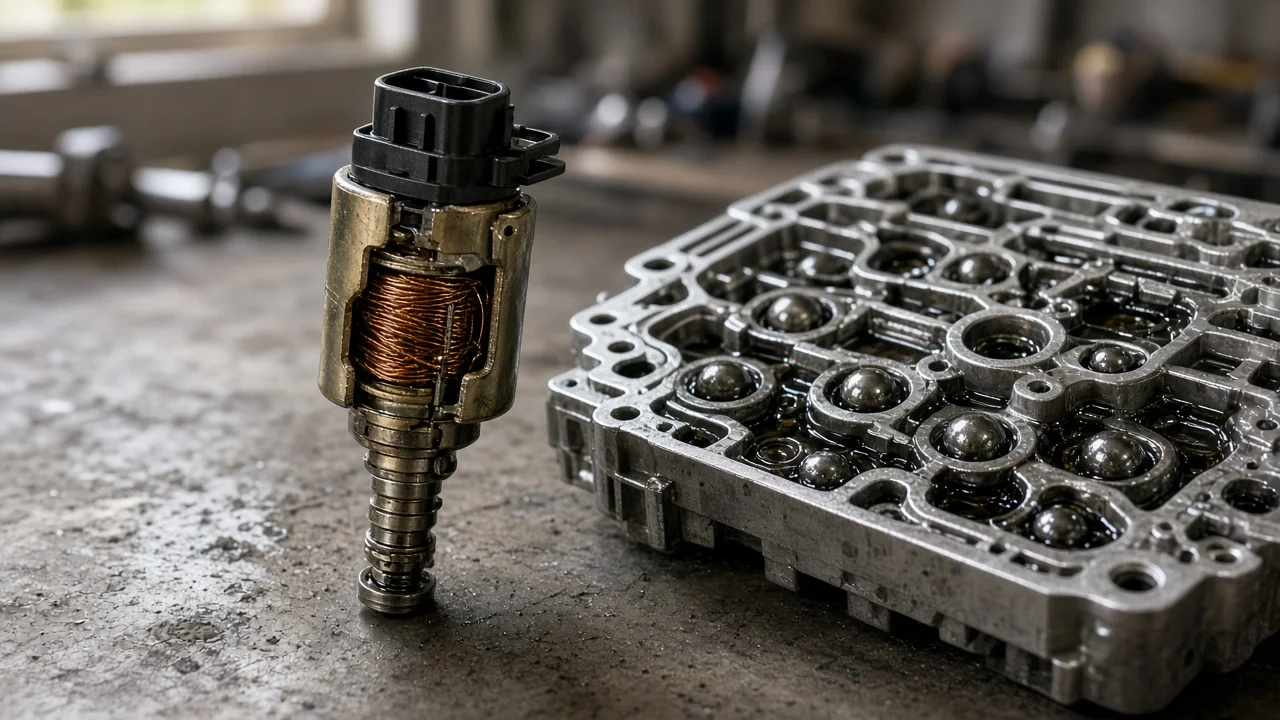
If your 2009 Impala shifts harshly, slips, or shows a transmission code, the pressure control solenoid is a likely suspect. It is not the only possible cause, though. This guide explains how to identify the correct solenoid for your car, what the part does, which conditions change the diagnosis, and what you can check before buying parts or committing to a repair. Start by confirming the transmission type, because fitment, fluid specification and procedures depend on it.
Which solenoid your 2009 Impala uses
Most 2009 Chevy Impalas use a version of GM's 4T65-E four-speed automatic transaxle, with a heavier-duty variant behind the V8 in the SS. On this family of transmissions, the pressure control solenoid is an electronically controlled variable force solenoid mounted on the valve body. It is not reached by dropping the bottom pan. The valve body sits behind the side cover at the end of the transaxle, and the solenoid connects through an internal wiring harness to the case connector.
To identify the right part, confirm the exact transmission before ordering. The service parts identification label in the vehicle lists option codes, and the transmission carries its own identification tag. A dealer parts counter or reputable parts catalog can match those codes to the correct solenoid. The solenoid itself is a cylindrical electrical unit with a single coil and usually a two-wire connector, held in the valve body by a retainer or bracket. Matching the engine size alone is not enough to guarantee fitment.
How the pressure control solenoid works
The powertrain control module decides how much line pressure the transmission needs. That decision is based on throttle position, engine load, vehicle speed and fluid temperature. The module then sends a controlled electrical current to the pressure control solenoid. The solenoid moves a valve that regulates hydraulic pressure to the pressure regulator system. Line pressure determines how firmly the clutches and bands apply. Too little pressure causes slipping and soft or flared shifts. Too much causes harsh engagements.
On GM variable force solenoids of this type, more current generally means lower line pressure. If the solenoid loses power or its circuit opens, the transmission defaults toward high pressure. This protects the clutches from slipping, but it produces noticeably firm or harsh shifts. That default helps explain why an electrical fault often feels different from a mechanical or hydraulic problem.
What changes the diagnosis and fitment
Shift behavior alone does not prove the solenoid has failed. Harsh, delayed or slipping shifts can also come from low or degraded fluid, a sticking valve in the valve body, worn clutch packs, internal leaks, a damaged internal harness, or incorrect adaptive learning in the control module. A pressure control solenoid can also fail mechanically while its electrical resistance still reads normally. In that case it may stick or respond poorly without setting an electrical code.
Diagnostic codes help narrow things down but rarely settle the question alone. An electrical code for the pressure control solenoid circuit, such as P0748, points to the solenoid, its wiring, the connectors or the control module. Ratio, slip or shift-time codes describe a symptom, not a specific failed part. The vehicle's service history also matters. A transmission with old fluid, a past overheating event or a previous rebuild may need a different approach than a well-maintained unit.
What you can check yourself
Begin with the fluid. Check the level using the procedure for your transmission, with the car level and the fluid at the specified temperature. The 2009 Impala calls for the GM-specified fluid listed in the owner's manual, typically Dexron VI. Note the color and smell. Dark, burnt-smelling fluid or debris suggests internal wear that a new solenoid will not fix. Then read the stored and pending codes with a scan tool, preferably one that shows transmission data and freeze-frame information.
Record exactly when the problem occurs. Note whether it happens cold or hot, on specific shifts, under light or heavy throttle, or only after highway driving. A scan tool that displays commanded solenoid current alongside fluid temperature and shift data can show whether the control module is commanding normal values. Look over the external transmission connector and wiring for damage, corrosion or oil intrusion. If you replace the solenoid yourself, plan for side cover removal, a new gasket, correct fluid, and a refill and level check afterward. Some tools may be able to reset transmission adaptive values once the repair is complete.
Limits and when to get professional help
Getting to the valve body on a transverse transaxle in an Impala is more involved than many owners expect. Clearance around the side cover is limited, and the steps vary with engine and equipment. Without the factory service procedure for your exact configuration, it is easy to damage the cover seal, pinch the internal harness or misplace check balls and small parts. Line pressure testing with a gauge is often the most reliable way to separate a solenoid problem from a pump, regulator or valve body issue, and it requires the correct test port and specifications.
Repair options range from replacing only the solenoid, to servicing or replacing the valve body, to a transmission overhaul when internal wear is confirmed. A transmission specialist can run pressure tests, check the commanded and actual values, and inspect the valve body before recommending one of these. That keeps you from paying for a part that only treats a symptom. If the car shows severe slipping, loss of drive or overheating, stop driving it and have it diagnosed, because continued use can turn a solenoid or fluid problem into a much larger repair.