Choosing Transmission Cooler Lines for a 2008 F-150
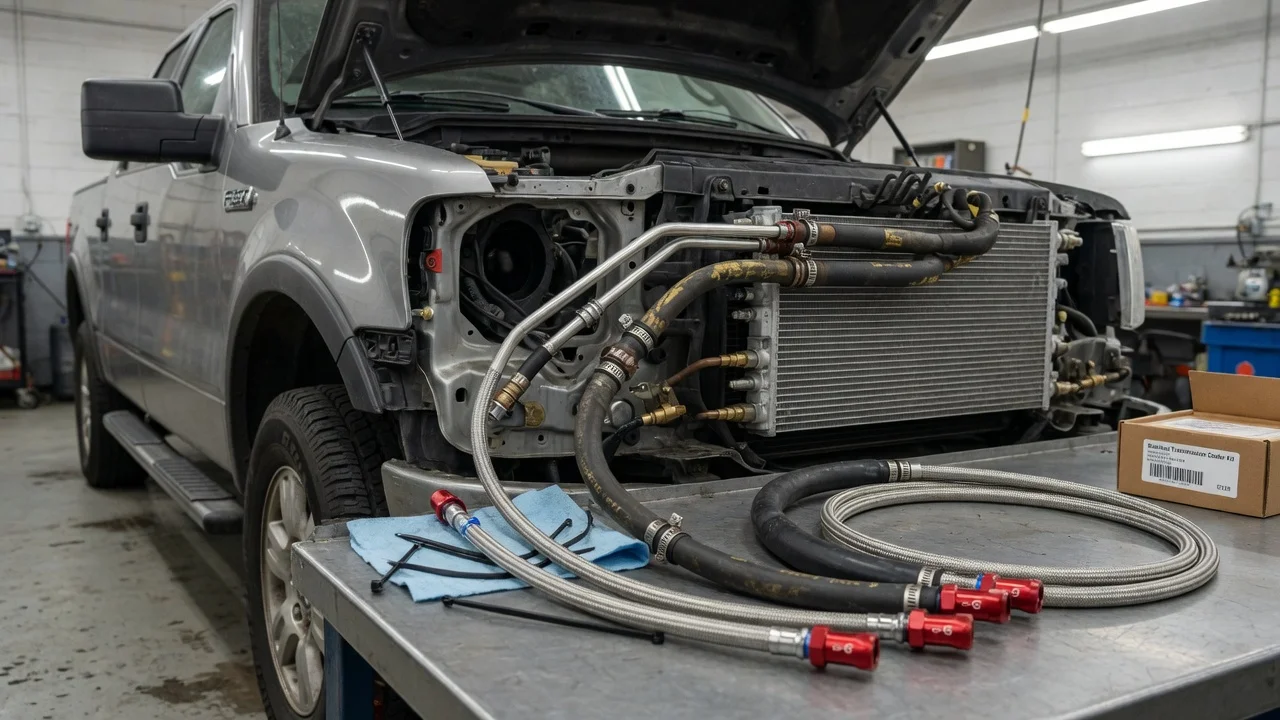
Red fluid dripping near the radiator or along the frame rail of a 2008 F-150 often points to the transmission cooler lines. A wet line alone does not prove where the leak starts, though. Choosing replacement lines means confirming the source, matching your truck's exact build, deciding between a full assembly and a section repair, and knowing what new lines can and cannot fix. This guide walks through those decisions so the repair seals the first time.
Define the job the product must do
On an automatic F-150 of this generation, the cooler lines carry fluid from the transmission to a cooler inside the radiator tank and back again. Trucks with a factory tow package also route fluid through an auxiliary cooler in front of the radiator. The lines are mostly steel tubing with short flexible hose sections and quick-connect fittings at the ends. The replacement's job is simple: restore a sealed, correctly routed path for fluid at operating temperature and pressure. It does not add cooling capacity or repair anything inside the transmission.
Before buying parts, confirm the leak is actually coming from the lines. Clean the area, drive the truck to operating temperature, and trace the wetness to its highest point. Fluid that runs down a line may be coming from a pan gasket, a cooler fitting O-ring, the radiator, or a seal above it. Low fluid can cause slipping, delayed engagement or harsh shift behavior, but those symptoms can also come from internal problems. Diagnostic codes may or may not set, so treat any symptom as a reason to inspect, not as proof that a particular part has failed.
Also consider your constraints. A truck in a road-salt region likely has corrosion on brackets and neighboring lines. Regular towing raises fluid temperatures. Whether you are doing the work in a driveway or paying a shop affects which design makes sense. How long you plan to keep the truck should shape how much you spend on the fix.
Check compatibility
Start with the transmission type. Automatic 2008 F-150s use a four-speed from Ford's 4R70E/4R75E family, depending on engine. Trucks built with a manual gearbox have no transmission cooler lines at all. Then record the engine, cab style, bed length, 2WD or 4WD, and whether the truck has the factory tow package or an auxiliary cooler. Line length, bends and routing change with wheelbase and equipment, so a line listed simply as 2008 F-150 may not match your truck. Decoding the VIN, or giving it to a parts counter, is the most reliable way to narrow fitment.
Compare any candidate part against what is on the truck. Check the end fittings, the tube diameter, the bracket locations, and whether the part covers the supply line, the return line or both. If the radiator or the auxiliary cooler has been replaced with an aftermarket unit, its port positions and fitting style may differ from stock, and catalog fitment may no longer apply. Confirm the fluid specification on the dipstick or in the owner's manual too. This era of Ford automatic is generally specified for Mercon V, and you will need enough of the correct fluid to refill what drains out.
Features that affect the choice
The main decision is between a complete preformed assembly and a partial repair. An OE-style assembly reproduces the factory bends and end fittings, and it is the most predictable choice when the steel is rusted along its length. Repair kits and section replacements splice in new hose or tubing where the old line failed. They cost less and avoid threading a long line through the chassis, but they add joints that must be done correctly. They also only make sense when the remaining steel is sound.
Look at material and construction rather than labels. Coated steel resists corrosion better than bare steel, and stainless lasts longer still. Stainless is stiffer, though, and can be harder to fit. Where hose is used, it should be explicitly rated for transmission fluid at operating temperature. Fuel hose and heater hose are not substitutes. Check that crimped hose-to-tube joints look even and that the kit includes the O-rings, retaining clips or seals the fittings need. Terms like heavy duty or premium mean little unless the seller states the material, coating, hose rating and fitting type.
Limitations and ownership costs
Replacing the lines can take more labor than the part price suggests. Routing along the frame may require loosening brackets, moving other components, or working around a rusted clip. Quick-connect fittings usually need a matching disconnect tool. Corroded fittings at the radiator or transmission can break or seize. Plan for drained fluid, rags, the correct replacement fluid, and enough time to check the level using the procedure in the owner's manual. Recheck every joint for seepage after a test drive and again after a few days of normal use.
Know what the part cannot do. New lines will not lower fluid temperature for towing; that job belongs to a properly sized auxiliary cooler. They will not fix a failed cooler inside the radiator, which can let coolant and transmission fluid mix and calls for a different repair. If the transmission ran low long enough to slip, wear may already exist, and shifting may not return to normal after the leak is sealed. Your service history helps here: fluid changes, previous leaks and earlier repairs all add context when deciding whether a fluid service or further diagnosis should follow.
Build a practical shortlist
First, confirm the leak source and write down your build details: transmission, engine, cab, bed length, drive type, tow package and any non-original radiator or cooler. Then decide which repair options fit your situation: a full supply-and-return assembly, a single line, or a section repair. Base that decision on how much of the steel is still sound and on how much labor you are willing to take on.
For each candidate, check that the listing matches your configuration rather than just the model year. Then compare the end fittings and bend shapes with your original line, and confirm the line material, coating and any hose temperature rating. Verify that the seals, clips or O-rings are included. Finally, review the warranty and return terms in case the fit is wrong. Add the cost of fluid, any needed tools and labor to get a true total. A part that matches your truck exactly and comes with clear specifications is a stronger choice than one sold mainly on vague claims.