2008 Chevy Impala Pressure Control Solenoid Identification and Location
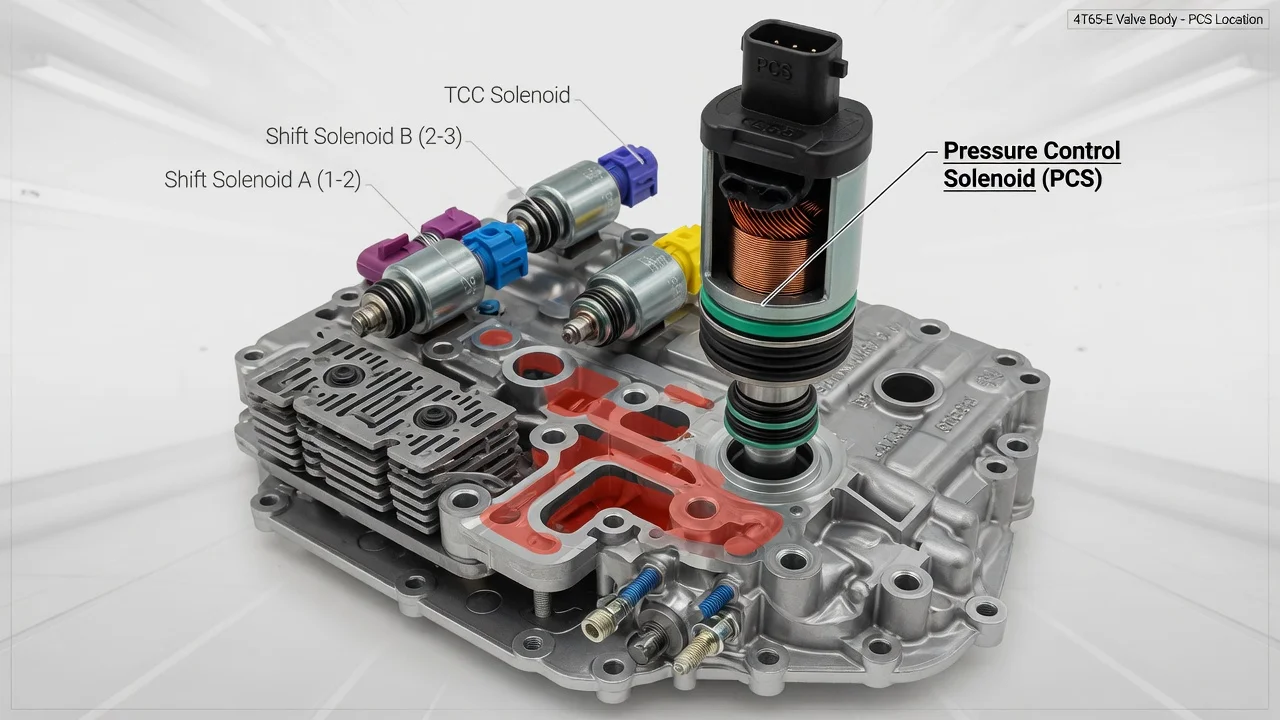
On a 2008 Chevrolet Impala, the transmission pressure control solenoid is not an external bolt-on part you can reach from under the hood. It is inside the automatic transaxle, mounted on the control valve body behind the case side cover. This guide covers confirming your transmission, recognizing the solenoid, understanding what it does, and deciding what to check before buying parts.
Where the Pressure Control Solenoid Is Located
The 2008 Impala uses the 4T65-E four-speed automatic transaxle with all engines. The SS model with the 5.3L V8 uses a heavy-duty version of the same transaxle. On this unit, the pressure control solenoid is attached to the valve body assembly, which is enclosed by the side cover on the driver's end of the transaxle near the left frame rail. The solenoid does not connect to the engine harness directly. A short internal wiring harness links it, along with the shift solenoids, the torque converter clutch solenoid and the fluid pressure switch assembly, to a single pass-through connector on the transmission case.
Because the side cover faces the inner fender, access is tight on this W-body car. The usual sequence is to raise and support the vehicle, remove the left front wheel and splash shielding, and drain the fluid. Depending on the procedure, you may also need to support the powertrain and lower part of the cradle or remove the left drive axle. Treat those steps as an outline only. The factory procedure for your exact configuration governs the order, the supports and the torque values.
Confirm the Transmission Type and Fitment
Confirm the transmission type before ordering anything, even though a 2008 Impala should have a 4T65-E variant. Engine size, the SS heavy-duty build and production changes can affect which internal parts fit. Later Impalas switched to a six-speed transaxle, so information for those years does not apply to a 2008. Check the Service Parts Identification label, which lists the vehicle's option codes, and the identification tag on the transmission case. A parts lookup by VIN is the most reliable way to confirm fitment. A part that merely looks similar may have different calibration or connector details.
How the Pressure Control Solenoid Works
The powertrain control module uses the pressure control solenoid to set line pressure, the main hydraulic pressure that applies the clutches and bands. It is a variable force solenoid, not a simple on-off valve. The module varies the electrical current through it, and the solenoid moves a valve that adjusts the signal to the pressure regulator. The module changes that current using throttle position, engine load, vehicle speed and fluid temperature. The aim is firm, quick shifts under heavy load and smoother, lighter shifts during gentle driving.
In GM designs of this type, losing control of the solenoid generally results in high line pressure rather than low pressure. This protects the clutches from slipping, but it often makes engagements and shifts harsh. Once the side cover is off, the pressure control solenoid can usually be told apart from the on-off shift solenoids by its body and by where it seats in the valve body. Compare it against the replacement part or a service diagram rather than guessing from appearance alone.
What Changes the Diagnosis
Diagnostic codes narrow the search but rarely prove the solenoid itself has failed. The generic codes from P0745 through P0749 describe pressure control solenoid circuit, performance or intermittent faults. An electrical code means the module detected a problem somewhere in the circuit. That could be the solenoid, but it could also be the internal harness, the case pass-through connector, the external harness or the module. A performance-type complaint without an electrical code may come from a mechanical or hydraulic cause rather than the solenoid.
Shift behavior also depends on conditions the solenoid does not control. Low or degraded fluid, debris in the valve body, worn clutches, a faulty fluid pressure switch or temperature sensor input, and learned shift adaptations can all produce harsh, delayed or soft shifts. Note when the problem appears: cold or hot, on upshifts or downshifts, at light or heavy throttle. That pattern matters as much as the code.
What the Owner Can Check
Start with the fluid. Check the level using the method and temperature the owner's manual specifies, and use only the fluid specification listed there. GM called for Dexron VI in vehicles of this era, but confirm it for your car. Look at the condition of the fluid as well. Dark fluid, a burnt smell or visible debris points toward internal wear that a new solenoid will not fix.
Next, read the stored codes and freeze frame data with a scan tool that can access transmission data. If the tool shows commanded and actual pressure control solenoid current, compare the two while the symptom is present. Then inspect the external transmission connector. Look for fluid wicking out of the case connector, corrosion, bent pins or damaged wiring near the exhaust and suspension. Resistance checks through the connector are possible, but they require the correct pin chart and specification values from service information.
Review the service history too. Recent fluid service, a previous valve body repair or a reflash of the control module can change how the transmission behaves and narrows down what to check.
Repair Options
If testing points to the solenoid, it can be replaced with the transaxle in the car. The job requires removing the side cover, so plan for a new cover gasket, fresh fluid of the correct specification and a proper fill and level check afterward. Some technicians replace only the solenoid. Others inspect the valve body and filter screen for debris first, because contamination that damaged one part can affect others. If the fault is in the internal harness or pass-through connector, replacing that harness may be the correct repair instead. After any repair, clear the codes and road-test under the conditions that originally caused the symptom. Relearning shift adaptations with a capable scan tool may also be needed.
Limitations and Next Step
This overview cannot replace vehicle-specific service information. Access steps, specification values and connector pinouts depend on the exact configuration, and a symptom alone does not confirm a failed solenoid. If the codes point to the circuit but the wiring and connector check out, or if the fluid shows signs of internal wear, a transmission specialist with factory-level diagnostic tools can test pressures directly. They can then tell you whether a solenoid, the valve body or a larger repair is the right next step.