2007 PT Cruiser Brake Booster Check Valve: Choosing the Correct Part
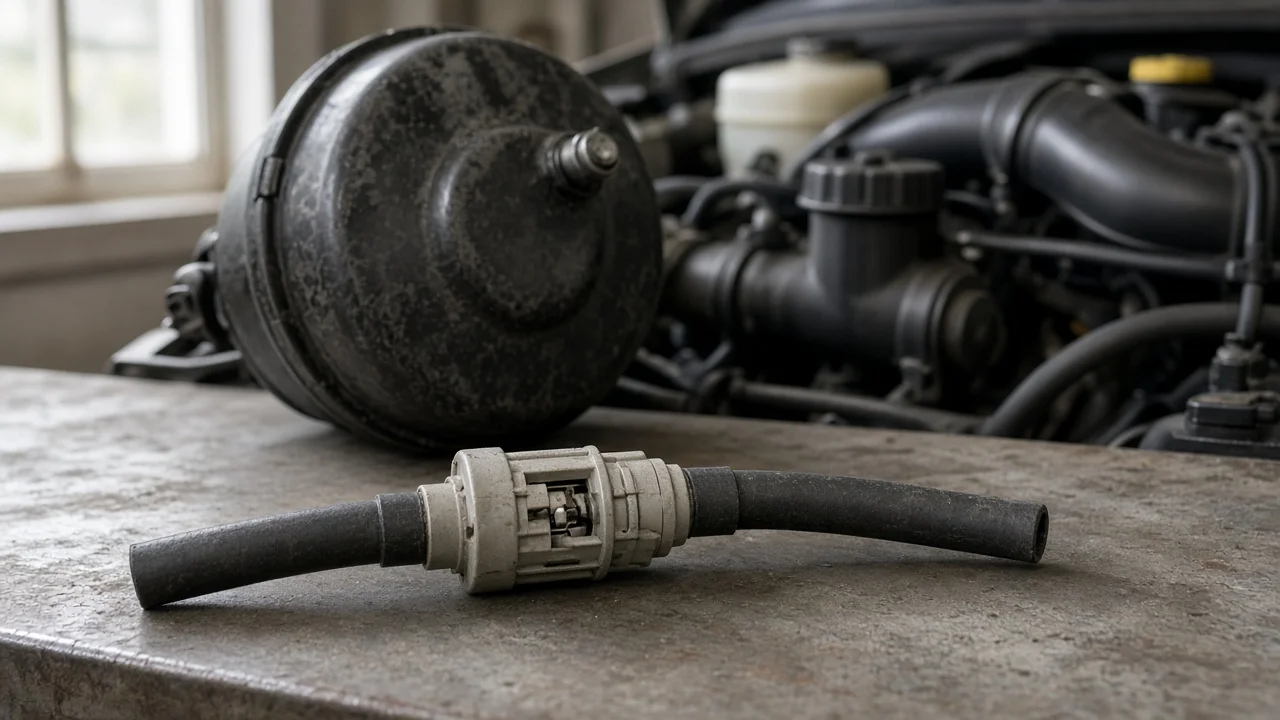
A hard brake pedal on a 2007 PT Cruiser, especially on the first stop after the car has been parked, often points to the small one-way valve that keeps vacuum in the brake booster. This guide explains what the booster check valve does, how to confirm it is the actual fault, and how to choose a replacement that fits your car rather than one that only looks similar. It covers the valve and its connections, not the whole braking system.
Define the job the product must do
The brake booster uses engine vacuum to multiply the force you apply to the pedal. The check valve sits between the booster and the intake manifold vacuum source and lets air flow in one direction only: out of the booster toward the engine. When the engine is off, or when manifold vacuum drops under heavy throttle, the valve closes and traps the vacuum already stored in the booster, so you still have power assist for a stop or two. On a turbocharged PT Cruiser the job is more demanding, because the intake manifold sees positive pressure under boost and the valve must keep that pressure out of the booster. A replacement therefore has to seal reliably in both conditions, not just pass air when new.
Before buying, make sure the valve is the problem. Typical signs include a firm pedal after the car sits, a hiss near the booster when the pedal is pressed, or loss of assist that returns once the engine has run for a while. A simple check is to remove the valve and blow through it: air should pass from the booster side toward the engine side and be blocked in the reverse direction. You can also run the engine, switch it off, wait, and then press the pedal; with a healthy valve and booster you should still feel assist, within the hold time given in the service information for your car. A cracked vacuum hose, a leaking grommet, a torn booster diaphragm or low engine vacuum can produce similar symptoms, so inspect those parts at the same time. If the pedal is hard, sinks toward the floor or the car pulls while braking, stop driving it and have the brakes inspected professionally rather than guessing with parts.
Check compatibility
Vehicle fitment starts with the exact car, not just the model year. The 2007 PT Cruiser was sold as a wagon and a convertible, with naturally aspirated and turbocharged versions of the 2.4-liter engine, and parts catalogs can split vacuum components by engine or body style. Use your VIN with a dealer parts counter or a catalog that decodes it, and treat a generic 'fits PT Cruiser' listing as a starting point rather than confirmation.
Then compare the physical interfaces with the part on your car. Look at how the valve mounts: some designs press into a rubber grommet in the booster shell, while others are built into the vacuum hose assembly, in which case the hose and valve may be sold as one piece. Match the nipple outside diameter to the hose inside diameter, the body angle, straight or elbow, so the hose routes without kinking, and the grommet size if one is used. If the old valve has a part number molded into it, record it and check interchange listings against it. A valve that needs an extra clamp to stop leaking, or forces the hose into a tight bend, is the wrong part even if the listing claims it fits.
Features that affect the choice
Few features on a check valve actually matter: the sealing quality of the internal one-way element, the durability of the body material under engine-bay heat, and whether a new grommet is included. Original-equipment parts offer the most certainty about dimensions and valve behavior. Reputable aftermarket valves can be a sound choice when the listing shows clear measurements, the mounting style and an interchange number, and when the seller names the specific engine and body style covered. On a turbo car, prefer a valve listed for that engine, since it must hold against boost pressure as well as vacuum.
Treat labels such as heavy-duty, premium or performance with caution. They say nothing measurable about the seal, opening pressure or temperature resistance, and those figures are rarely published for parts this small. Useful evidence is concrete: photos showing the ports and grommet, stated dimensions, an OE reference number, and a return policy that covers a fitment mismatch. A valve supplied with a grommet is worth choosing if the old grommet is hard, cracked or loose, because an aged grommet can leak even around a brand-new valve.
Limitations and ownership costs
Replacing the check valve is usually a simple job, but do it with the engine off and note the hose routing first. Ease the old valve out of the grommet without prying against the booster shell, and fit the new one with a rubber-safe lubricant if the service information allows it; petroleum-based products can swell rubber brake components. Replace a hardened hose or grommet at the same time, then start the engine, listen for leaks, and confirm pedal feel and assist before driving. Ongoing costs are low: the valve has no consumables or scheduled maintenance, and the main extra expense is a hose, grommet or clamp.
The valve only controls vacuum supply. It will not fix worn brake pads, scored or warped brake rotors, a sticking caliper, contaminated brake fluid or friction material that has reached the wear limits for your car. Those faults affect stopping distance and pedal feel in their own ways and need inspection against vehicle-specific specifications. If you find brake fluid inside the vacuum hose or booster, the master cylinder is likely leaking internally, and a new check valve will not solve it. A booster with an internal leak cannot be cured with a valve either; it needs replacement or professional service.
Build a practical shortlist
Before ordering, narrow the options with a short set of checks. Confirm the year, body style and engine, and verify the part against your VIN. Make sure the mounting style matches yours, whether grommet-mounted or integrated into the hose. Compare the port sizes and body angle with the old valve. Check whether a grommet is included and whether you need one. Prefer a listing with an OE or interchange number and real dimensions over one that relies on marketing terms. On a turbocharged car, confirm the part is listed for that engine.
Once two or three candidates pass these checks, the decision comes down to confidence in fit and return terms rather than brand claims. Keep the old valve until the new one is installed and tested, so you can compare them side by side. After installation, repeat the engine-off assist test. If the pedal still feels hard or the assist fades quickly, the cause lies elsewhere, most often in the hose, the booster itself or low engine vacuum.