Identifying a 2007 Chevy Impala Pressure Control Solenoid
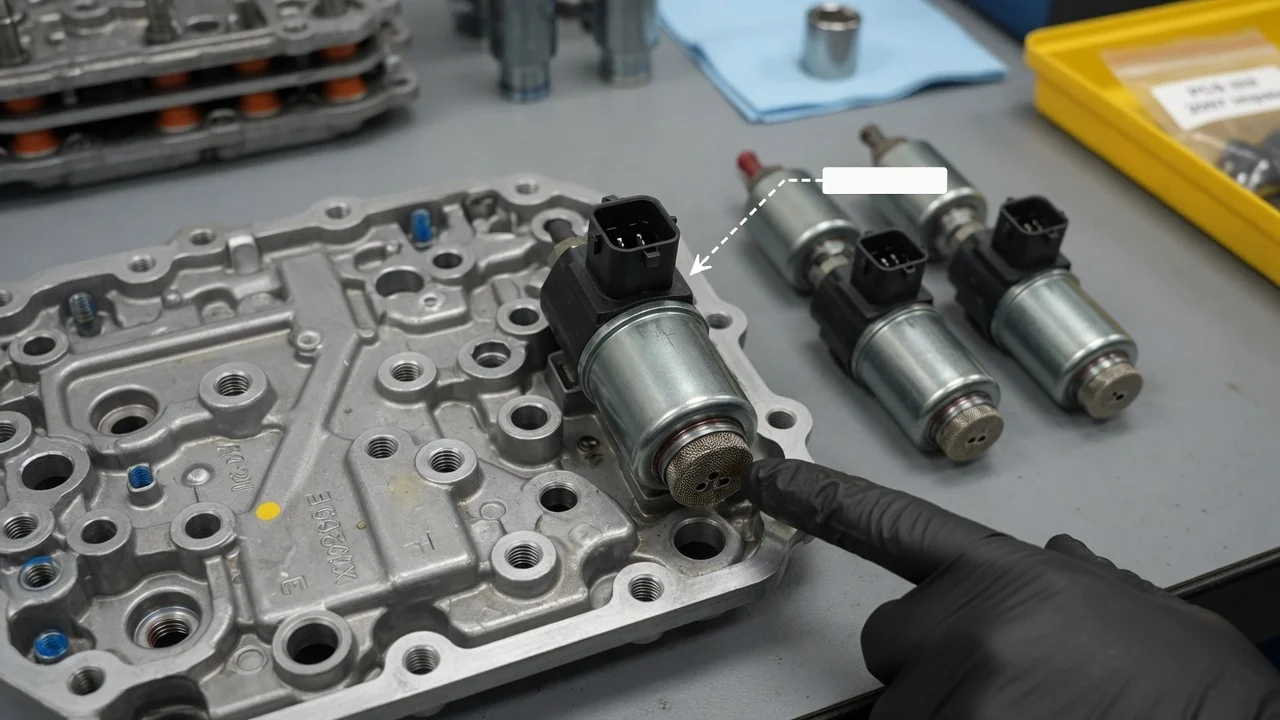
If your 2007 Chevy Impala shifts harshly, flares between gears or stores a pressure control code, the transmission pressure control solenoid is likely to come up during diagnosis. Finding the right part starts with confirming the transmission, because the solenoid sits inside the transaxle and is matched to that unit, not just to the model year. This guide explains what the solenoid does, what changes the answer for your car and how to approach diagnosis before buying parts.
The short answer for the 2007 Impala
The 2007 Impala lineup used the GM 4T65-E four-speed automatic transaxle with its V6 engines, and the V8 SS used a heavy-duty version of the same family. On this transaxle, the pressure control solenoid is an electrically controlled valve mounted on the control valve body, which sits behind the transaxle side cover. It is an internal part. You cannot reach it from under the hood, and replacing it means draining fluid and removing the side cover. When shopping, match the part to the 4T65-E variant in your car rather than to the model name alone. Treat a code or a symptom as a reason to test the system, not as proof that the solenoid has failed.
How the pressure control solenoid works
The solenoid regulates line pressure, the hydraulic pressure that applies the clutches and bands inside the transaxle. The control module varies the electrical current sent to the solenoid based on inputs such as throttle position, engine load, vehicle speed and fluid temperature. On GM units of this design, more current generally means lower line pressure. If the signal is lost, the transmission defaults toward high pressure. That fail-safe protects the clutches from slipping, but it makes shifts noticeably firm.
Because the solenoid sets line pressure, problems with it usually show up as changes in shift behavior. Pressure that is too high tends to cause harsh engagements into drive or reverse and firm, banging shifts in every gear. Pressure that is too low can cause soft, delayed or slipping shifts. The same symptoms can also come from low or degraded fluid, worn clutch packs, valve body wear, a sticking pressure regulator valve, damaged wiring or a control module issue. The solenoid is one link in that chain, so shift quality alone does not identify it as the cause.
What changes the answer
The first variable is the exact transmission type. The standard 4T65-E and the heavy-duty version used behind the V8 differ internally, and some solenoids or solenoid kits are listed by engine or production date. To confirm fitment, check the RPO codes on the vehicle's service parts identification label and the identification tag on the transaxle case. Giving your VIN to a parts supplier is the most reliable way to avoid buying a solenoid for the wrong unit.
Service history matters as well. A rebuilt, replaced or remanufactured transaxle may have an updated valve body or solenoid that differs from the original. Fluid also plays a role. GM now specifies Dexron VI for these transaxles, superseding the earlier Dexron III, but confirm the fluid specification in your owner's manual. Old, burnt or incorrect fluid can change shift feel enough to mimic a pressure control fault. If you don't know when the fluid was last serviced, factor that in before blaming a solenoid.
Operating conditions are the third variable. A problem that appears only when the transmission is cold, only after it is fully warm, or only over bumps points in different directions. Heat-related and intermittent faults often trace back to connectors or wiring rather than to the solenoid coil itself.
What you can do as an owner
Start by reading diagnostic codes with a scan tool that can access transmission data, not just generic engine codes. Record stored and pending codes along with any freeze-frame data. A code such as P0748, which GM uses for a pressure control solenoid electrical fault, tells you the control module saw a problem in that circuit. The cause could be the wiring, the connector, the solenoid coil or the module, so the code does not confirm the solenoid is bad. Other transmission codes stored at the same time can change the diagnosis.
Next, check the fluid level and condition using the procedure in your owner's manual or service information. That procedure specifies the fluid temperature for the check, and a check at the wrong temperature can mislead you. Look for a burnt smell, dark color or debris. Then note when the shift problem occurs: which gears, cold or hot, light or heavy throttle, and whether it is constant or intermittent. A clear description saves time if a shop takes over the diagnosis.
Repair options depend on what testing shows. If an electrical code is confirmed, the wiring and connector check out and the solenoid circuit tests out of range, replacing the solenoid through the side cover is a reasonable repair. It requires a new gasket, the correct fluid and, in many cases, a reset or relearn of the transmission's shift adaptations afterward. If you have shift complaints with no codes, a shop will usually measure actual line pressure with a gauge before replacing parts. Replacing the solenoid on symptoms alone often costs money without fixing the problem.
Limitations and next step
This overview is general. Exact part numbers, connector details, removal steps and torque specifications come from service information matched to your VIN, and those details can differ between the standard and heavy-duty transaxles. Without a confirmed transmission identification and real test results, nobody can say for certain that the pressure control solenoid is your problem.
Get professional help if you see multiple transmission codes, slipping, burnt fluid or metal debris, or if diagnosis needs a line pressure test or circuit measurements you can't perform. A transmission shop can compare commanded and actual pressure, test the solenoid circuit at the connector and tell you whether a solenoid replacement, a valve body repair or a larger overhaul is the right fix for your Impala.