2007–2009 Chevy Suburban LTZ Front Electronic Struts: Fitment Guide
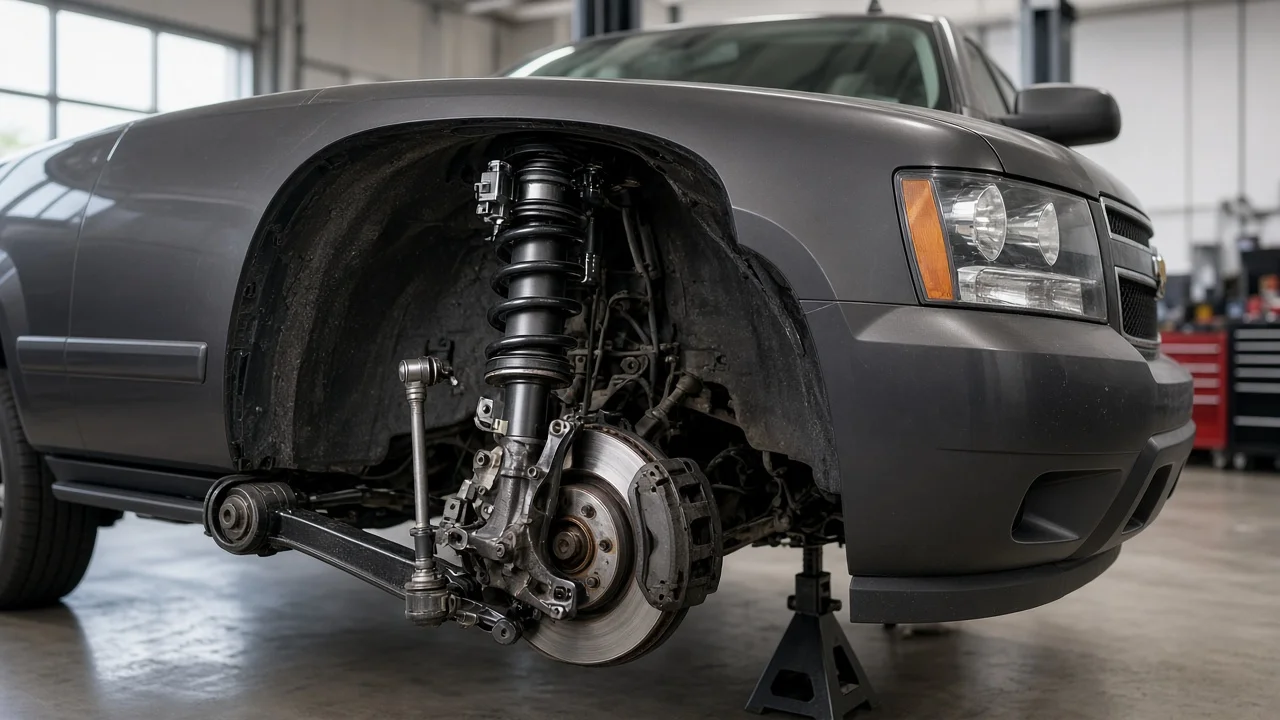
If you own a 2007, 2008 or 2009 Chevy Suburban LTZ and the front ride has gone soft, bouncy or noisy, or a suspension warning has appeared, the struts you order must match the truck's electronic damping system. This guide explains how the front electronic struts on these LTZ models work, which details decide fitment and what to check before you buy or install replacements.
Short answer: match the suspension option, not just the trim
On the 2007–2009 Suburban LTZ, the front suspension normally uses electronically controlled struts as part of GM's Autoride system, so a standard passive strut is not a direct replacement. The correct part is an electronic strut with the matching electrical connector and mounting points for your truck's drivetrain and series. The trim name is a useful starting point, but the reliable confirmation is the Service Parts Identification label, usually in the glovebox, which lists the factory option codes. On these trucks the Autoride package is commonly identified as RPO Z55; confirm that code on your label and match it in the parts catalog before ordering.
Your realistic choices are an OE-style electronic replacement that keeps adjustable damping, or a conversion kit that replaces the electronic struts with passive units. Both can fit, but they are not equivalent in ride behavior or in how the truck's suspension control module responds.
How the front electronic struts work
Each front strut contains a damper with an electrically controlled valve. A suspension control module reads inputs such as suspension position sensors and vehicle speed, then commands each damper to firm up or soften many times per second. That lets the truck stay compliant on smooth pavement and resist body roll, brake dive and float over larger bumps.
Because the module expects to see each damper's electrical circuit, a failed solenoid, a damaged connector or a strut without the correct electronics can trigger a suspension service message and stored trouble codes. The damper can also wear mechanically like any strut, leaking fluid or losing control, even while the electrical side still reads normal. The coil spring, upper mount and lower mounting points carry the vehicle's weight and set ride height, so the assembly as a whole affects how the truck sits, not only how it rides.
What changes the correct part
Drivetrain matters. Two-wheel-drive and four-wheel-drive versions of these Suburbans can use different front strut assemblies, and catalogs typically list them separately. Series matters too: confirm whether the truck is a 1500 or 2500 rather than assuming from the LTZ badge. Model year is less of a dividing line within 2007, 2008 and 2009 than drivetrain and option codes, but always check that the listing covers your exact year.
Next, decide between a bare strut and a complete assembly. A bare electronic strut requires moving your existing spring and upper mount over, which takes a spring compressor and carries real injury risk if done carelessly. A complete assembly arrives with spring and mount installed and must match your original spring rate to keep the correct ride height. Previous modifications also change the answer: a leveling kit, lift or aftermarket wheels can affect which strut length and spring are appropriate.
If you are considering a conversion to passive struts, check whether the kit addresses the suspension control module. Without the provision the kit specifies, removing the electronic dampers is likely to leave a warning message and stored codes. A conversion also gives up the adaptive damping the LTZ was designed around, which some owners accept for cost and others regret on the highway.
What the owner can check and do
Start with observation. Look for oily residue on the strut body, a torn or chafed wiring harness, a corroded or loose connector at the top of the strut, and uneven front ride height side to side. Note whether the dash shows a suspension service message. A scan tool that can read chassis or suspension module codes helps separate an electrical fault in one damper from a wiring problem or a sensor issue, which can save buying parts you do not need.
While the front end is accessible, check joint play in the ball joints, tie rod ends and control arm bushings. Worn components there can produce clunks and wander that get blamed on struts. Replace struts in pairs across the axle so damping is balanced left to right.
If you do the work yourself, use proper vehicle support: lift at the factory points, place rated jack stands under the frame and never work under a truck held only by a jack. Follow the model-specific service procedure and use the fastener specification it gives for the upper strut nuts, lower mount and wheel lug nuts; do not guess values. Reconnect the electrical connector fully and route the harness away from moving parts. Afterward, confirm ride height, clear any codes as the procedure directs and have a wheel alignment checked, since strut replacement can affect camber and toe.
Limitations and when to get help
Fitment listings are only as good as the information you give them. If your option label is missing, unreadable or does not clearly show the electronic suspension code, or if the truck has been modified, have a dealer parts department or a parts professional decode the VIN before ordering. A warning message that returns after new struts are installed points to wiring, a sensor or the control module rather than the dampers themselves.
There is no safe way to estimate how far a truck can be driven on a leaking or failed front strut; poor damping reduces braking stability and control, especially when loaded or towing. If the front end feels unstable, pulls, or you hear metal-on-metal noise, have a suspension and steering technician inspect it before further driving. For spring compression, alignment and module diagnosis, professional equipment and the factory procedure are the safest route.