Identifying a 2006 Lexus GS300 Transmission Shift Solenoid
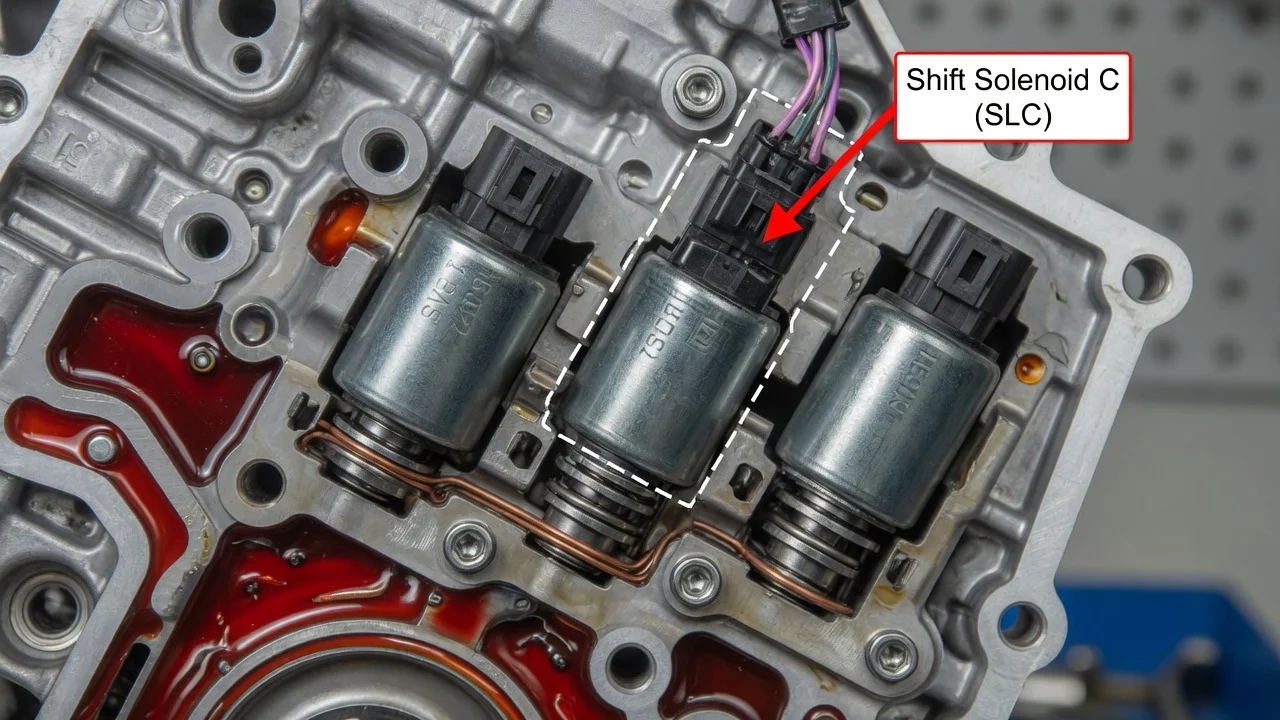
If your 2006 Lexus GS300 shifts harshly, flares between gears or stores a transmission code, a shift solenoid is a common suspect. Identifying the right one takes more than a symptom. This guide explains where the solenoids sit and how they control the six-speed automatic. It also covers which details of your car change the diagnosis and parts choice, and what you can check before committing to a repair.
Short answer: which solenoid and where it lives
The 2006 GS300 uses an Aisin-built six-speed electronically controlled automatic, commonly identified as the A960E in rear-wheel-drive cars. All-wheel-drive models use a related variant. The shift solenoids are not a single part. Several electrically controlled solenoids are bolted to the valve body inside the transmission oil pan, and each one is assigned to a specific clutch or brake circuit. There are also separate solenoids for line pressure and torque converter lock-up. Identifying the faulty shift solenoid therefore means matching a stored diagnostic code or a confirmed circuit fault to one specific solenoid position. Buying a generic replacement and hoping it fits the problem is not a reliable approach.
Three identifiers are reliable: the stored trouble code with its description, the transmission model, and the part number for the solenoid at that position. The transmission model appears on the case identification tag or in the vehicle's build data. A symptom alone, such as a harsh 2-3 shift, does not prove which solenoid has failed, or that a solenoid has failed at all.
How shift solenoids control the six-speed
The control module reads vehicle speed, throttle position, engine load and fluid temperature. It then commands the solenoids to route hydraulic pressure through the valve body. Most of the shift solenoids on this transmission are linear types. Instead of simply switching on or off, they vary pressure in proportion to the electrical current they receive. This lets the module apply one clutch while releasing another in a smoothly overlapped clutch-to-clutch shift. If a solenoid sticks, wears internally or loses its electrical signal, the overlap goes wrong. The driver feels this as a flare, a bump, a delayed engagement or a missing gear.
Pressure control depends on clean fluid passing through fine passages and solenoid screens, so fluid condition and solenoid behavior are closely linked. Debris from clutch wear can make a mechanically sound solenoid act faulty. A fault in the harness or connector produces the same circuit code as a failed coil. If the module detects a serious fault, the transmission may enter a fail-safe mode that holds a limited range of gears to protect itself. This is why some owners describe the car as stuck in one gear.
What changes the answer for your car
Confirm the drivetrain first. Rear-wheel-drive and all-wheel-drive GS300 models do not use an identical transmission type. Valve body components, solenoid part numbers and service steps can differ between them. Production date can matter as well, because parts may be superseded during a model run. For fitment, the VIN and the part number on the existing solenoid are better guides than the model year alone. If an aftermarket listing says a solenoid fits every GS model of a given year, verify that claim against these details.
The type of fault also changes the repair path. A code that describes an electrical circuit problem points first toward wiring, connectors and resistance checks. A code that describes a performance or stuck condition suggests a mechanical or hydraulic cause, which may involve the solenoid, the valve body or internal clutch wear. Service history matters too. A transmission with old or incorrect fluid, previous overheating or high mileage under towing is more likely to have contamination or clutch wear, and a new solenoid will not fix either. Codes in other systems, low battery voltage or poor grounds can also cause erratic shift behavior.
What the owner can do
Start by reading codes with a scan tool that can access transmission data, not only generic engine codes. Record the exact code and its description, any freeze-frame data, and whether the fault is current or historical. A manufacturer-level tool can also show commanded gear, solenoid status and fluid temperature. On many vehicles it can run active tests of individual solenoids, which gives far stronger evidence than a generic reader. Note when the problem occurs: cold or hot, light or heavy throttle, upshift or downshift, and which gear change.
Check fluid condition and level using the correct procedure. This transmission has no conventional dipstick. The level is checked through a fill and overflow plug with the engine running and the fluid within a temperature window defined by the factory procedure. The fluid specification is Toyota ATF WS, and using a different type can itself cause shift complaints. Dark, burnt-smelling fluid or heavy debris on the pan magnet suggests internal wear, which should be evaluated before any parts are replaced. Inspect the transmission wiring harness and the connector at the case for damage, corrosion or oil intrusion.
If the evidence points to a specific solenoid, there are generally three repair options. You can replace that solenoid alone, or replace the complete solenoid set while the pan is off. If the bores are worn or several faults appear together, replacing the valve body assembly may make more sense. Reaching a solenoid requires removing the oil pan and, depending on its position, other valve body components. The job finishes with a correct refill and level check. Some repairs may also require clearing learned shift values afterward, which needs capable diagnostic equipment.
Limitations and the next step
Without the stored codes, live data and a fluid inspection, nobody can say with certainty which solenoid has failed. The same symptom can come from wiring, fluid, the valve body, internal clutches or the control module. Take solenoid positions, connector pin assignments, resistance specifications and torque values from the factory repair information for your exact vehicle, matched by VIN and drivetrain. Before ordering parts, see a transmission specialist with manufacturer-level diagnostics if the codes are inconclusive, the car is in fail-safe mode, or the fluid shows signs of internal wear.