2006 Ford F-150 Brake Fluid Level Sensor: Identification and Location
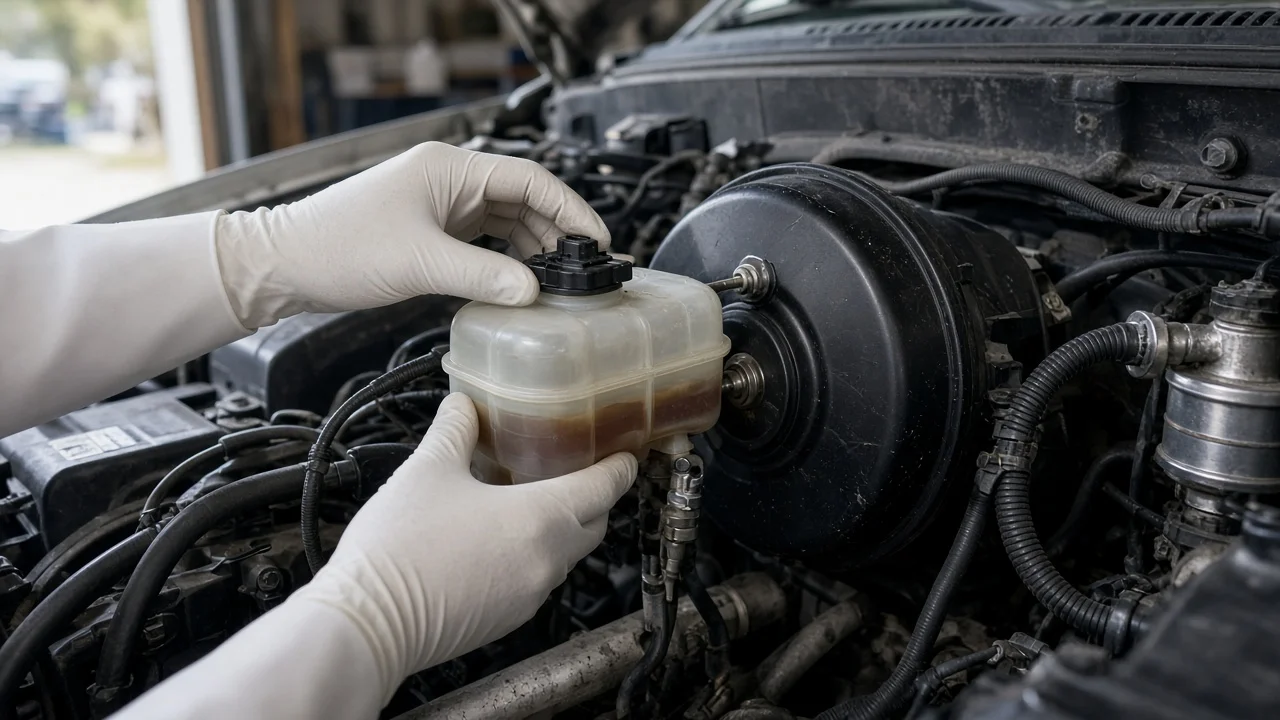
On a 2006 Ford F-150, the brake fluid level sensor is a small float-operated switch. It is built into or plugged into the plastic master cylinder reservoir. When the fluid drops too low, it signals the instrument cluster, which turns on the red BRAKE warning lamp. The 2004–2008 trucks of this generation use the same basic layout, so owners of a 2005, 2007 or 2008 F-150 will find the sensor in the same place. This guide covers how to identify it, what its warning means and what to check before replacing anything.
Where the sensor is on a 2006 F-150
Open the hood and stand at the driver side. The brake master cylinder sits at the back of the engine compartment, bolted to the front of the large round vacuum brake booster on the firewall. The translucent plastic reservoir on top of the master cylinder holds the brake fluid and has MIN and MAX marks molded into its side. The level sensor is part of this reservoir assembly. Look for a small electrical connector plugged into the reservoir body, usually low on its side. That connector and the switch body it attaches to make up the sensor.
Some replacement parts supply the switch as a separate piece that pushes or clips into the reservoir. Others sell it only as part of a complete reservoir. Which version fits depends on the part originally installed, so confirm vehicle fitment by VIN or compare against the old part before ordering. Don't confuse the sensor with the brake lines leaving the master cylinder or with the ABS hydraulic unit, which has its own wiring and is mounted elsewhere.
How the low fluid warning works
A float rides on the fluid inside the reservoir, and a small magnet in the float operates a reed switch in the sensor. When the level falls below a set point, the switch changes state and the cluster lights the red BRAKE lamp. The sensor does not measure how much fluid is left or how worn the brakes are. It only reports whether the level is above or below a threshold.
The fluid level drops for two main reasons. The first is pad wear. As brake pads wear, the caliper pistons move outward to follow the thinning friction material, and fluid from the reservoir fills the space behind them. A gradual fall from MAX toward MIN over the life of a set of pads is normal. The second is a leak. A faster drop, or a level below MIN while the pads still have plenty of material, points to a leak at a caliper, brake line, hose or the master cylinder itself.
What changes the answer
The red BRAKE lamp is shared with the parking brake. If the lamp stays on with a full reservoir, the cause may be a parking brake that is not fully released or a faulty parking brake switch. The amber ABS lamp belongs to a separate system. If both lamps come on together, a hydraulic or ABS fault is possible, and that needs a scan tool diagnosis rather than a sensor swap.
Model year matters at the edges of this range. The 2004 F-150 Heritage carried over the previous-generation design, and 2009 and later trucks use different parts. Engine, drivetrain and trim can also change reservoir part numbers, so match parts to your VIN. Recent brake work changes the reading too. Fitting new pads pushes the caliper pistons back and raises the reservoir level, so a reservoir topped up to MAX on worn pads may overflow during a pad replacement. A lamp that flickers only in turns or hard stops usually means the level is close to MIN and the fluid is moving away from the float.
Checking the sensor and the fluid yourself
Park on level ground with the engine off. Clean the cap and the top of the reservoir before opening it so dirt cannot fall in. Note where the fluid sits relative to the MIN and MAX marks and look at its color. Dark or cloudy fluid is old and has absorbed moisture. Confirm the parking brake is fully released and see whether the lamp changes.
If the level is low, inspect the brakes before adding fluid. Check the inner and outer pads at each wheel and compare the remaining friction material with the wear limits in the service information. Look at the brake rotors for deep scoring or a raised lip. Look for wet spots on the inside of each wheel, around each caliper, along the lines and hoses, and at the joint between the master cylinder and the booster. Then top up only to MAX with the fluid type shown on the cap. These trucks were specified for DOT 3 brake fluid. Never add silicone-based DOT 5.
If the level is correct and the lamp stays on with the parking brake released, inspect the sensor connector for corrosion, a broken locking tab or damaged wires. Unplugging the connector with the ignition on can help narrow down the fault. Whether the lamp should then go out or come on depends on the circuit design, so check the expected result in a wiring diagram for your truck before drawing conclusions.
Replacing the sensor
For a separate plug-in sensor, replacement is usually simple. Disconnect the wiring, release the retainer and remove the switch from the reservoir, then fit the new one with its seal. If the sensor is integrated, the reservoir has to come off the master cylinder. That disturbs the grommets and can let air into the system. Any job that opens the hydraulic system or lets the reservoir run dry may require bleeding the brakes. On ABS-equipped trucks, follow the bleeding procedure in the service information for your vehicle.
Limitations and when to get professional help
This guide describes the general layout of the 2004–2008 F-150. Connectors, part numbers and test values can differ between builds. Use the service manual or a VIN-based parts lookup for exact parts, wiring, pad and rotor wear limits, and bleeding procedures.
Stop driving and arrange professional service if you notice any of these signs: the pedal feels soft or sinks, pedal travel increases, the truck pulls when braking, fluid is visibly leaking, the level keeps dropping after topping up, or the red BRAKE and amber ABS lamps are on together. A low fluid warning can be the first sign of a failing hydraulic system. Replacing the sensor does not fix the condition it was reporting.