2006 Dodge Ram 1500 4WD Actuator Fitment: What to Match Before You Buy
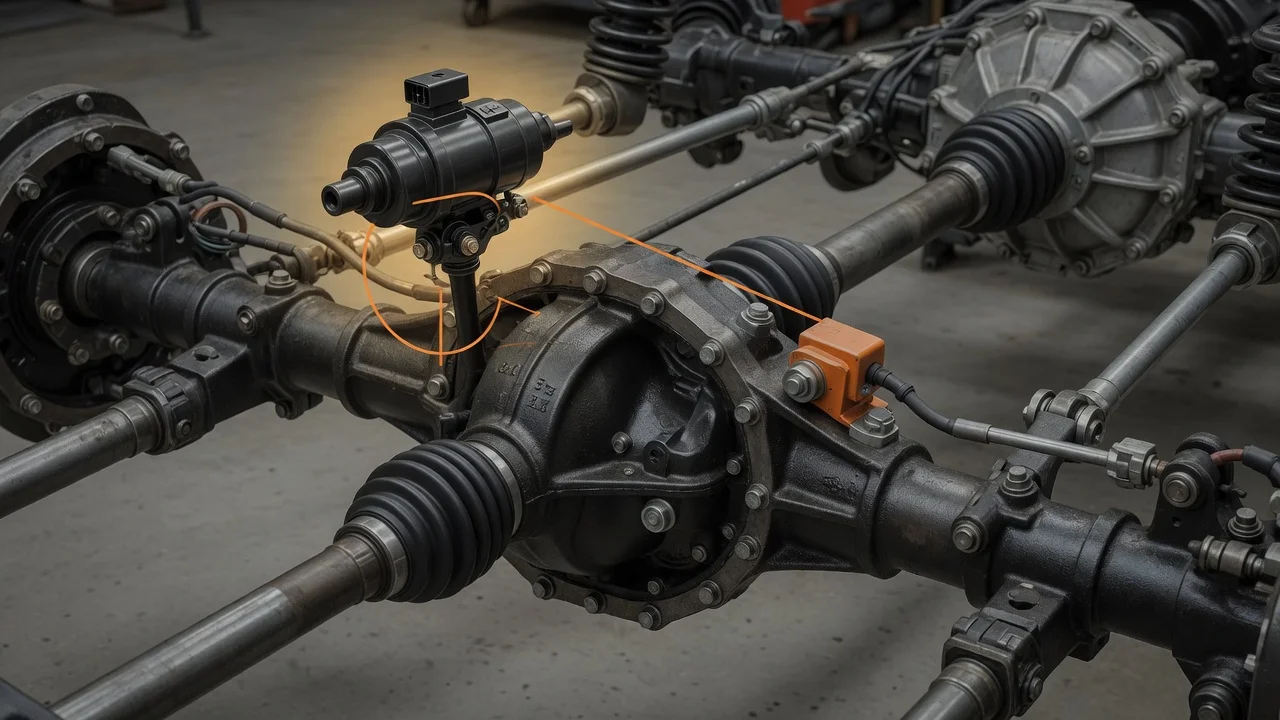
Buying a 4WD actuator for a 2006 Dodge Ram 1500 is easier once you know which actuator the truck needs and which details of your vehicle configuration decide fitment. The term can mean the front axle disconnect unit on the front differential. On trucks with a dash-mounted 4WD selector, it can also mean the shift motor on the transfer case. This guide explains how to tell them apart, what to match, and how to confirm the part before you order.
Which 4WD Actuator Fits a 2006 Ram 1500
A replacement fits when it matches the actuator your truck already has, and the model year alone does not guarantee that. On a 4WD 2006 Ram 1500, most owners mean the front axle disconnect actuator. This electric unit on the front axle couples and uncouples a front axle shaft. Parts for this truck are usually listed by model and drive type, and sometimes by transfer case or production date. Treat a listing as a starting point, not proof. To confirm fitment, use the part number on the original actuator or a parts lookup tied to your VIN.
Two qualifications matter. First, an actuator listed for a Ram 2500 or 3500 of the same year will not fit by default, because the heavy-duty trucks use a different front axle design. Second, if your truck has an electronic shift transfer case, its shift motor may also be called an actuator. A new axle actuator will not fix a fault in the transfer case motor, and a new transfer case motor will not fix a failed axle actuator.
How the Front Axle Actuator Engages 4WD
When you select 4WD, the transfer case starts sending torque to the front driveshaft. On a truck with an axle disconnect, that alone does not drive the front wheels. One front axle shaft is split, and a sliding collar inside the axle housing must join the two halves. When 4WD is selected, the actuator receives a signal and moves a plunger or shift fork that slides the collar into engagement. Shifting back to 2WD reverses the motion. The front wheels then stop turning part of the front driveline, which reduces drag and wear in everyday driving.
The actuator only moves a collar, so it depends on everything around it: a sound power supply and ground, an intact connector, a shift fork that moves freely, and internal splines that can line up. If the splines are not aligned, the collar may engage only after the truck rolls a short distance. Owners usually start looking at this part when 4WD will not engage, the 4WD indicator behaves abnormally, or the front axle grinds in 4WD. The same symptoms can come from wiring, the selector switch or the transfer case.
Configuration Details That Change Fitment
Start with drive type and model. A two-wheel-drive Ram 1500 has no front axle actuator, and the heavy-duty models are a separate parts category. Axle parts are often not tied to cab or bed style, but if a listing splits by body style, follow it. Engine choice can matter when a catalog groups trucks by drivetrain package. The transfer case type, manual lever or electronic shift, affects which electrical 4WD components the truck uses.
Production date is another variable. Manufacturers sometimes revise a part during a model year, so a truck built early in production can differ from one built late, even though both are sold as 2006 models. The build date is on the door jamb label, and the VIN identifies the exact build. Also compare the physical details of the old actuator: connector shape and pin count, mounting bolt pattern, plunger length, and whether it seals with a gasket or an O-ring. Aftermarket and remanufactured units are often designed to cover several applications, so check these features directly instead of relying on product photos.
Operating conditions affect how long a part lasts, not whether it fits. Trucks driven through water, road salt or mud see more corrosion at the connector and seal, and that may be why the original failed. Address the cause during installation, or the new unit may meet the same fate.
Checks Before and After Buying
Before ordering, confirm that the actuator is the failed component. 1) Check the 4WD-related fuses listed in the owner's manual. 2) Inspect the actuator connector and nearby harness for corrosion, green deposits, melted insulation, or wiring rubbed through against the axle or exhaust. 3) With 4WD selected, have a helper listen for the actuator moving. 4) Read 4WD system codes with a capable scan tool to narrow down the fault. A technician can also check whether the front driveshaft is driven in 4WD. If it is not, the problem lies upstream at the transfer case or its controls, not at the axle actuator.
Once the actuator is confirmed as the fault, remove the old unit and read its part number before you order. During installation: 1) Clean the mounting surface and use the seal supplied with the replacement. 2) Tighten the fasteners to the manufacturer specifications in the service manual rather than guessing. 3) Protect the connector as the service procedure recommends, and route the harness away from heat and moving parts. 4) If fluid was lost while the actuator was out, refill the front axle with the specified lubricant. Afterward, test engagement at low speed on a loose or slippery surface. Record the repair in the service history so future diagnosis has a reference point. Front axle and transfer case fluid service follow the maintenance schedule, while the actuator is normally replaced only when inspection shows it has failed.
Limitations and When to Get Help
This guide cannot confirm a specific part number for your truck, because fitment depends on build details that only the VIN, the original part label or a dealer parts catalog can settle. Listings that cover many years and models may be accurate, but treat them as claims to verify. If the truck has been modified, for example with a lift kit, aftermarket axle components or a swapped transfer case, the original catalog data may no longer describe it.
Get professional help in any of these cases: a new actuator is installed but 4WD still will not engage, codes point to the transfer case controls or the selector, the front driveshaft is not driven, or grinding suggests internal axle damage. A shop with dealer-level diagnostic software may be able to command the actuator and test its circuit directly. Your next step is to find your VIN and the number on the old actuator, and match both before you buy.