Identifying a 2006 Dodge Dakota Transmission Shift Solenoid
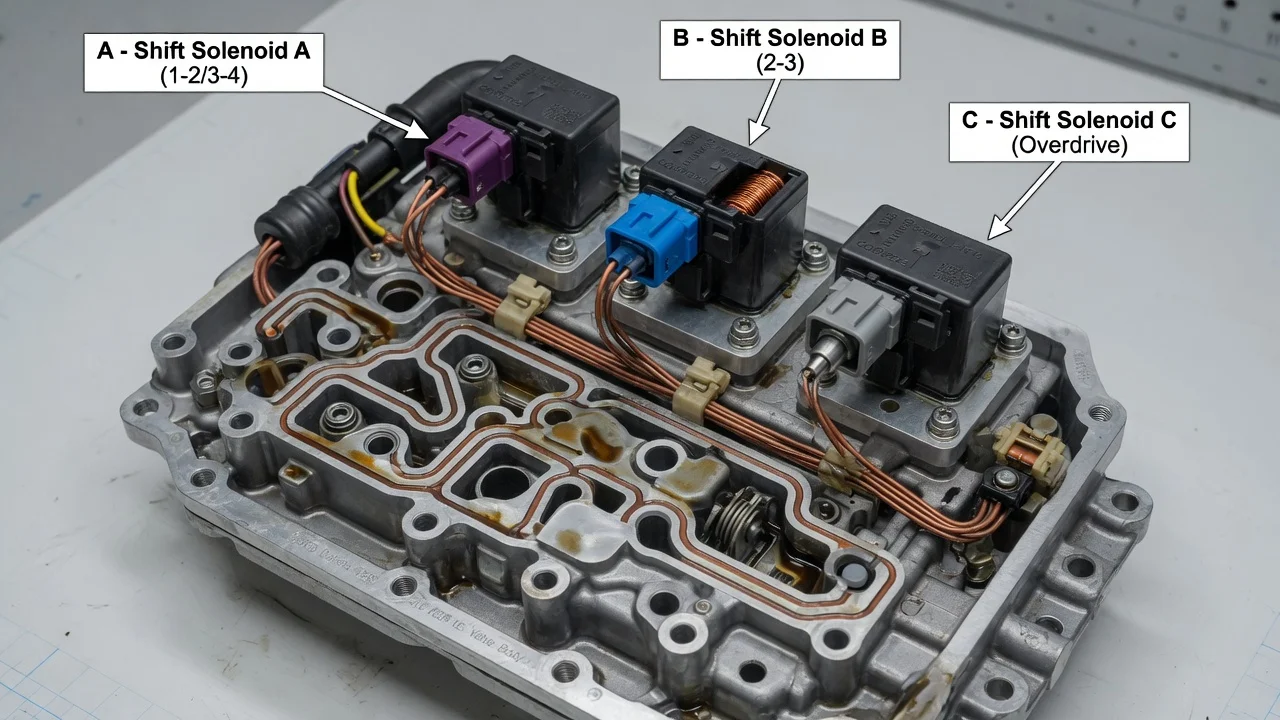
If your 2006 Dakota is shifting harshly, refusing to upshift or stuck in one gear, a shift solenoid is a common suspect. The right part depends on which transmission the truck has. These automatics also don't use a single standalone shift solenoid the way older designs did. This guide explains how to identify the correct solenoid hardware for your truck. It also covers what the symptoms and codes can and cannot tell you, and what to check before spending money on parts.
The short answer
A 2006 Dodge Dakota with an automatic transmission does not have one generic shift solenoid. The electronically controlled automatics used in this generation group several solenoids together with pressure switches. The result is a single solenoid and pressure switch assembly, often called a solenoid pack. That assembly is normally serviced as a complete unit rather than one solenoid at a time. So identifying your shift solenoid really means identifying which transmission you have and then matching the solenoid assembly made for it.
The engine is the first clue. Trucks with the 3.7-liter V6 automatic were generally paired with the 42RLE four-speed. Trucks with the 4.7-liter V8 used a unit from the RFE family, either the 45RFE or the 545RFE. Each of these uses a different solenoid assembly, so they are not interchangeable. If your Dakota has a manual transmission, it has no shift solenoids at all, and shifting problems point elsewhere.
How the solenoid assembly controls shifting
In these transmissions, the transmission control module decides when to shift. On many trucks of this era, that module is integrated into the main powertrain controller. It bases its decisions on vehicle speed, throttle position, engine load and other inputs. It then energizes specific solenoids in the assembly. Each solenoid opens or closes a hydraulic passage in the valve body, which routes pressurized fluid to apply or release a particular clutch. Different combinations of applied clutches produce the different gear ratios.
The pressure switches built into the same assembly report back whether hydraulic pressure actually arrived where it was commanded. This feedback is why the controller can set fault codes when a clutch circuit does not respond as expected. When the controller detects a serious electrical or hydraulic fault, it typically puts the transmission into a limp-in mode. In that mode the transmission holds a single fixed gear, often second, so the truck can still be driven slowly to a shop. A truck stuck in one gear with the check engine light on is a classic sign that the controller has logged a fault. It does not by itself prove the solenoid assembly has failed.
What changes the answer for your truck
Transmission type is the biggest variable. The 42RLE, 45RFE and 545RFE differ in internal layout and in the number of solenoids. They also differ in where the assembly sits on the transmission and how you access it. On some designs the assembly is reached by removing the oil pan, while others mount it differently. Confirm the location in service information for your exact unit before you plan the job.
Fitment can also vary within a model year. Parts catalogs may split listings by engine, drivetrain, production date or transmission revision. The most reliable ways to confirm fitment are a VIN-based parts lookup through a dealer parts counter or a reputable parts supplier, or the identification tag on the transmission case. Choosing a part only by year and model, without the transmission type, is a common way to end up with the wrong assembly.
Service history matters too. A transmission that has been rebuilt, swapped from another vehicle or reprogrammed may not match what the original build data suggests. Fluid condition also changes the picture. These transmissions are specified for ATF+4. The wrong fluid, or fluid that is low, burnt or contaminated with debris, can cause shift behavior that looks like a solenoid problem when the real issue is hydraulic or mechanical.
What you can check before buying parts
Start by reading the diagnostic codes with a scan tool that can access transmission data, not just generic engine codes. Codes in the P07xx range relate to the transmission. They point toward circuits, pressure switches, ratio errors or specific solenoid functions. Write down every stored code before clearing anything, because the combination of codes is more useful than any single one. A code that names a solenoid circuit can mean a failed solenoid. It can also mean a damaged connector, a chafed wire or a controller fault.
Next, check the fluid level and condition using the correct procedure for your transmission. That usually means the engine running, the transmission at operating temperature and the truck on level ground. Look for a dark color, a burnt smell or visible particles. Inspect the transmission wiring harness and connectors for corrosion, loose pins or heat damage. These checks cost little and can rule out common causes of erratic shifting.
Pay attention to when the shift behavior changes. Note whether the problem appears only when the transmission is cold or hot. Note whether it affects one particular shift or all of them, and whether it comes and goes with bumps or weather. That pattern helps a technician separate an electrical fault from a worn clutch or a valve body problem. If the evidence does point to the solenoid assembly, your repair options include a new assembly, a quality remanufactured unit or professional replacement. Some of these transmissions may need a quick learn or adaptation procedure with a capable scan tool after the work.
Limitations and when to get help
Symptoms alone cannot confirm a failed solenoid. Harsh shifts, slipping, delayed engagement and limp-in mode can all come from low fluid, worn clutches, a sticking valve, wiring faults or controller problems. Replacing the solenoid assembly without testing may not fix the truck. It can also delay the repair while internal wear gets worse. Proper testing involves checking solenoid resistance and circuit integrity and watching live transmission data during a road test. Some steps need specialized scan tool functions.
For a definitive answer, use VIN-specific service information for your Dakota and its transmission. If the codes are unclear, if the fluid shows signs of internal damage, or if the truck has been in limp-in mode repeatedly, have a transmission specialist diagnose it. That costs far less than replacing parts on guesswork, and it protects a transmission that may still be saved with a targeted repair.