2006 Chrysler 300 Shift Lock Release: How to Get Out of Park
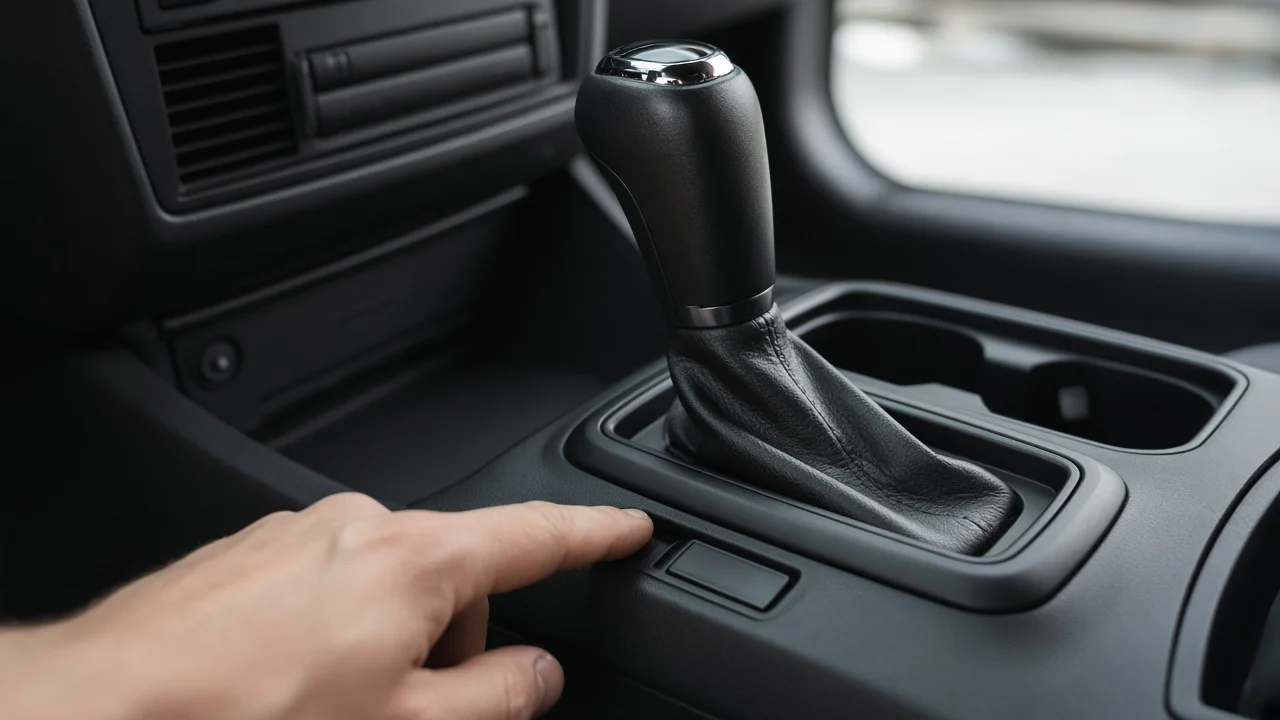
If the shifter on a 2006 Chrysler 300 will not leave Park even with the brake pedal pressed, the car has a manual shift lock release for exactly this situation. Using it moves the transmission into Neutral so the car can be pushed, repositioned or loaded for towing. It does not fix whatever kept the lock engaged, so treat the override as a temporary step and follow it with diagnosis.
The short answer
The 2006 300 uses a brake transmission shift interlock. A solenoid in the shifter assembly holds the lever in Park until the ignition is on and the brake pedal is pressed. When that release does not happen, you can bypass it mechanically. The general sequence is to set the parking brake firmly, turn the ignition to the On or Run position, and press and hold the brake pedal. Then locate the small access cover or slot in the console trim next to the shifter, remove the cover carefully with a small flat tool, and press down on the release inside with a key or thin screwdriver while moving the shifter from Park to Neutral. The exact location and shape of the access point can differ with trim and console design, so confirm it in the owner's manual for your car rather than prying at random trim pieces.
Two qualifications matter. If the battery is dead, the override still lets you select Neutral for pushing or towing, but the car will not start until the electrical problem is solved. And once the transmission is in Neutral the car can roll freely, so keep the parking brake applied until you are ready to move it under control.
How the shift interlock works
When you press the brake pedal, the brake lamp switch closes. That signal is used to energize the interlock solenoid in the shifter, which pulls a locking pin or plate out of the way so the lever can move. The same switch also turns on the brake lights, which is why the two systems are often connected when something goes wrong. A related key interlock prevents the ignition key from being removed unless the shifter is in Park. The whole arrangement depends on electrical power, a working pedal signal and a solenoid that physically moves. The manual override simply pushes the locking piece aside by hand, skipping all three.
The shift lock lives in the shifter assembly, not inside the transmission. The transmission has its own parking pawl that locks the output. If the car is parked on a slope and its weight is resting on that pawl, the lever can feel stuck even when the interlock has released. In that case the cause is mechanical load, not a failed solenoid. Pressing the brake firmly and applying the parking brake before shifting usually takes the load off.
What changes the answer
The 2006 Chrysler 300 was offered with more than one automatic transmission type. Many V6 cars use a four-speed automatic. The V8, SRT8 and all-wheel-drive versions commonly use a five-speed automatic with Autostick. The interlock principle is the same on both, but the shifter assembly, console bezel and override access can differ in detail. If you end up replacing shifter parts, confirm fitment by VIN rather than by model year alone, because engine, drivetrain and transmission all affect which part is correct.
Operating conditions also change what the stuck shifter means. A weak or dead battery, a blown fuse, a failing brake lamp switch, a liquid spill in the console, a sticking solenoid, or the parked-on-a-hill effect described above can all produce the same symptom: a lever that will not come out of Park. The symptom by itself does not identify the failed part, so check the simple things before buying components.
What the owner can do
Start with observations that need no tools. Have someone stand behind the car while you press the brake pedal. If the brake lights do not come on, the brake lamp switch, its fuse or its wiring becomes a strong suspect, though not a confirmed fault until tested. Next, turn the ignition on and look at the instrument cluster. Dim or flickering lights point toward the battery or charging system. With the ignition on, press and release the brake while listening near the shifter. A faint click suggests the solenoid is receiving a signal. Silence suggests the signal or power is not reaching it. Also look for sticky residue or spilled drinks around the shifter, which can jam the mechanism.
Decide carefully before driving after an override. If the brake lights are not working, the car is unsafe to drive and the brake light problem should be repaired first. If the brake lights work and only the shifter is affected, a short trip home may be reasonable, but you may need the override again each time you park. A scan tool that reads body and powertrain modules may show diagnostic codes related to the brake switch or shifter circuit. A basic engine code reader may not see them, so a clean scan from a simple tool does not rule out a problem.
If the override does not free the lever, do not force it. Arrange a flatbed tow, particularly for all-wheel-drive cars, and follow the towing guidance in the owner's manual for your drivetrain.
Common repair options
Repair options follow from what the checks reveal. Brake light failure combined with a locked shifter often leads to testing and, if needed, replacing or adjusting the brake lamp switch, along with checking the related fuse. Electrical weakness points to battery and charging system testing. If the switch and power are good but the solenoid does not respond, the shifter interlock solenoid or the shifter assembly may need attention. If the lever moves but the gear indicated on the dash does not match what the transmission is doing, that is a separate issue involving shifter linkage or adjustment rather than the shift lock.
The shift lock itself has nothing to do with transmission fluid. If you also notice changes in shift behavior, such as harsh engagement, slipping or delayed gear changes, that calls for a separate transmission diagnosis. That work should use the correct fluid specification for your specific transmission and take the car's service history into account.
Limitations and next step
The steps here describe how the system generally works on this model. They cannot account for the condition of your particular car, previous repairs or aftermarket changes to the console or wiring. The owner's manual remains the reference for the exact override location and towing instructions. If the override will not release the lever, if the brake lights and shifter problems appear together and the cause is not obvious, or if the transmission behaves abnormally after you get it out of Park, have a technician with a capable scan tool and access to vehicle-specific wiring information inspect it. Telling them which checks you have already done, what you heard and when the problem started will shorten the diagnosis.