2006 Chevy Impala Pressure Control Solenoid: Identification and Location
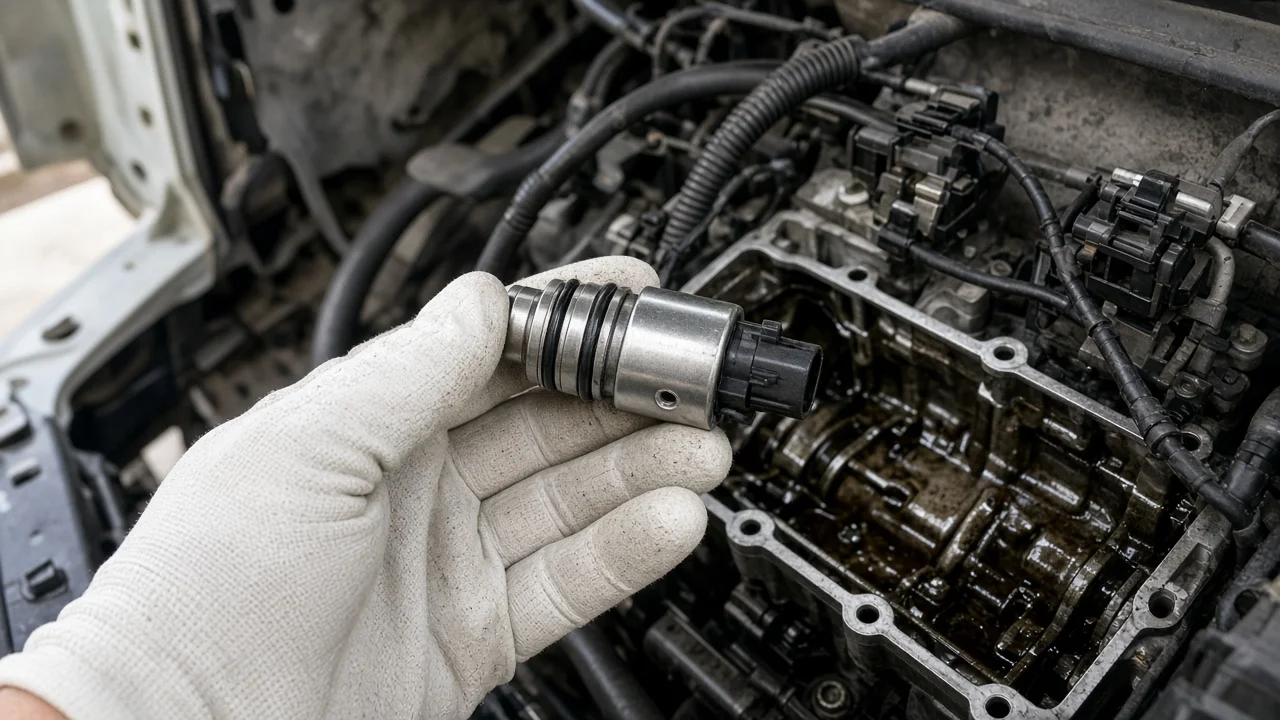
On a 2006 Chevrolet Impala, the transmission pressure control solenoid is part of the automatic transaxle's valve body. It is not a separate component bolted to the outside of the case. Each engine offered in the Impala that year was paired with a version of GM's 4T65-E four-speed transaxle, so the general location is the same across trims. Access, parts fitment and diagnosis still need care before anything is replaced.
Where the pressure control solenoid sits
The pressure control solenoid, often called the PC solenoid or electronic pressure control solenoid, is mounted on the valve body behind the transaxle side cover. In the Impala's transverse layout, that cover faces the driver's side of the car. It sits low and behind the left front wheel, near the frame rail and subframe. A bracket or retainer holds the solenoid in place. It plugs into the internal wiring harness that also serves the shift solenoids and the torque converter clutch solenoid, and that harness leaves the case through one main electrical connector. You cannot see or remove the solenoid without taking the side cover off, and on this platform the cover is hard to reach.
The pressure control solenoid is a variable force type that the computer controls in fine steps. The shift solenoids, by contrast, simply switch on and off. It usually looks different from the shift solenoids and is not interchangeable with them. Replacement parts are matched to the transaxle family and sometimes to a specific variant. Before ordering, check the transaxle identification tag on the case or the transmission option code on the vehicle's service parts identification label. That confirms fitment, which a parts catalog lookup by model year alone may not.
How the solenoid controls line pressure
On this Impala, the powertrain control module manages the transmission. It changes the electrical current sent to the pressure control solenoid based on throttle position, engine load, vehicle speed and fluid temperature. The solenoid produces a signal pressure that acts on the pressure regulator valve, which raises or lowers main line pressure. Line pressure determines how firmly the clutches and bands apply during each shift and while holding a gear. On this design, more current generally means lower line pressure. With no current, the system defaults to maximum pressure. That fail-safe keeps the clutches from slipping, but it makes engagements and shifts noticeably firm.
Because the solenoid only regulates pressure the pump has already produced, a pressure complaint is not automatically a solenoid fault. A worn pump, a sticking pressure regulator valve, worn valve body bores, leaking seals or low fluid can cause similar shift behavior while the solenoid works normally.
What changes the answer
The 2006 Impala was sold with a 3.5-liter V6, a 3.9-liter V6 and, in the SS, a 5.3-liter V8. Higher-output versions may use a heavy-duty variant of the transaxle. The solenoid sits in the same general place on each, but internal parts, calibration and some components can differ. That is why fitment should be checked against the actual transaxle rather than the model name alone.
Service history also matters. A car with a replacement or rebuilt transaxle may have a different internal parts mix than the original. Fluid specification affects shift quality as well. GM later specified DEXRON-VI as the service fluid for this transaxle family, so confirm the correct fluid in the owner's manual or on the fill marking. Operating conditions are another factor. Some faults appear only when the fluid is hot, only on a cold start, or only under heavy throttle. A test drive that misses those conditions can lead to the wrong conclusion.
What the owner can do
Start by reading diagnostic codes with a scan tool that can access transmission data, not just generic engine codes. A code such as P0748 points to the pressure control solenoid electrical circuit. The fault could still be in the external connector, the internal harness, the solenoid itself or the control module. A capable scan tool can also show commanded solenoid current, fluid temperature and gear state. These readings help connect a symptom to what the computer is actually doing.
Check the fluid level and condition using the procedure in the owner's manual, with the fluid at operating temperature. Note whether it is burnt, dark or contaminated. Record the shift behavior precisely: harsh engagement into drive or reverse, firm upshifts, slipping, flare between gears, or delayed engagement. Note when each one happens. Inspect the external transmission connector for corrosion, bent terminals or damaged wiring. A connector problem is a far simpler repair than anything behind the side cover.
Repair options depend on what testing confirms. A wiring or connector fault can often be fixed without opening the transaxle. Replacing the solenoid with the transaxle in the car means removing the side cover. On this platform, that usually requires supporting the engine and lowering or moving the left side of the subframe or the engine mount to gain clearance. If pressure readings point to mechanical wear, valve body service or a transmission rebuild may be the more appropriate path. Replacing the solenoid on symptoms alone risks spending money without fixing the cause.
Limitations and next step
This overview describes the typical layout and operation of the 4T65-E in a 2006 Impala. It cannot confirm the condition of a particular car. Resistance specifications, torque values, the side cover removal procedure and connector pinouts should come from the factory service information for your exact transaxle. A line pressure test with a gauge, compared with the specified values, is the most direct way to separate a solenoid or electrical fault from a mechanical pressure problem.
If codes point to the solenoid circuit but the connector and wiring check out, or if the symptoms suggest internal wear, a transmission specialist with a capable scan tool and pressure gauges is the sensible next step. Bring them the codes, your notes on when the symptoms occur, and any service history. That information shortens diagnosis and helps avoid unnecessary parts replacement.