Choosing Steering Linkage for a 2006–2008 Dodge Ram 2500
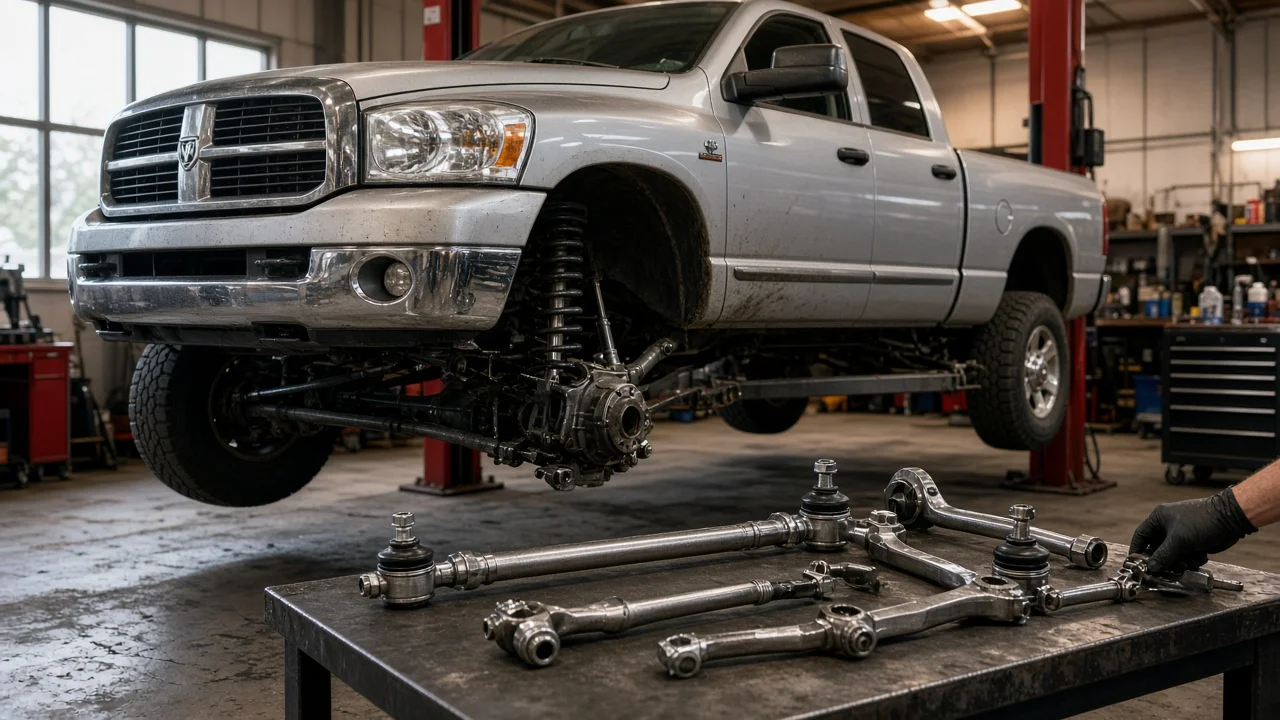
Shopping for steering linkage for a 2006, 2007 or 2008 Dodge Ram 2500 usually starts with a symptom: wander on the highway, an off-center steering wheel, clunks over bumps or a failed inspection. The right parts depend on how your truck is equipped and used, not on the thickest tube in a catalog. This guide covers defining the job, confirming fit, judging features, planning for ownership costs and narrowing a shortlist, so the linkage you buy matches the truck and your plans for it.
Define the job the product must do
Start with how the truck works. A stock-height daily driver that occasionally tows has different needs than a plow truck, a rig on oversized tires or a lifted truck that sees trails. Heavy front-end weight from a diesel, a plow mount or a winch bumper, along with large tires, puts more load on joints and tubes, which is why many owners in those situations look beyond basic replacement parts. For a truck that stays close to factory configuration, a quality factory-style replacement is often the sensible choice.
Next, confirm what is actually worn. With the truck on level ground or properly supported following the vehicle support procedure in the service information, have a helper rock the steering wheel while you watch each joint for movement before the wheels respond. Excess joint play at a tie rod end or drag link end points to linkage, but a worn track bar, ball joints, wheel bearings or steering gear can produce similar wander and clunks. Identifying the real source keeps you from buying a full kit to solve a problem located elsewhere, or tells you that replacing the whole set makes sense on a high-mileage truck.
Check compatibility
Trucks from 2006 through 2008 belong to the same Ram generation, but that does not make every listing interchangeable. Drivetrain matters first: two-wheel-drive and four-wheel-drive trucks use different front-end hardware, so a 2008 Ram 2500 steering linkage listing for one will not necessarily suit the other. Confirm the exact model year, drivetrain and factory configuration, and use your VIN with a parts catalog or dealer parts counter when listings are vague or show multiple options.
Then check the interfaces. The ends must match the tapers at the knuckles and pitman arm, the adjusting sleeves or threaded sections must suit the parts they join, and the steering damper clamp must fit the new tube diameter. Ride height changes the picture: a lift or leveling kit can alter drag link angle and clearance, so a part sold for a stock 2006 Dodge Ram 2500 may not be ideal on a modified truck. Verify clearance to the differential, track bar, wheels and tires through full steering lock and full suspension travel, and confirm whether the design depends on specific mounting points or a matching pitman arm.
Features that affect the choice
The broad split is between factory-style replacements and heavy-duty upgrades. Factory-style parts restore the original layout and usually install with standard tools. Heavy-duty assemblies typically use larger or thicker tubing and larger joints, and some change the steering layout altogether. Conversion-style kits can require modifying or machining components, replacing the pitman arm or relocating the damper, so read the instructions before deciding.
Joint design is a real trade-off. Greaseable ends let you purge contamination during service but need regular attention; sealed ends need no lubrication but cannot be serviced once their boots fail. Adjustable designs make setting toe and centering the steering wheel straightforward, while fixed lengths depend on the rest of the system being correct. Look for concrete information: tube material and dimensions, joint type, boot construction, included hardware, clear installation instructions and specific warranty terms. Labels such as heavy duty, extreme or lifetime are not evidence on their own; a warranty is only as useful as its exclusions and claim process.
Limitations and ownership costs
Plan for a professional wheel alignment after replacing tie rods or a drag link; setting length by measurement only gets you close enough to drive to the shop. Budget for tools you may lack, such as a pitman arm puller or joint separator, and for new cotter pins, nuts or other single-use hardware. Tighten every fastener to the fastener specification in the factory service information or the kit instructions rather than guessing, and follow the manufacturer's guidance on rechecking after initial driving. Greaseable joints add a routine service step, and all joints need periodic boot inspection.
New linkage also has limits. It cannot cure play in the steering gear, a loose track bar, worn ball joints, failing wheel bearings or out-of-balance tires, and a new steering damper can mask loose parts rather than fix them. If a heavy-duty conversion needs a different pitman arm, damper relocation or machining, add those costs and the extra shop time to the comparison, not just the price of the kit.
Build a practical shortlist
Narrow the options with a short checklist. Fitment: the listing names your model year and drivetrain, matches your VIN lookup and suits your current ride height and tire size. Interfaces: ends, threads and tapers match the knuckles and pitman arm, the damper mount fits and nothing requires parts you do not plan to buy. Design: joint type and serviceability fit your maintenance habits, and adjustability suits your alignment needs.
Documentation and cost complete the list. Choose products with clear instructions, stated materials and readable warranty terms, then compare the total cost including alignment, hardware, tools and any machining or damper changes. Finally, confirm that the inspection showed worn linkage rather than another front-end component. Whether you are replacing a single tie rod end on a 2007 or upgrading the full assembly on a lifted 2006, a shortlist built on these points leads to parts that fit, steer predictably and suit how the truck is used.