2006–2007 Dodge Ram 1500 Brake Fluid Level Sensor: Identification and Location
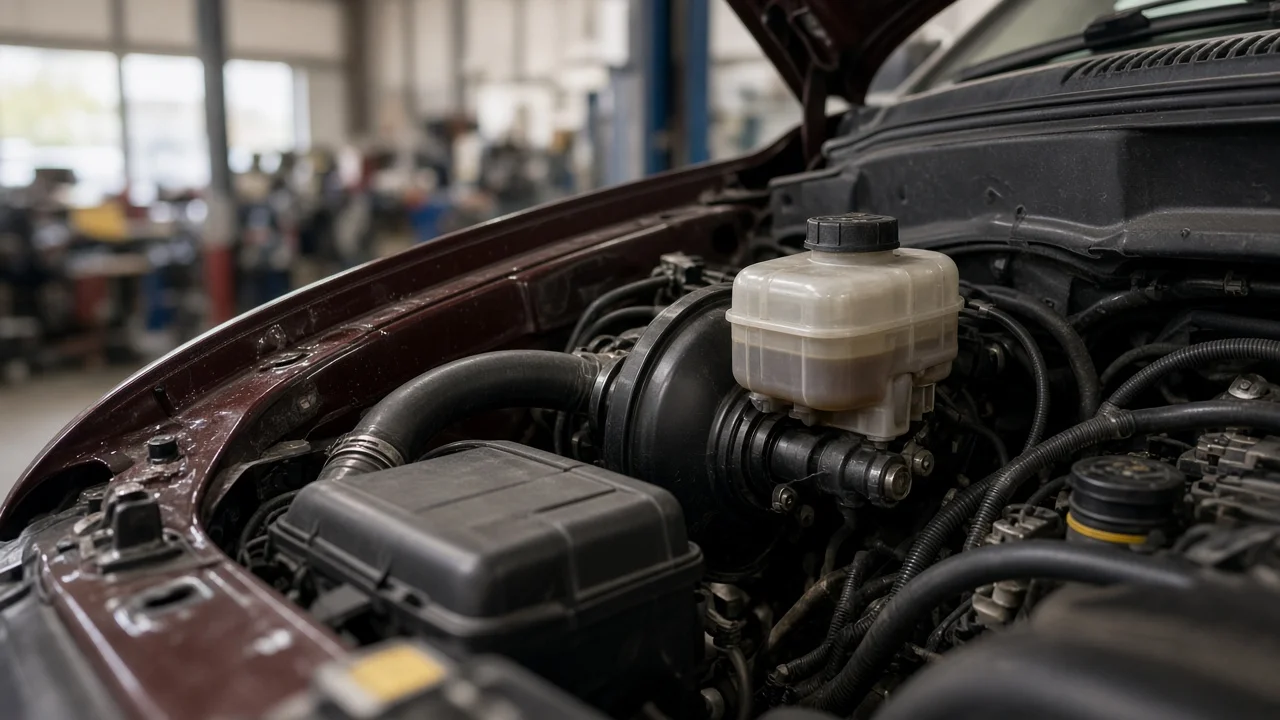
On a 2006 or 2007 Dodge Ram 1500, the brake fluid level sensor is a small electrical switch built into the master cylinder reservoir. Its job is to tell the instrument cluster when fluid has dropped far enough to turn on the red brake warning lamp. This guide covers where to find the sensor, how to recognize it, what it can and cannot detect, and what a low-fluid warning usually says about the rest of the brake system.
Where the sensor is on a 2006–2007 Ram 1500
Open the hood and look at the driver's side rear of the engine compartment, near the firewall. The large round brake booster is mounted there, and the master cylinder bolts to its front. On top of the master cylinder sits a translucent plastic reservoir with MIN and MAX marks molded into its side and a cap on top. The fluid level sensor is mounted in the reservoir body. You can identify it by the small electrical connector plugged into it and the wiring harness branch routed to it. On these trucks the sensor belongs to the reservoir assembly. It is not a separate part somewhere along the brake lines.
Don't confuse it with nearby parts that have similar names. The brake light switch is at the brake pedal arm under the dash. ABS wheel speed sensors are at the wheels or axle. The reservoir cap has no electrical function. The exact position and angle of the level switch and its connector can differ depending on the master cylinder fitted for a given brake configuration. Compare what you see with the service information for your truck's VIN rather than with a photo of a different Ram.
How the brake fluid level sensor works
Most reservoir level switches of this type use a float that rides on the fluid surface and carries a small magnet. When the level falls toward the MIN mark, the float drops near a magnetically operated switch, the switch changes state, and the cluster lights the red BRAKE lamp. It is an on/off signal, not a gauge. It cannot tell you how much fluid remains above the trigger point. It also says nothing about fluid condition, moisture content, or how much friction material is left on the brake pads.
Fluid level is closely linked to brake wear. As the pads wear, the caliper pistons move outward, more brake fluid stays in the calipers, and the reservoir level slowly falls. A gradual drop that matches pad wear is normal. A sudden drop, or a low level while the pads still look thick, points to a leak. Topping up a reservoir that has dropped from wear can also cause trouble later. When new pads go in and the pistons are pushed back, the displaced fluid returns to the reservoir and can overflow.
What changes the answer
A lit red brake lamp does not prove the level sensor has triggered. On the 2006 and 2007 Dodge Ram, the same lamp also warns that the parking brake is applied. Depending on configuration, the brake system can use it to flag other hydraulic or ABS-related conditions. Before blaming the sensor, check the fluid level and the parking brake, and review any other warning lamps that are on at the same time.
Ram 1500 trucks from these years were built with different rear brake setups and ABS arrangements, along with 2WD and 4WD versions and several cab and bed combinations. These differences can change the master cylinder and reservoir part numbers, and so whether a given switch or reservoir fits. Remanufactured or aftermarket master cylinders may come with or without the reservoir and level switch. Ram 2500 and 3500 heavy-duty trucks use different brake hardware, so don't assume their parts interchange with the 1500. Confirm vehicle fitment by VIN before ordering a replacement sensor or reservoir.
What the owner can do
Start with a fluid check. Park on level ground with the engine off and wipe the reservoir and cap clean. Read the level against the MIN and MAX marks through the translucent plastic. If it is near or below MIN, inspect the brakes before adding fluid. Look at pad thickness and the condition of the brake rotors, and check each wheel, caliper, brake hose and line for wetness. Also check where the master cylinder meets the booster. If fluid is needed, use only the type specified on the cap or in the owner's manual, which is normally DOT 3 for this truck. Use a freshly opened container and do not fill above MAX.
If the lamp is on but the fluid is at the correct level, first make sure the parking brake is fully released. Then inspect the connector at the reservoir for a loose fit, corrosion or damaged wires. The lamp should light briefly as a bulb check when the ignition is turned on and then go out. A lamp that stays on with a full reservoir and the parking brake released suggests a stuck or failed switch, a wiring fault, or another brake system condition. The reverse matters too. A low reservoir with no warning lamp means the sensor or its circuit is not doing its job. A technician can test the switch with a meter using the factory procedure. On some reservoirs the switch unclips from the outside, while others may require draining the fluid or replacing the reservoir. Check which applies before you remove anything.
Limitations and when to stop driving
This article describes the typical layout and behavior of the sensor. It does not replace the factory service procedure for your truck. Connector style, switch design, removal steps and part numbers depend on the exact build. Pad wear limits and minimum rotor thickness also come from vehicle-specific service information or the specification marked on the rotor, not from general rules of thumb.
Stop driving and arrange professional service, or a tow if needed, if any of these happen: the brake pedal feels soft or sinks, it travels farther than usual, the truck pulls when braking, fluid is visibly leaking, or the warning lamp comes back on soon after a top-up. Losing brake fluid can lead to loss of hydraulic braking. A brake technician should find and repair the leak, inspect the pads, rotors and calipers, and bleed the system if air may have entered. They should also confirm that the level sensor turns on the warning lamp when it should.