2005 Duramax Glow Plug Control Module Location
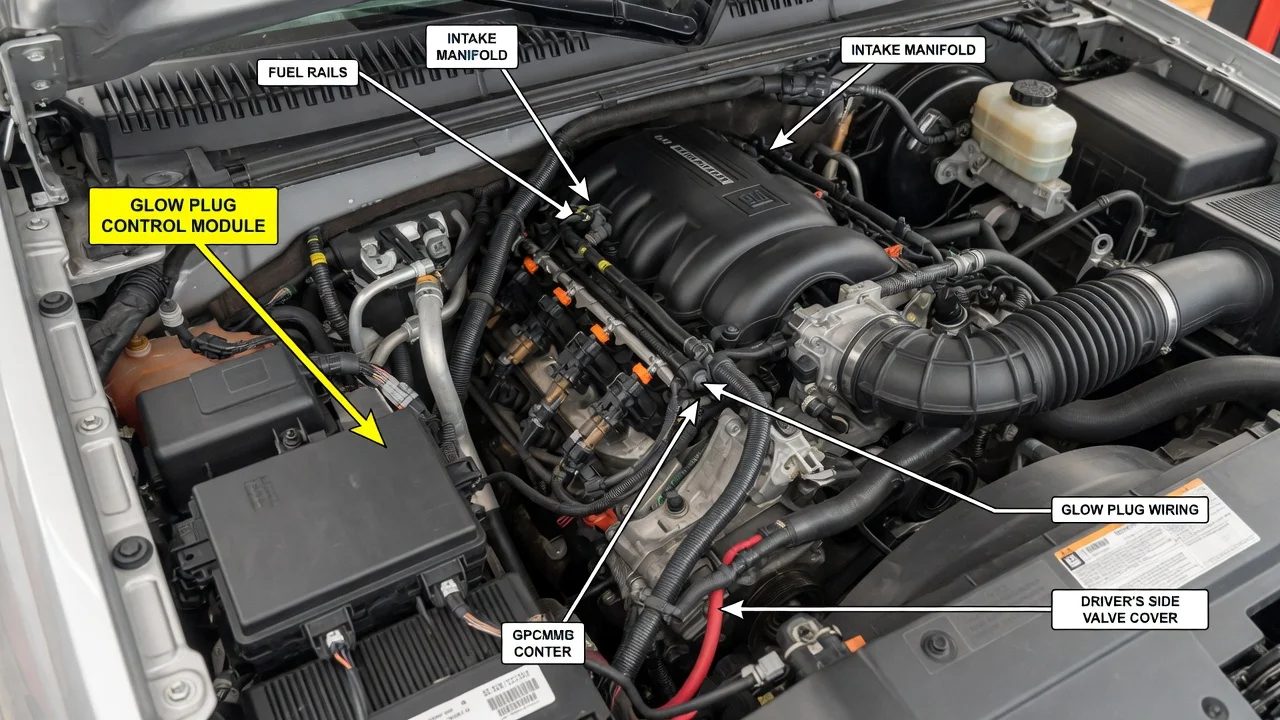
On a 2005 Chevrolet Silverado or GMC Sierra HD with the 6.6L LLY Duramax, the glow plug control module is commonly found low on the passenger-side frame rail near the front of the truck, roughly below the battery area. You will usually reach it from underneath or through the wheel well. This guide covers where to look, what can change that location, and how to tell a glow plug problem from a fuel delivery problem before you buy parts.
Where the module sits on a 2005 Duramax
For the 2005 model year, GM's three-quarter-ton and one-ton pickups used the LLY version of the Duramax 6.6L V8 diesel. On these trucks, the glow plug controller is a small sealed box usually mounted on or next to the right (passenger) frame rail, toward the front and roughly beneath the passenger-side battery. A heavy feed cable from the battery side supplies the current it switches. A multi-wire harness runs from the module to the eight glow plugs in the cylinder heads.
Because the module sits low and far forward, it collects road spray, salt and grime. For a clear view, raise the front of the truck and support it on stands, or remove the inner splash shield. Treat this as the common factory location, not a guarantee. Before you order a part or cut any zip ties, confirm the location in the service information for your exact VIN. Other Duramax generations mount the controller in different places.
How the glow plug system works
A diesel ignites its fuel with compression heat, not a spark. In a cold engine, the cylinder walls absorb much of that heat, so glow plugs pre-warm each combustion chamber. The engine control module decides how long to heat, mainly based on coolant temperature, and commands the glow plug control module. The module then switches high current to the plugs. It can also flag circuit faults so the engine computer sets a code and the wait-to-start lamp behaves differently.
The glow system only helps the fuel spray ignite. It does not create fuel pressure. The high-pressure fuel pump and common rail still have to supply fuel at the correct pressure, and every injector has to atomize it properly. So a cold-weather hard start has two possible causes: not enough heat, or fuel that is not being delivered properly. The module location only matters once the evidence points to the heat side.
What changes the answer
Start by confirming the engine configuration. The model year on the badge does not always settle it, because build date, chassis and engine code determine which Duramax you have. The engine code in the VIN and the RPO code label in the glove box identify an LLY. Medium-duty chassis that used the Duramax, such as Kodiak and TopKick trucks, have a different underhood and frame layout, so the pickup location does not apply to them.
Previous owners also change things. Aftermarket bumpers, winch mounts, lift kits, relocated batteries and non-original replacement controllers can end up on a different bracket or held on with zip ties. If you find an unfamiliar box, trace the large feed wire and the harness heading toward the cylinder heads, because the glow plug controller connects to both. Climate matters too: a weak glow system that goes unnoticed in summer often shows up as long cranking once temperatures drop below freezing.
What the owner can do
Start with observations. Check whether the wait-to-start lamp behaves normally, whether white smoke and a rough idle clear up as the engine warms, and whether any codes are stored. A glow plug circuit code such as P0380, or a related glow plug code, points toward the plugs, the wiring or the controller. A scan tool that can command the glow plugs, used with a clamp-on ammeter on the feed cable, shows whether current actually flows. Compare your readings with the service manual specifications, not with numbers repeated online.
Before you touch the module, disconnect both batteries (these trucks carry two) and let the engine and controller cool. Inspect the connectors for green corrosion, melted terminals or broken locks. Check the harness wherever it runs near exhaust or steering components. You can test individual glow plugs for resistance from the harness side. The plugs themselves are reached through the wheel wells, and removing them from a warm engine reduces the chance of breaking one.
If no codes are stored and the plugs are confirmed to heat, look at the fuel side instead. Common causes of hard starts include a restricted or water-contaminated fuel filter, air entering through a loose filter head or supply line, gelled fuel in winter, and actual fuel pressure that falls short of desired on a scan tool. A visual leak check for wet fittings is fine. Never loosen high-pressure lines or injector fittings to bleed or test them: a common-rail diesel can hold dangerous pressure, and escaping fuel can penetrate skin. Winter-blend fuel and anti-gel treatment can help prevent gelling, but neither repairs a failed glow plug, controller or fuel pump.
Limitations and next step
This guide describes the common factory location and general system behavior. It cannot account for every build variation, repair history or regional option. Wiring diagrams, connector views, test specifications and torque values come from VIN-specific service information, and that information should guide any replacement. Glow plug removal carries real risk on these engines, because a seized plug that snaps can require extraction from the cylinder head.
Take the truck to a diesel-qualified shop in any of these situations: the controller tests good but the system still does not heat, a glow plug breaks during removal, rail pressure or injector balance data looks abnormal, or you see or smell fuel leaking near the engine. These jobs need proper tooling and pressure-safe procedures. A technician can confirm whether the fault is on the heat side, the fuel side or both.