2004 Pontiac Grand Prix Pressure Control Solenoid: Identification and Diagnosis
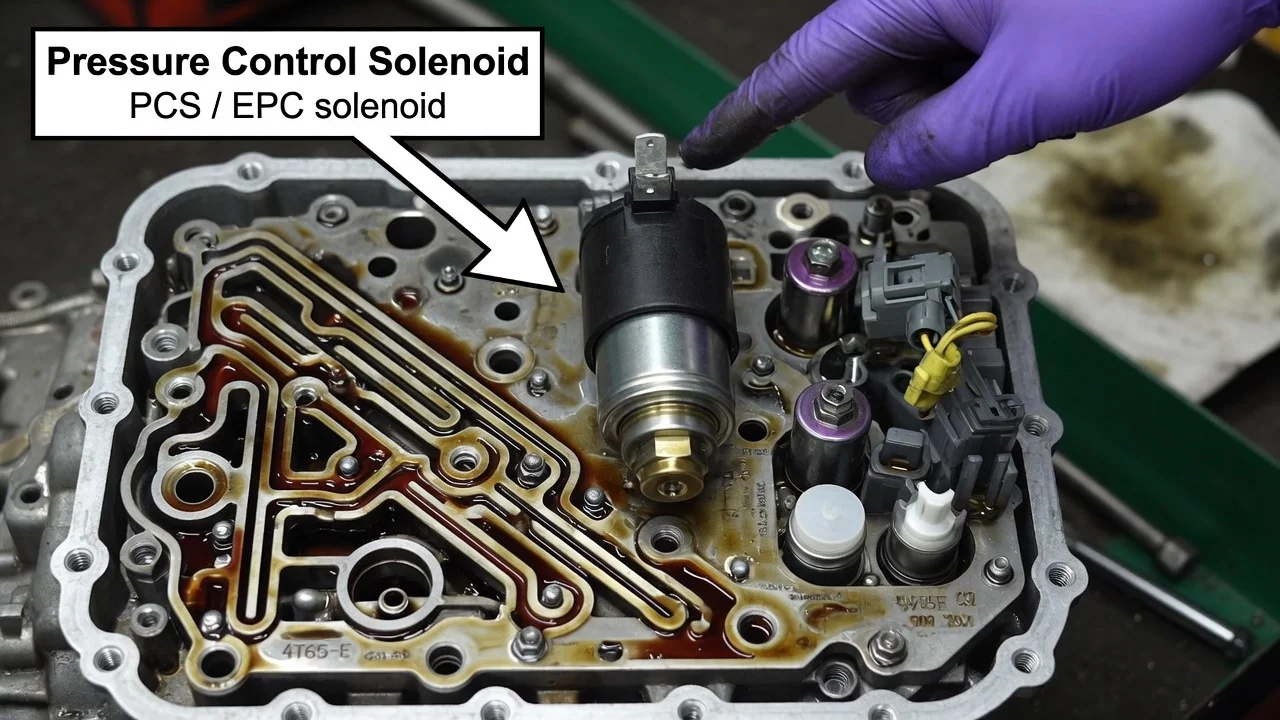
On a 2004 Pontiac Grand Prix, the transmission pressure control solenoid is one of several electrical components mounted on the automatic transaxle's valve body. It sets line pressure, which governs how firmly the clutches apply during each shift. Owners usually go looking for it after harsh or soft shifts or a stored trouble code. This guide explains how to identify the part, how it works, what varies by configuration and what you can reasonably check before replacing anything.
The short answer
The 2004 Grand Prix uses GM's 4T65-E four-speed automatic transaxle, with the supercharged GTP using a heavy-duty version of the same family. The pressure control solenoid, often abbreviated PCS, is an electronically controlled variable force solenoid bolted to the valve body inside the transaxle, behind the side cover on the end of the unit that faces the driver's side of the car. It is not visible from outside. Without disassembly, the only part of its circuit you can reach is the transaxle's external wiring connector and the harness leading to it. The PCS is a separate part from the two shift solenoids and the torque converter clutch solenoid, which sit in the same area and are frequently sold in kits alongside it.
One important qualification: a trouble code or shift complaint that mentions pressure control does not by itself prove the solenoid has failed. Damaged wiring, a contaminated connector, low or degraded fluid, internal leaks, worn clutches and control module faults can produce similar symptoms and readings. Confirm the transmission type first, then test before ordering parts.
How the pressure control solenoid works
The powertrain control module watches throttle position, engine load, vehicle speed, transmission fluid temperature and transaxle input and output speeds. Based on those inputs, it varies the electrical current sent to the pressure control solenoid. The solenoid in turn moves a small valve that adjusts the signal reaching the pressure regulator, which raises or lowers main line pressure. Heavy throttle calls for higher pressure so the clutches clamp firmly and do not slip; light cruising calls for lower pressure so shifts stay smooth. A useful way to think about it: the shift solenoids decide which gear the transaxle is in, while the pressure control solenoid largely decides how hard each engagement feels.
GM electronic transmissions of this type are generally designed so that losing control current pushes line pressure toward maximum as a protective default. That is why an open circuit or unplugged connector often shows up as harsh, banging shifts rather than slipping. A solenoid that sticks, or one fed by a partially clogged screen or contaminated fluid, can instead cause erratic shift behavior: firm one moment, flared or slipping the next. The module also learns shift adaptations over time, and when it cannot correct a long or slipping shift it may set an adapt-related code. Such codes point toward a pressure or clutch problem without isolating which component is responsible.
What changes the answer
Configuration matters for fitment. The 2004 Grand Prix was offered with a naturally aspirated 3.8-liter V6 and a supercharged version in the GTP, and the transaxle behind each engine is not necessarily identical. Parts catalogs may split listings by option code, transmission variant or build date, and gasket sets or solenoid kits can differ even when the solenoid itself is shared. The Service Parts Identification label, usually found in the glove box or trunk, lists the option codes for your specific car, and the transmission identification tag on the case narrows it further. Use both when buying a pressure control solenoid rather than relying on model year alone.
Fluid specification and service history also change the picture. These transaxles were originally filled with Dexron III, which GM has since superseded with Dexron VI; follow the owner's manual and current GM service information for your vehicle. Old, burnt or incorrect fluid can make a healthy solenoid behave badly, and debris can jam its valve. Unknown fluid service, a previous solenoid or valve body replacement, an aftermarket shift kit or reprogrammed transmission software can all alter how symptoms should be interpreted. Operating conditions matter too: a complaint that appears only when the fluid is cold, or only after a long highway drive, suggests a different diagnostic path than one that is constant.
Finally, separate electrical faults from performance complaints. A code describing the pressure control solenoid circuit, commonly P0748 on GM vehicles of this era, directs attention to the solenoid, its wiring and the control module output. A shift complaint with no electrical code usually points toward fluid, hydraulic or mechanical causes first. Always confirm code definitions against service information for your exact vehicle.
What the owner can do
Start by observing and recording. Note which shifts are harsh or slipping, whether the problem appears cold or hot, how quickly the car engages Drive and Reverse, and whether the check engine light came on with the change. Then read the diagnostic codes. A basic code reader shows stored codes, but a scan tool with enhanced transmission data is far more useful, because it can display commanded pressure control solenoid current, fluid temperature, gear commanded and slip values. Write down freeze frame data before clearing anything, since clearing codes also erases information a technician may need.
Next, check the fluid level and condition using the procedure in the owner's manual, which specifies the temperature and conditions for an accurate reading. Fluid that smells burnt, looks very dark or carries visible debris suggests internal wear that a new solenoid will not fix. Inspect the transaxle's external electrical connector and nearby harness for corrosion, fluid wicking into the plug, bent or pushed-back pins and chafed insulation. With the right service information, the solenoid circuit can be checked for resistance and shorts at the connector; compare your reading against the published specification rather than a figure from a forum.
Repair options depend on what testing shows. A wiring or connector fault is the cheapest fix. Replacing the pressure control solenoid itself means draining fluid, removing the side cover and refitting it with a new gasket, and on this car access to the side cover is tight enough that other components typically have to come out first. That makes it a moderate-to-advanced job for a home mechanic. If testing points to valve body wear, internal leaks or clutch damage, a valve body replacement or overhaul is the realistic path, and a solenoid alone is unlikely to restore normal shifts.
Limitations and next step
Symptoms and codes narrow the search but cannot confirm a failed pressure control solenoid on their own. Confirming that line pressure is actually wrong requires a pressure gauge test against specification, and verifying the control side may require monitoring commanded and actual current under load. After any repair, the module's learned shift adaptations may need to be reset so it can relearn, otherwise shift quality can remain off for a while even with a good part installed. Software updates may also apply, depending on the vehicle's history.
Seek professional help if there is slipping or harsh shifting with no code, if the fluid is burnt or full of debris, if a new solenoid produced no change, or if you lack an enhanced scan tool and the service procedures for this transaxle. A transmission shop can perform a line pressure test, road test with data logging and inspect the valve body, which turns an educated guess into a confirmed diagnosis before you spend money on parts.