Nissan Titan Rear Axle Shafts: Check Fitment for Your Year
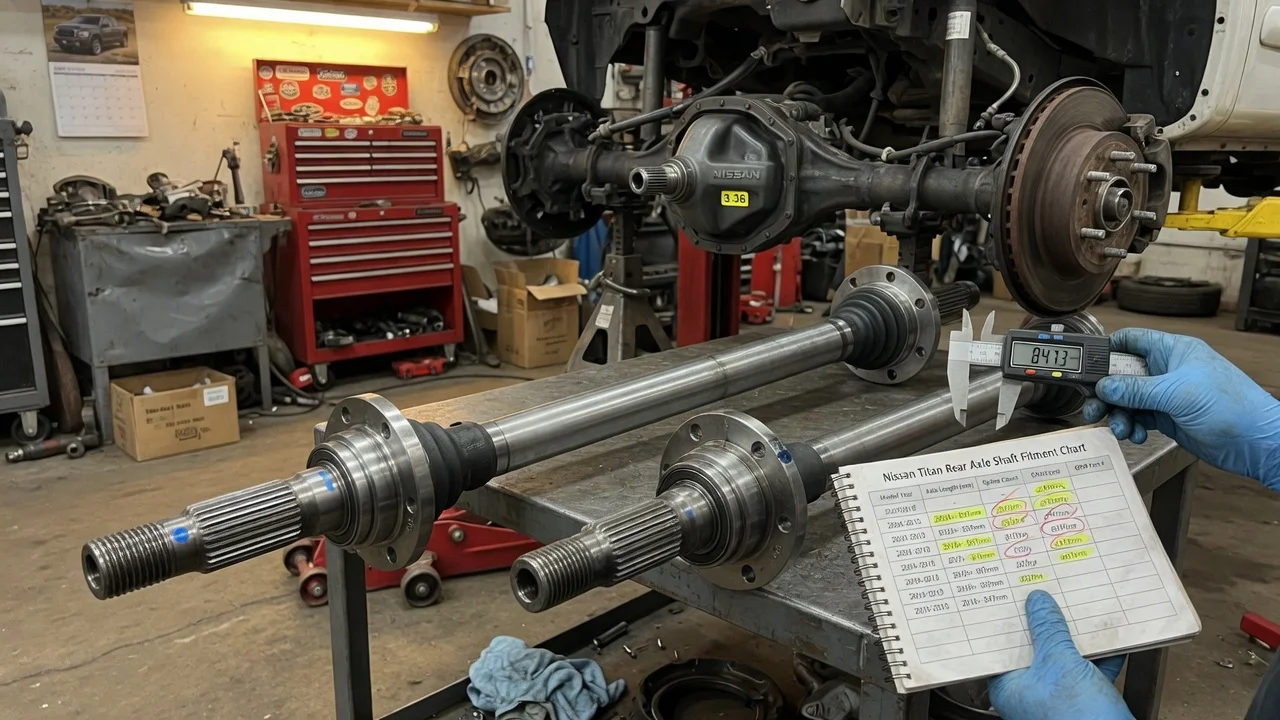
A noise, vibration or gear oil leak at the back of a 2004 Nissan Titan often gets blamed on the rear axle shaft. The shaft is only one part of an assembly that also includes the wheel bearing, axle seal, differential and brakes. Before buying a replacement, pin down what the truck is actually doing and confirm the part matches your exact configuration. A shaft listed for a 2005 or 2006 Titan will not automatically suit yours.
Establish the symptoms
Start by recording when the problem appears. Note the speed range, whether it changes on acceleration, coasting or braking, whether it is worse in left or right turns, and whether it differs when the truck is cold, warm, empty or loaded. Describe the sound as precisely as you can: a hum or growl that rises with road speed, a clunk when pulling away, a click in tight turns, or a grinding that you can feel through the seat. Also note vibration, a pull to one side, wetness or a gear oil smell near a rear wheel, and any ABS or traction warning lights.
Recent changes matter as much as the symptom itself. Check the service history for new tires, wheel or brake work, a differential fluid change, a lift or suspension modification, and any heavy towing or off-road use. Write down your vehicle configuration from the VIN and the door-jamb and axle labels: two-wheel or four-wheel drive, cab and bed style, axle ratio, and whether the truck has a locking rear differential. These details guide both diagnosis and parts fitment.
Distinguish plausible causes
A worn rear wheel bearing is the most frequent reason owners start looking at the axle shaft. It usually produces a growl that rises with speed and changes when weight shifts from one side to the other during gentle weaving. The shaft itself wears less often. It is more likely to be damaged after a bearing has failed and scored the surface it rides on, after an impact that bends it, or when the splines that engage the differential become worn.
A leaking axle seal shows up as gear oil on the inside of the wheel, the brake backing plate or the brake parts. Contaminated brakes can grab, squeal or lose effectiveness on that side. A leak can come from a worn seal, excessive bearing play, a damaged seal surface on the shaft, an overfilled differential or a blocked vent. Differential problems often cause whine that changes between acceleration and deceleration rather than with side loading. Irregular tire wear, a lost wheel weight or a bent wheel can mimic a bearing hum or a shaft vibration. A worn driveshaft joint can produce a clunk on takeoff that is easy to misplace at the axle.
Some observations weaken certain causes. A noise that does not change at all when you weave gently points away from a wheel bearing and toward tires or the differential. A sound that occurs only while braking points toward the brakes. A dry axle end makes a seal leak unlikely, although it does not rule out bearing wear.
Checks in a useful order
Begin with safe observations that need no tools. Park on level ground and look at the inside of each rear wheel, tire sidewall and the area behind the wheel for wet oil or caked grime. Check tire wear patterns and lug nut condition. Then drive on a smooth, quiet road with the radio off. Note whether the noise follows road speed or engine speed, and whether gentle weaving changes it.
The next checks require proper tools and support. With the rear wheels raised and the truck secured on rated stands, spin each wheel by hand and feel for roughness. Grip the tire and check for in-and-out or rocking movement. With the wheel and brake components removed, inspect for oil contamination and look at the axle flange. Check the differential fluid level and look for metal particles. Acceptable play, flange runout, fluid type and fill level must come from the manufacturer specifications for your truck, not from guesswork.
Removing the shaft, servicing the bearing and retainer, installing a new seal and tightening fasteners to torque require the factory service procedure and often a press or specialized pullers. A qualified technician can also localize noise on a road test with chassis listening equipment. That can separate a bearing from the differential more reliably than listening from the cab.
Interpret the findings
Roughness or play at one wheel with no oil present suggests a bearing problem. It does not by itself prove the shaft needs replacing. Once the shaft is out, its bearing surface, seal surface and splines should be inspected. Only scoring, wear or damage there justifies a new shaft rather than a bearing and seal.
Oil at the wheel confirms a leak but not its cause. Before installing a new seal, confirm the bearing has no excess play, the seal surface on the shaft is smooth, the differential is filled correctly and the vent is clear. Otherwise the new seal may leak again. Brake parts soaked in gear oil usually need cleaning or replacement as part of the repair.
A suspected bent shaft should be confirmed by measuring flange runout with a dial indicator against specification. A visible wobble alone may come from the wheel or the brake rotor. A broken shaft or stripped splines typically leaves that wheel without drive. With an open differential, the truck may not move at all. That finding makes the shaft the confirmed failed part.
Urgency and next action
Stop driving and arrange a tow if you hear loud grinding from a rear wheel, feel the wheel wobble, notice a hub that is unusually hot, see gear oil on the brakes with reduced braking, or find the shaft or wheel moving outward. On axles where the shaft locates the wheel, a failed bearing or retainer can allow the wheel to separate from the truck. No remaining mileage can be promised once these signs appear, and operating conditions such as towing increase the risk.
To order the correct rear axle shaft for a Nissan Titan, have the VIN, model year and build date, drive type, cab and bed configuration, axle ratio and differential type ready. Specify the side, because left and right shafts can differ in length. Check whether the replacement comes with the bearing, seal and retainer already installed, and whether your ABS sensor reads from a component on the shaft. Compare the new part with the old one before installation. Parts listed across 2004, 2005 and 2006 trucks should be confirmed against your VIN rather than assumed from the year alone.
When the shaft is replaced, the bearing and seal on that side are normally renewed at the same time. Address any brake contamination, and refill the differential with the fluid type and quantity specified for your axle. Record the work, part numbers and fluid used in the service history, and note it against the maintenance schedule so future inspection can compare like with like.