Identifying a 2004 Honda Odyssey Transmission Shift Solenoid
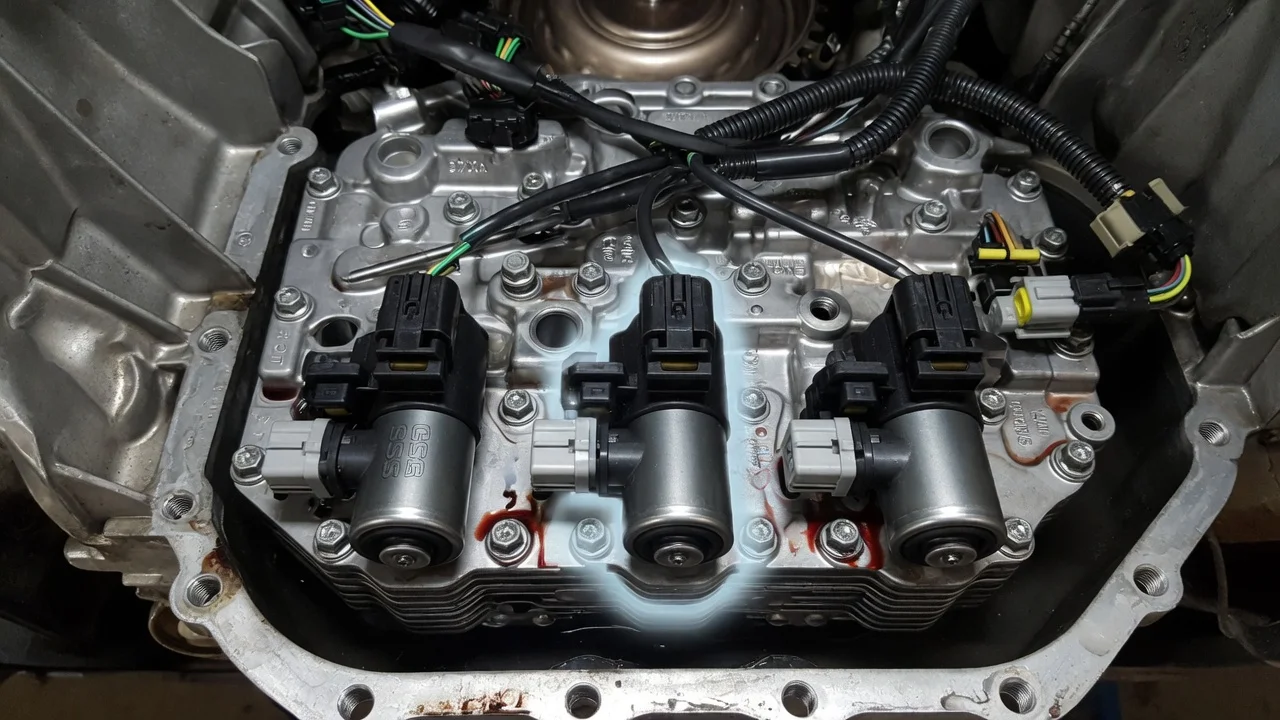
Your 2004 Odyssey may shift harshly, slip, flare between gears or hold one gear, and a scan tool may point toward a shift solenoid. You then need to know which solenoid is involved, where it sits and whether it has actually failed. This guide explains how to identify the correct part for your van, what the solenoids do and how to avoid replacing a good component because of a code alone.
The short answer
In the US market the 2004 Odyssey uses an electronically controlled five-speed automatic. Its shift solenoids are mounted on the outside of the transmission housing. Honda automatics of this era also have no conventional removable oil pan. Because of that layout, solenoid access is usually easier than on transmissions that hide their solenoids inside a pan-mounted valve body. To find the solenoid in question, start with the diagnostic trouble code. Honda labels its shift solenoids by letter, such as A, B and C, and the code tells you which circuit the control module flagged. Then match the replacement by VIN lookup or by the part number on the installed solenoid, not by model year alone.
One qualification matters most. A code that names a solenoid circuit tells you the module saw an electrical fault in that circuit. The fault can be the solenoid itself, but it can also be the connector, the wiring or, less often, the module. A code is a starting point for testing, not proof of a failed part.
How the shift solenoids work
The control module decides when to shift using vehicle speed, throttle position, engine load and fluid temperature. It carries out each shift by switching the shift solenoid valves on and off. Each valve opens or blocks a fluid passage, and the on/off combination across the solenoids moves shift valves inside the valve body. Those valves route pressurized fluid to the clutch for the selected gear. A separate group of linear pressure control solenoids sets how firmly each clutch applies. Problems with those pressure solenoids tend to show up as poor shift quality, while shift solenoid problems usually show up as missing or wrong gears.
The module also checks its own work. It compares input and output shaft speeds to confirm that each commanded gear produced the expected ratio. If the ratio is wrong, it can store a gear ratio or shift malfunction code even when every solenoid tests fine electrically. A sticking valve, low fluid or worn clutches can all produce that result, so a ratio code does not point to a solenoid the way a circuit code does.
What changes the answer
Fitment is the first variable. The 1999 to 2001 Odyssey used a four-speed automatic, and the 2002 to 2004 vans moved to the five-speed. Parts listings that cover the whole generation can mix the two. Confirm by VIN and compare the part number on your existing solenoid. If the van's service history shows a replacement transmission, used or remanufactured, read the identification code stamped on the transmission case and make sure the parts you order match the unit actually installed.
The type of code is the second variable. Generic electrical codes such as P0753, P0758 and P0763 describe circuit faults for shift solenoids A, B and C. Codes about incorrect gear ratio, torque converter clutch performance or general shift malfunction describe a hydraulic or mechanical result. Those faults have many possible causes. A Honda-capable scan tool may also show manufacturer-specific codes with more detail, and they should be read alongside the generic ones.
Operating conditions are the third variable. A fault that appears only when the transmission is hot can come from a solenoid coil whose resistance drifts with heat. It can also come from fluid that has thinned or broken down. A fault that appears only on rough roads or in wet weather points toward wiring or connectors. Note when the symptom happens, because it narrows the diagnostic path.
What the owner can do
First, retrieve the stored codes with a scan tool that reads transmission codes, not just engine codes. Write down every code, including pending ones, before clearing anything. Then check the fluid level and condition on level ground using the warm-engine dipstick procedure in the owner's manual. The fluid specification matters on this transmission. The van originally called for Honda ATF Z1, which Honda has since replaced with ATF DW-1. Universal or multi-vehicle fluids are a common cause of shift complaints on Honda automatics. Dark fluid with a burnt smell, or visible debris, suggests internal wear rather than a simple solenoid fault.
Next, inspect the solenoid connectors and the nearby harness. Look for corrosion, bent or pushed-back pins, chafed insulation and transmission fluid wicking into the connector. Unplugging and reseating a connector sometimes clears an intermittent circuit code, which is useful evidence in itself. Write down the shift behavior in specific terms: which shift is wrong, whether it is harsh, delayed or missing, and whether it happens cold or hot.
If testing points to a solenoid, check whether the part is sold on its own or only as an assembly with other solenoids. Use new seals or O-rings and clean the mating surface so no dirt enters the hydraulic passages. Afterward, clear the codes and road-test under the same conditions that triggered the fault. Also check the service information for any required reset of learned transmission values.
Limitations and next step
This article does not give resistance values, connector pin layouts or exact mounting positions. Those details belong in factory service information for your VIN, and guessed specifications lead to wrong conclusions. Some faults also cannot be confirmed at home. Hydraulic problems such as a stuck valve, clutch wear or pressure loss usually need line pressure testing or professional scan data before anyone can name the cause.
Bring the van to a transmission specialist in any of these cases: the codes concern gear ratios rather than solenoid circuits, the fluid is burnt or contaminated, or the symptoms continue after the electrical checks. The repair options run from a single solenoid or harness repair to a valve body service, a rebuild or a remanufactured unit. A shop can only recommend the right one once the cause is confirmed. If the transmission has dropped into a fail-safe gear or is slipping badly, limit driving until it is diagnosed. Continued operation can turn a modest electrical repair into internal damage.