Choosing Transmission Cooler Lines for a 2004 Ford F-150
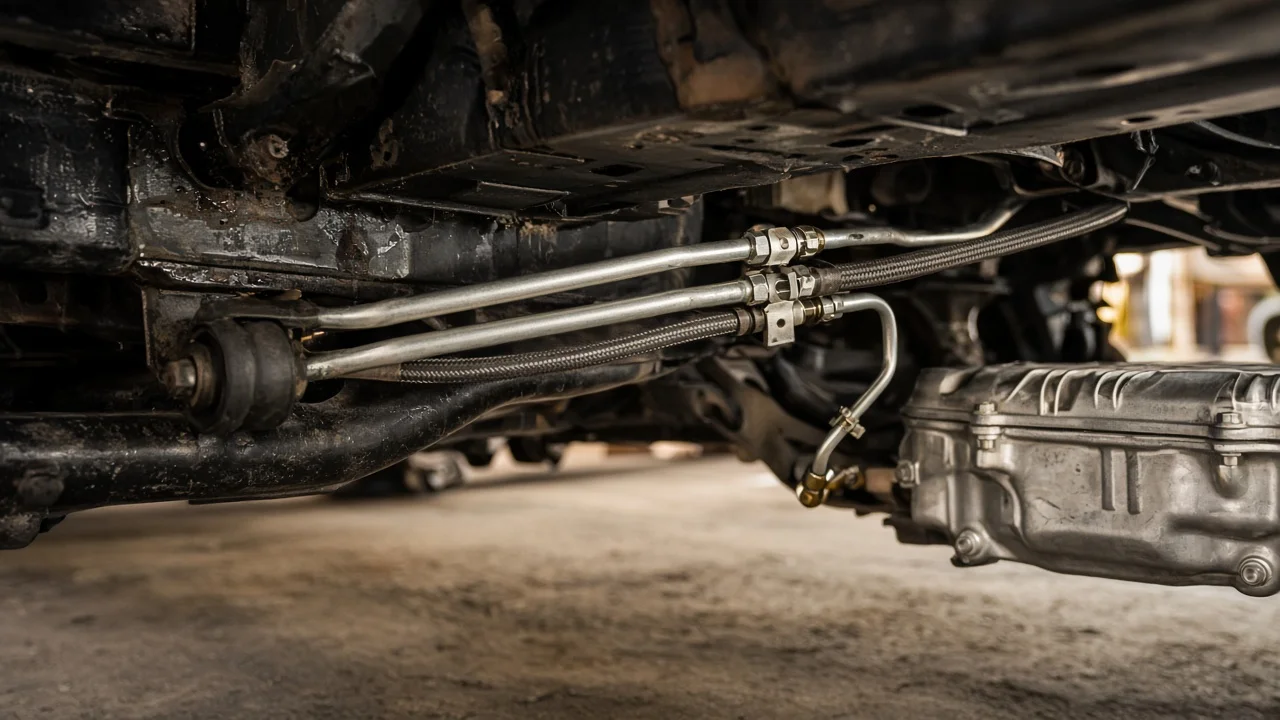
A leaking or rusted transmission cooler line on a 2004 F-150 can drain fluid quickly, and a low fluid level is hard on any automatic transmission. Choosing a replacement starts with knowing exactly which truck you have. Ford sold two different F-150 generations as 2004 models, and line routing changes with engine, drivetrain and towing equipment. This guide covers what the lines must do, how to confirm fitment, which features matter and what ownership costs to expect.
Define the job the product must do
Cooler lines carry hot fluid from the transmission to a cooler, usually built into the radiator tank, and return it to the transmission. Trucks equipped for towing often route fluid through an auxiliary cooler mounted ahead of the radiator as well. The replacement must handle transmission fluid at operating temperature and pressure, follow the original routing without rubbing on exhaust or suspension parts, and seal reliably at both ends. Most owners shop for these parts because the steel sections have rusted through, a flexible section is weeping at its crimp, or a line was damaged during other work.
Before buying, confirm that a line is actually the source of the leak. Fluid found on a cooler line may have come from the radiator connection, the pan gasket or a fitting higher up, then run downhill. Clean the area, drive the truck and look for the wet spot where fluid first appears. Slipping, delayed engagement or harsh shift behavior can follow fluid loss, but those symptoms do not confirm that a line has failed, and diagnostic codes may not set at all. Treat the symptom as a reason to inspect, not as a diagnosis.
Check compatibility
The first fitment question is which 2004 F-150 you own. Ford introduced a redesigned F-150 for 2004 and also sold the F-150 Heritage, a carryover of the previous body style. Their cooler lines are not interchangeable, so check the model badging, the vehicle identification number and the build date label in the driver door opening. Next, note the engine: 2004 trucks were offered with a 4.2L V6 and 4.6L or 5.4L V8 engines, and routing can differ between them. Two-wheel drive and four-wheel drive trucks may also use different lines because of the front axle and transfer case.
Transmission type matters too. Automatic 2004 F-150s use a four-speed unit from Ford's 4R70/4R75 family, while trucks with a manual transmission have no transmission cooler lines. Determine whether your truck has the factory tow package, since an auxiliary cooler changes how many lines there are and where they run. Finally, look at the connections. Factory lines typically attach to the transmission case and radiator with quick-connect fittings held by retaining clips, and the replacement ends must match. Lines are often sold separately as the supply and return line, so identify which one has failed and compare a listing's photos and fitment notes to the part on your truck.
Features that affect the choice
Replacement options fall into three groups. A complete pre-bent assembly, either original equipment or aftermarket, replaces the whole line with fittings already attached and is the closest to factory routing. A repair kit replaces only the damaged section, joining new hose or tubing to the sound part of the old line. A universal hose and clamp approach is the cheapest and quickest, but it depends heavily on correct hose rating, clamp choice and secure routing. Complete assemblies cost more and can be awkward to snake into place, while partial repairs leave older steel in service that may already be corroding.
Material and construction deserve attention. Coated steel resembles the original, and stainless steel resists rust longer but can be stiffer to bend if adjustment is needed. Any hose used should be rated for transmission oil cooler service and the temperatures involved; ordinary fuel or heater hose is not a substitute. Compression fittings are sometimes used for line repairs, but their reliability depends on the fitting design and installation, so many technicians prefer flared or factory-style connections. Labels such as heavy duty or lifetime say little on their own. More useful evidence includes a clear fitment list noting engine, drivetrain and tow package, photos of both ends, and part number cross-references.
Limitations and ownership costs
Replacing a cooler line usually means raising the truck safely, catching fluid, releasing the quick-connect fittings with the correct disconnect tool and working around brackets, the transfer case or skid plates. Old fittings can seize, and forcing them may damage the radiator connection, which can turn a line repair into a radiator replacement. Budget for new retaining clips or seals if the design uses them, and plan for transmission fluid to replace what is lost. Many automatics of this era call for a Mercon V fluid specification, but confirm the requirement from the dipstick, owner's manual or service information for your exact transmission.
New lines restore the circuit; they do not repair a transmission that has already been damaged by low fluid or overheating. If the fluid is dark, smells burnt or carries debris, further diagnosis is needed, and the cooler itself may require flushing or replacement so contamination is not sent back into the transmission. After installation, check the fluid level using the procedure for your transmission, usually with the engine warm and running, then recheck the fittings for leaks after a test drive. Review the service history as well; if the fluid has not been changed in a long time, factor a fluid service into the overall repair options.
Build a practical shortlist
Start the shortlist by recording the truck details: new-generation F-150 or Heritage, engine size, two-wheel or four-wheel drive, automatic transmission confirmed, and whether a factory tow package or auxiliary cooler is present. Then note which line has failed, supply or return, and whether the damage is limited to one section or spread along the steel tubing.
For each candidate part, check that the listing names your exact configuration, that both end fittings match the connections on your transmission and radiator, and that the routing and length look consistent with the original. Compare whether it is a complete assembly or a partial repair, what material it uses, whether clips or seals are included, and whether the hose is rated for transmission cooler use. Add the cost of fluid, any special disconnect tool and possible radiator fitting damage to the price of the part. A complete pre-bent line with verified fitment is usually the most straightforward choice for a heavily rusted system, while a properly rated repair section can make sense when only a short, accessible portion has failed.