Identifying a 2004 Chevy Trailblazer Transmission Shift Solenoid
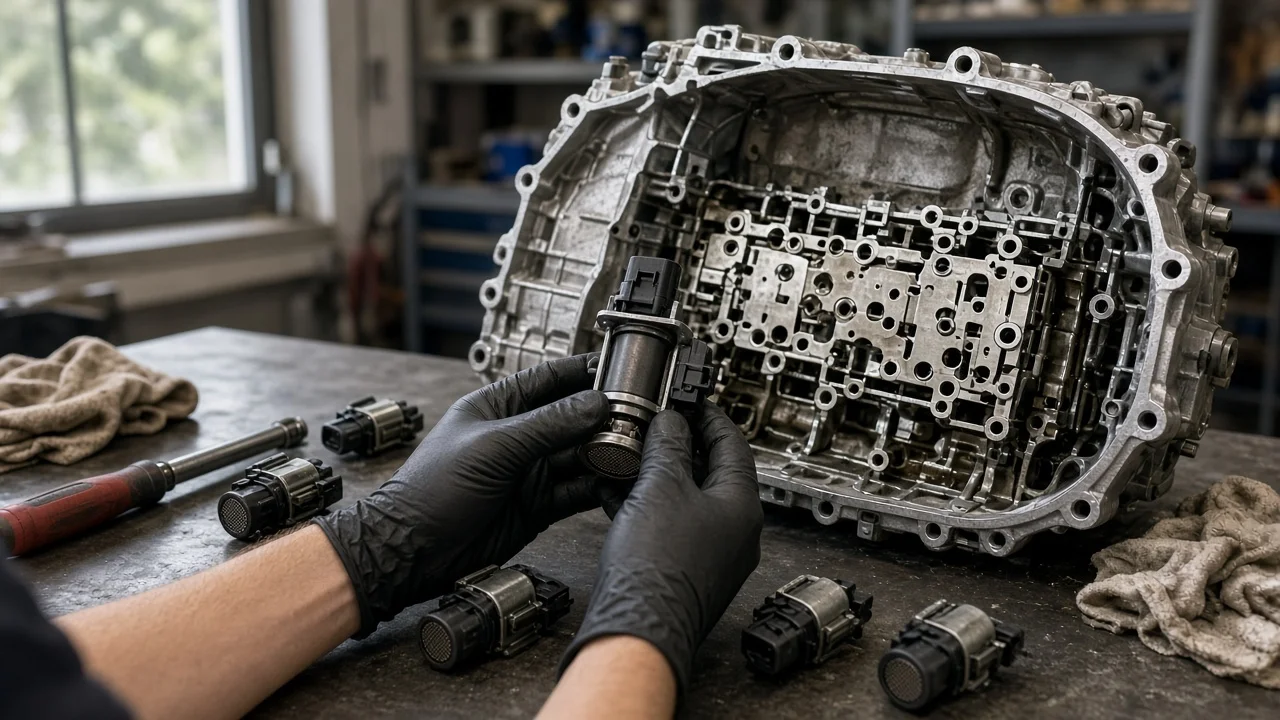
On a 2004 Chevy Trailblazer, the shift solenoids are part of the electronic controls of the 4L60-E automatic transmission, and they sit inside the transmission rather than on the outside. Identifying the right solenoid starts with confirming the transmission and reading the stored diagnostic codes. A harsh, missed or stuck shift can come from wiring, fluid condition, the control module or worn internal parts just as easily as from a solenoid itself.
The short answer for the 2004 Trailblazer
The 2004 Trailblazer uses GM's 4L60-E, an electronically controlled four-speed automatic. Gear selection is handled by two on/off shift solenoids, commonly called shift solenoid A (the 1-2 shift solenoid) and shift solenoid B (the 2-3 shift solenoid). Both mount on the valve body, are held in place by retaining clips and plug into the internal transmission wiring harness. Reaching them requires draining the fluid and removing the oil pan and filter. The valve body also carries other solenoids, including the torque converter clutch solenoid, the pressure control solenoid and the 3-2 shift solenoid. These are separate parts with separate jobs and are not interchangeable with the A and B shift solenoids.
Diagnostic codes usually tell you which solenoid circuit the control module is unhappy with. P0751 and P0753 relate to shift solenoid A, while P0756 and P0758 relate to shift solenoid B. A performance-type code means the module saw shifting that did not match its command, and an electrical-type code means it detected a circuit fault. Neither one proves the solenoid itself has failed; a damaged harness, a corroded connector or a hydraulic problem can set the same code.
How the shift solenoids select gears
The two shift solenoids work as a pair. The control module switches them on and off in set combinations, and each combination routes fluid pressure to the shift valves that apply the clutches and bands for a given gear. In the 4L60-E pattern, first gear has both A and B on, second has A off and B on, third has both off, and fourth has A on and B off. Because every gear depends on the combination rather than on one solenoid alone, a single faulty solenoid produces a recognizable shift behavior, such as skipping a gear, starting off in the wrong gear or refusing to upshift past a certain point.
When the solenoids lose power entirely, both are effectively off, so the transmission generally defaults to third gear in Drive. Owners often describe this as limp mode: the truck pulls away sluggishly from a stop and never shifts. That symptom points toward a power, ground, connector or module problem affecting both solenoids at once, not necessarily two failed parts. Fluid condition also matters, because debris, varnish or low fluid level can keep a shift valve from moving even when the solenoid is working correctly.
What changes the answer
Start by confirming the transmission type rather than assuming it. The Service Parts Identification label, usually found in the glove box, lists RPO codes, and M30 identifies the 4L60-E. The transmission case also carries an identification tag. Check the service history as well: a rebuilt or replacement transmission may contain updated internal parts, and solenoid designs changed over the long production run of the 4L60-E. Parts listed for other years or other GM trucks may not match, so use the VIN when confirming fitment of a solenoid or solenoid kit.
Operating conditions shift the diagnosis too. A problem that appears only when the transmission is hot can suggest a solenoid or valve that sticks with heat or worn hydraulic sealing, while one that comes and goes over bumps often points to a loose connector or chafed wiring. Fluid specification is part of this picture. The 2004 Trailblazer originally specified Dexron III, and GM's later service guidance generally lists Dexron VI as the replacement; confirm the current recommendation for your vehicle before topping up or refilling, since the wrong fluid can affect shift feel.
What the owner can do
Read the codes with a scan tool that can access transmission data, not only generic engine codes, and write down every code along with any freeze frame information. Note the shift behavior in detail: which gears are missing, whether the problem is constant or intermittent, whether it changes with temperature and whether the check engine light is on. Then check the fluid level and condition using the procedure in the owner's manual. Dark, burnt-smelling fluid or visible metal particles change the conversation from a solenoid repair to a possible internal failure.
If the codes and symptoms point to a solenoid circuit, inspect the electrical connector on the transmission case and the harness running to it for damage, corrosion or fluid seeping into the plug. If the evidence still points to a solenoid, replacement means draining the fluid, removing the pan and filter, releasing the retaining clip, swapping the solenoid with its seal, then refilling with the correct fluid. Many technicians replace shift solenoids A and B together because kits often include both. Afterward, clear the codes and road test to confirm normal upshifts and downshifts.
Avoid treating a solenoid as the default fix when the signs point elsewhere. Slipping in several gears, flare during shifts, burnt fluid or debris in the pan usually indicate worn clutches, bands or other hard parts, and a new solenoid will not correct those. In that situation, the realistic repair options are a professional diagnosis, a transmission rebuild or a replacement unit.
Limitations and next step
This overview describes typical 4L60-E behavior, not the exact specifications for your truck. Connector pinouts, solenoid resistance values, pan bolt torque and wiring diagrams should come from factory service information matched to your VIN. Some tests, such as commanding each solenoid on and off with a bidirectional scan tool or watching live shift data during a road test, require equipment most owners do not have, and a transmission shop can perform them quickly.
The practical next step is to gather the codes, record the shift behavior and check the fluid before buying parts. With that information, you can decide whether a solenoid replacement is a reasonable home repair or whether the truck needs a shop that can confirm the cause before money goes into the transmission.