2004 Chevy Trailblazer Transmission Shift Solenoid Symptoms
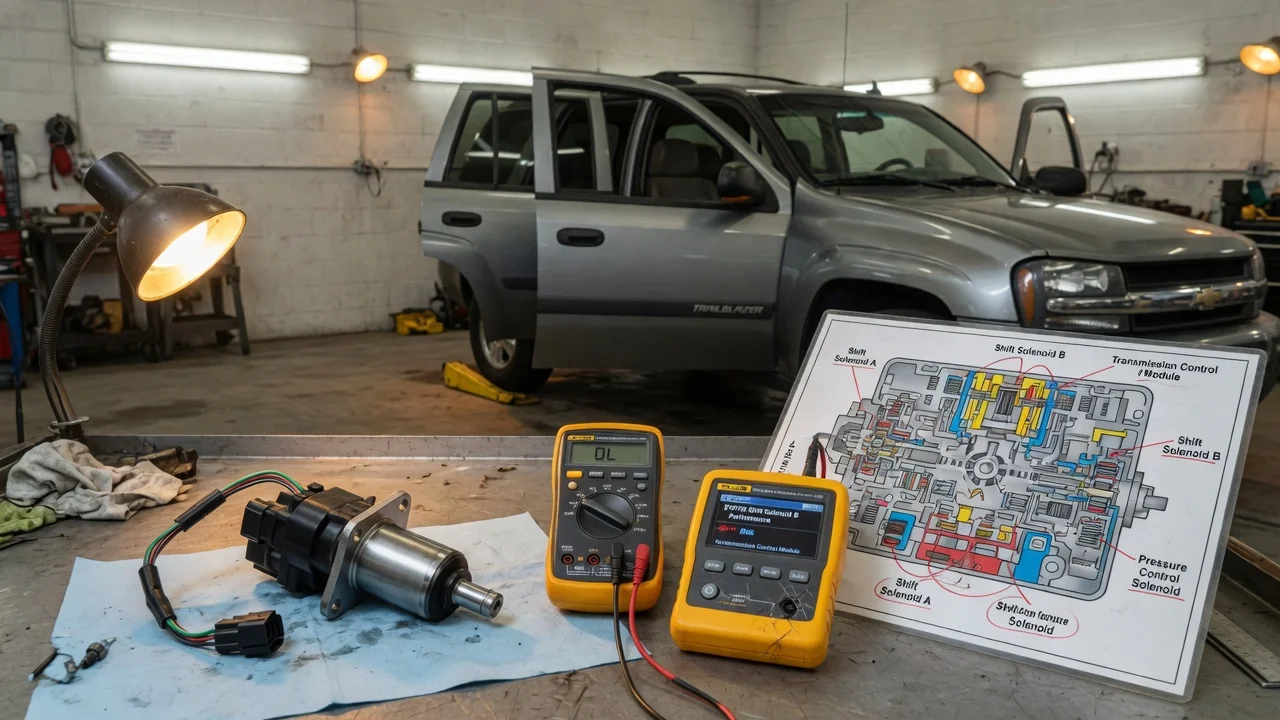
When a 2004 Chevy Trailblazer starts shifting late, harshly or not at all, a shift solenoid is often the first suspect. That is a reasonable starting point, but the same complaints can come from low or worn fluid, a wiring fault, a speed sensor problem or internal wear. This guide explains how to document what the truck is doing, which causes fit which signs, and what needs to be confirmed before you buy parts.
Establish the symptoms
Start by confirming the transmission type. Trailblazers from this model year normally use the 4L60-E four-speed automatic, but verify it rather than assume. The Service Parts Identification label, usually found inside the glove box, lists RPO codes, and M30 identifies the 4L60-E. In this unit, two shift solenoids, often called A and B or 1-2 and 2-3, work together to select the gears. Separate solenoids control torque converter clutch lockup and line pressure, so a fault in any of them can feel like a shifting problem.
Next, write down exactly how the problem shows up. Reported shift solenoid symptoms include no upshift or the transmission holding one gear, starting from a stop in a higher gear and feeling sluggish, skipping a gear, harsh or delayed shifts, erratic shifting that comes and goes, and a check engine light. Note whether it happens cold or only after the truck is fully warm, which specific shift is affected, whether hitting a bump or rain changes it, and whether the speedometer behaves normally. Also note recent changes to the service history: a fluid service, battery or wiring work, towing, overheating or a recent pan removal. These details narrow the possibilities far more than the symptom alone.
Distinguish plausible causes
A failed solenoid or its circuit is most strongly suggested by electrical diagnostic codes such as P0753 (1-2 shift solenoid circuit) or P0758 (2-3 shift solenoid circuit). These usually appear with a sudden change in shift behavior, sometimes intermittent with temperature or vibration. Performance codes such as P0751 or P0756 mean something different: the computer commanded a gear and saw a ratio that did not match. A sticking solenoid can cause that, but so can a valve body problem, low pressure or worn clutches. When several solenoid codes appear together, a shared cause such as the case connector, the internal harness, the power feed or low system voltage is more likely than multiple solenoids failing at once. The case connector on these transmissions can seep fluid, which can disturb the electrical connection.
Other causes produce similar shifting. Low or burnt fluid tends to cause slipping and engine speed flare between gears, often worse when hot. A faulty output speed sensor can cause erratic shifts and is often accompanied by an unsteady or dead speedometer. A pressure control solenoid fault, often logged as P0748, typically makes every shift harsh or soft rather than affecting one gear. Internal mechanical failures are common on high-mileage 4L60-E units, including worn clutch packs or a damaged reaction sun shell. These usually cause the loss of particular gears, such as third, fourth or reverse, and often leave friction material or metal in the pan. No codes, gradual onset and slipping all point away from a simple solenoid fault.
Checks in a useful order
Several checks are safe for most owners. Read and record all stored codes and freeze frame data before clearing anything, because clearing erases the evidence. A basic code reader shows generic codes, but it may not show transmission data. Check the fluid level and condition using the procedure in the owner's manual or service information, which for this transmission normally means level ground, the engine running and the fluid at operating temperature. Confirm the fluid specification for your vehicle. GM originally specified Dexron III, which was later superseded by Dexron VI. Note the color and smell, and any sign of a leak around the pan, cooler lines or the electrical connector on the case. Inspect the visible harness for chafing or heat damage near the exhaust, and check battery and charging condition.
Deeper tests need equipment and specifications. A scan tool that reads transmission data can compare the commanded gear with the actual gear and show solenoid states, fluid temperature and speed sensor readings during a road test. Many tools can also command the solenoids for testing. Resistance and circuit checks at the case connector have to be compared against the published values for your transmission, not generic figures. A line pressure test with a gauge separates hydraulic problems from electrical ones. Removing the pan lets you inspect the debris and reach the shift solenoids on the valve body. Pressure testing, valve body work and anything beyond the pan are best left to a qualified transmission technician.
Interpret the findings
An electrical solenoid code plus an out-of-range reading at the case connector points to the solenoid or the internal harness. The reading should still be confirmed directly at the solenoid once the pan is off. If the solenoid tests correctly inside but the circuit fails outside, the fault lies in the external wiring, the connector or the control module, and a new solenoid would not help. A performance code with good electrical results suggests a hydraulic or mechanical cause, so replacing a solenoid on that evidence alone is a gamble. Heavy friction material or metal in the pan indicates internal wear, which usually means overhaul or replacement instead of a solenoid swap.
Low fluid that, once corrected, restores normal shifting still requires finding the leak, and slipping that has already occurred may have caused damage that shows up later. After any repair, clear the codes and road test under the same conditions that originally triggered the problem to confirm it does not return. When ordering parts, check fitment against the VIN and transmission identification rather than the model name alone, since parts and procedures can differ by build and configuration.
Urgency and next action
Stop driving and arrange a tow if the truck will not move in drive or reverse, slips badly with engine speed flaring, smells burnt, shows a transmission overheating warning, leaks fluid steadily or makes new clunking or grinding noises. A transmission stuck in one gear may still move the vehicle, but it can make acceleration, merging and hill starts unsafe, and continued driving can turn an electrical fault into internal damage. There is no reliable way to predict how far a transmission with these symptoms will last, so treat the warning signs as the limit, not a mileage estimate.
Before calling a shop, gather the VIN, the transmission RPO code, the mileage, the service history, every stored code with freeze frame data, your notes on fluid level and condition, and a clear description of when the symptoms appear. With that information a technician can choose the right repair option, whether that is a solenoid replacement through the pan, a harness or connector repair, valve body service, or an overhaul or replacement unit if internal wear is confirmed.