2004 Chevy Silverado Shift Lock Release: Why It Sticks and What to Check
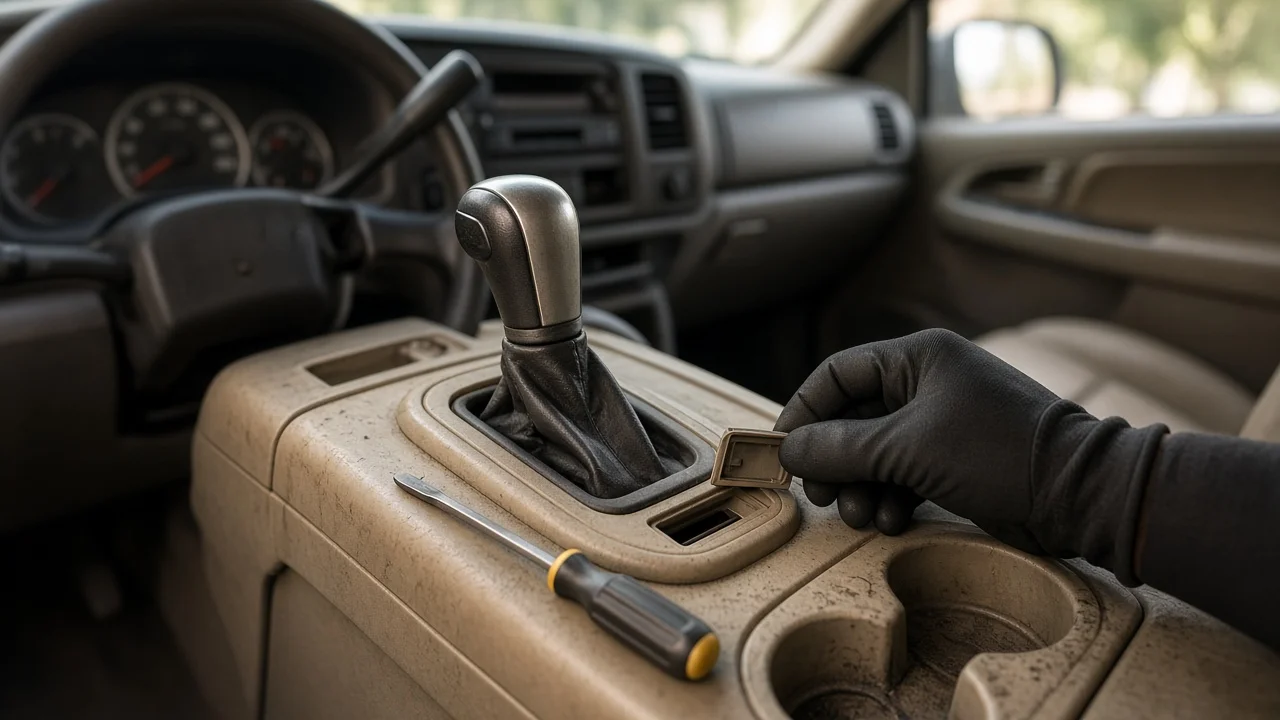
When the shifter on a 2004 Chevy Silverado refuses to come out of Park, the shift lock is usually either working as designed or missing one of the signals it needs. It helps to know how the interlock decides when to release, which transmission your truck uses, and which checks are safe to make yourself. That knowledge separates a simple fix from a repair that belongs in a shop.
The short answer
On automatic Silverados of this year, the shift lock releases only when the ignition is in the ON or RUN position and the brake pedal is pressed firmly. GM describes the system for this truck generation as electronic. It also notes that the system does not work normally when battery voltage is low, and the suggested first response is to charge or jump-start the battery, not to override the lock. So the direct answer is to turn the key fully to ON, press the brake firmly, and then move the lever. If the lever still will not move, the usual suspects are a missing brake signal, weak battery voltage, a blown fuse, or a fault in the steering column or shift linkage. A stuck lever on its own does not mean the transmission has failed.
Many passenger cars have a small override slot next to the shifter. Column-shift trucks of this era are generally not set up that way, so check the owner's manual for your truck before looking for one. If the manual does not describe a manual override, do not improvise one by prying off covers or forcing the lever. The parts inside the column break easily and sit close to airbag wiring.
How the shift interlock works
The system is called a brake transmission shift interlock. A switch at the brake pedal reports when the pedal is pressed. An interlock solenoid in the steering column then blocks or frees the shift mechanism based on that signal and on ignition power. A related park lock feature keeps the key from being removed unless the lever is fully in Park. Together, these features stop the truck from being knocked into gear without the driver's foot on the brake.
Because the release depends on electrical power and an accurate brake signal, anything that interrupts either one can leave the lever locked even when the transmission itself is fine. The same brake switch also feeds the brake lights and other systems, so the brake lights are a useful first clue. However, working brake lights do not prove that every circuit in that switch is healthy.
Identify the transmission and shifter setup
Not every 2004 Silverado has a shift lock. Trucks with a manual gearbox do not use this system at all. Automatic trucks received different transmissions depending on engine and weight rating. Light-duty models typically used the 4L60-E family. Heavy-duty gas models could be fitted with the 4L80-E, and Duramax diesel models with the Allison 1000. The Service Parts Identification label, usually found in the glove box, lists option codes that confirm the exact transmission type.
The interlock sits in the column and brake circuit, so the release procedure is largely the same across the automatic versions. The transmission type matters more once the lever moves but the truck does not behave correctly, because fluid specification, diagnostic paths and repair options differ between these units. Also note how your truck is configured, including whether the shifter is on the column, since a different shifter arrangement changes where the lock mechanism sits.
What changes the answer
Start by separating two symptoms. If the lever will not move out of Park at all, the problem is most often on the interlock side: battery voltage, the brake switch, a fuse, wiring or the column mechanism. If the lever moves but the truck stays in Park, does not engage the selected gear, or shows a gear indicator that disagrees with the lever, suspect the shift cable, its adjustment or the linkage at the transmission instead. Those faults change shift behavior and need different checks.
Conditions matter as well. On a steep grade, the truck's weight can load the parking pawl so heavily that the lever feels locked even after the interlock has released. Setting the parking brake before shifting into Park helps prevent this. Other factors can also affect the result: • Very cold weather. • Recent work on the brake pedal, steering column or lighting. • Aftermarket accessories that tap into brake circuits, such as remote starters or trailer wiring. Review your service history for any of these.
Checks an owner can make
Make the truck safe first. Set the parking brake and, if you will be working around the truck, chock the wheels. Turn the key fully to ON rather than accessory, press the brake pedal firmly, and try the lever with steady, moderate effort. Look for anything that keeps the pedal from traveling normally, such as a bunched-up floor mat.
Next, have a helper confirm that the brake lights come on when you press the pedal. If they do not, the brake switch, its adjustment, a fuse or the wiring becomes the leading suspect. Check the battery and its connections as well. Dim interior lights, slow cranking or a voltmeter reading well below normal all point toward low voltage, which should be corrected before anything else. The fuse box covers and the owner's manual identify which fuses serve the stop lamps and related circuits on your truck.
Interlock problems often do not set diagnostic codes, so a clean scan does not rule them out. Codes are more useful when the lever moves but shift behavior is wrong while driving. If you reach that point, check the fluid level and condition using the procedure and fluid specification for your exact transmission, and record what you find before any repair.
If the truck has to be moved
If the lever cannot be freed and the truck must be moved, do not drag it with the transmission in Park. Rolling the truck against a locked parking pawl can damage drivetrain parts. A flatbed tow is the safest choice, especially for four-wheel-drive trucks. Tell the tow operator that the truck is stuck in Park so they can plan the lift accordingly.
Limitations and when to get help
This guide cannot confirm which part has failed on a particular truck. The same locked lever can come from a battery issue, a switch, a solenoid, wiring or a cable, and replacing parts by guesswork wastes money. Reaching the interlock solenoid usually means removing steering column trim near airbag components. That work calls for the factory service procedure for your truck and the right safety precautions.
Have a qualified technician take over in any of these situations: • The basic checks do not restore normal operation. • The repair requires work near the column or airbag wiring. • The lever moves but the truck does not engage gears properly. When ordering parts, confirm fitment by VIN, because cab style, drivetrain and transmission all affect which components apply.