Identifying a 2004 Buick Century Transmission Pressure Control Solenoid
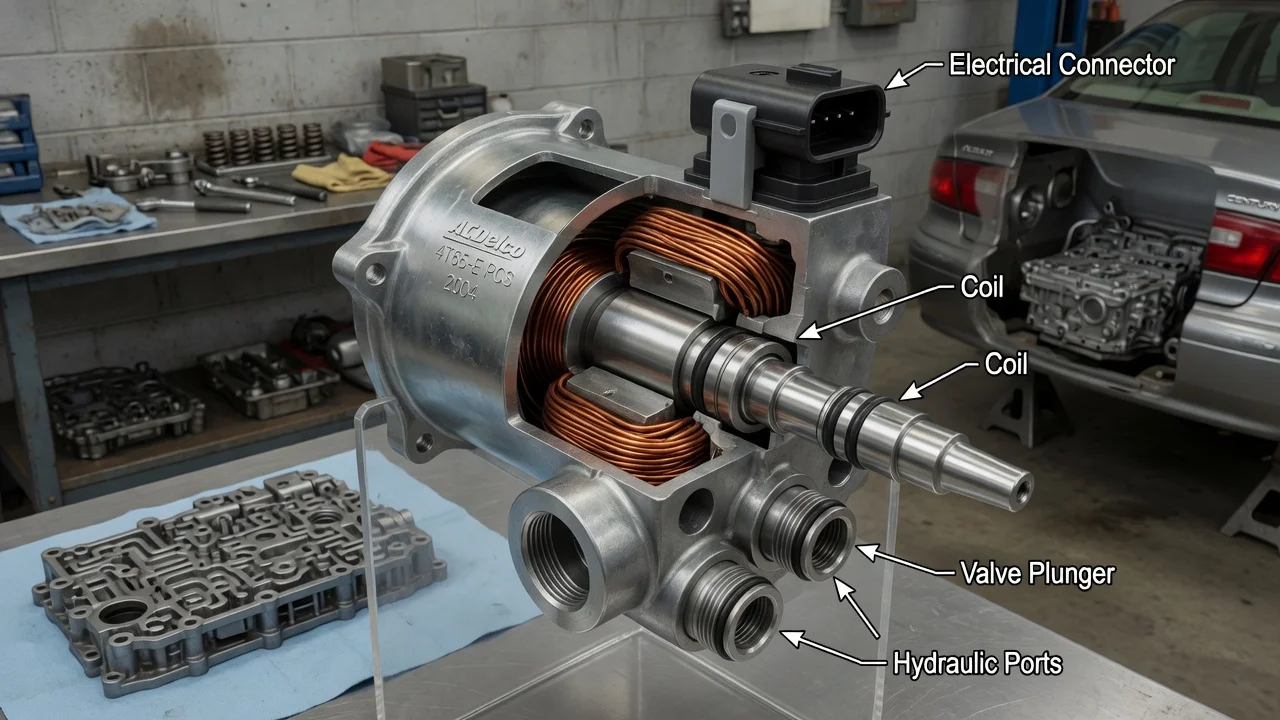
The pressure control solenoid in a 2004 Buick Century regulates the hydraulic line pressure that applies the clutches and bands inside the automatic transaxle. When it misbehaves, owners usually notice harsh, soft or erratic shifts. Before buying a part or blaming the solenoid, confirm exactly which transmission your car has and what the diagnostic data actually shows. This guide explains how to identify the solenoid, how it works, and what to check first.
Identifying the solenoid on a 2004 Century
The 2004 Buick Century is a front-wheel-drive car that was generally paired with GM's four-speed electronically controlled 4T65-E transaxle. On this unit, the pressure control solenoid is mounted on the valve body, which sits behind the transaxle's side cover rather than in a pan at the bottom of the case. It is an electrically controlled solenoid with a wiring connector that plugs into the internal transmission harness, so it is not visible or testable from outside without disconnecting the external harness connector or removing the cover.
Do not rely on the model year alone to identify the correct part. Confirm the transmission type using the service parts identification label, which lists the vehicle's option codes, and the identification tag on the transmission case. These details, together with the vehicle identification number, are what a parts supplier needs to match fitment. GM revised internal transmission components during the production life of this transaxle family, so a solenoid that looks similar may not be correct for your specific unit.
How the pressure control solenoid works
The powertrain control module calculates how much line pressure the transaxle needs based on throttle position, engine load, vehicle speed and other inputs. It then sends a varying electrical current to the pressure control solenoid. The solenoid converts that current into a regulated hydraulic signal that adjusts the main pressure regulator valve. In GM's design, the relationship is generally inverse: lower current produces higher line pressure, and higher current lowers it.
That design acts as a safety default. If the control circuit opens or the module stops commanding the solenoid, line pressure tends to rise toward maximum so the clutches do not slip and burn. This is why an electrical fault in the solenoid circuit often produces very firm or harsh shift behavior rather than slipping. Mechanical problems inside the solenoid, such as a sticking plunger or contamination from debris in the fluid, can instead cause inconsistent pressure, which may feel like flare between gears, delayed engagement or shifts that change from firm to soft.
What changes the answer
Diagnostic codes are the first dividing line. A code such as P0748 indicates a pressure control solenoid electrical problem, which points to the circuit as a whole: the solenoid winding, the internal harness, the case connector, external wiring or the control module. It does not by itself confirm that the solenoid has failed. Other transmission codes, such as those for shift solenoids, fluid temperature or gear ratio errors, can produce similar shift complaints and need to be considered together.
Fluid condition and service history also matter. Low fluid, the wrong fluid specification, or fluid that is dark and contaminated can cause pressure-related symptoms that mimic a bad solenoid. Debris from worn clutches can also lodge in the solenoid or valve body, in which case replacing the solenoid treats a symptom of a larger internal problem. The car was originally filled with a Dexron-type automatic transmission fluid; check the owner's manual or dipstick marking and use the currently approved GM specification.
Finally, a transmission that has been rebuilt, swapped or fitted with a remanufactured valve body may not match the original configuration. If the service history is unknown, inspect the identification tag rather than assuming the factory unit is still installed.
What the owner can do
Start by reading stored and pending diagnostic codes with a scan tool, and record them before clearing anything. A tool that displays live transmission data is more useful than a basic code reader, because it can show the commanded pressure control solenoid current and, on some tools, the actual current. A large mismatch between commanded and actual values supports an electrical problem in the circuit.
Next, check the fluid level and condition with the engine running and the transmission at operating temperature, following the procedure in the owner's manual. Note any burnt smell, dark color or visible particles. Inspect the external transmission harness connector and wiring near the transaxle for damage, corrosion, oil intrusion or a loose fit. Pay attention to when the shift behavior changes, for example only when cold, only after warming up, or only under heavy throttle, because those patterns help a technician narrow the cause.
Resistance can be measured through the transmission case connector with a multimeter, but the reading must be compared with the specification in the factory service information for your transmission, and it should be checked hot and cold if the fault is intermittent. A normal resistance reading does not rule out a sticking solenoid, and an abnormal reading may come from the internal harness rather than the solenoid itself.
Repair options
If testing confirms the solenoid or its internal harness is at fault and the fluid is in reasonable condition, replacing the solenoid can be a practical repair. On this front-wheel-drive layout, reaching the side cover and valve body involves significant disassembly, so the job requires the correct service procedure, new gaskets, proper torque values and refilling with the specified fluid. When choosing a part, match it to the transmission identification rather than to a generic year-and-model listing.
If the fluid shows heavy wear debris, the transmission slips under load, or several codes point to mechanical problems, a solenoid replacement alone may not resolve the complaint. In that case, a valve body service, rebuild or replacement transmission may be the more realistic repair, and a transmission specialist can advise after an internal inspection.
Limitations and next step
Shift symptoms, and even a pressure control solenoid code, describe what the control module detected, not which component failed. Exact connector pinouts, resistance specifications, torque values and disassembly steps vary by transmission build and should come from factory service information for your vehicle. If you are not comfortable working on internal transmission components, or if the diagnosis points to anything beyond a clear circuit fault, have a transmission technician confirm the cause with live data and pressure testing before replacing parts. Bring your recorded codes, fluid observations and service history to that visit to shorten the diagnosis.