Identifying a 2004 Acura TL Transmission Shift Solenoid
If your 2004 Acura TL shifts harshly, holds a gear or sets a transmission code, a shift solenoid is one possible cause, but it is not the only one. This guide explains which solenoids the automatic version uses, how they work and how to identify the correct part. It also covers what to check before replacing anything, so you can tell a wiring or fluid issue from a component that has actually failed.
The short answer for the 2004 TL
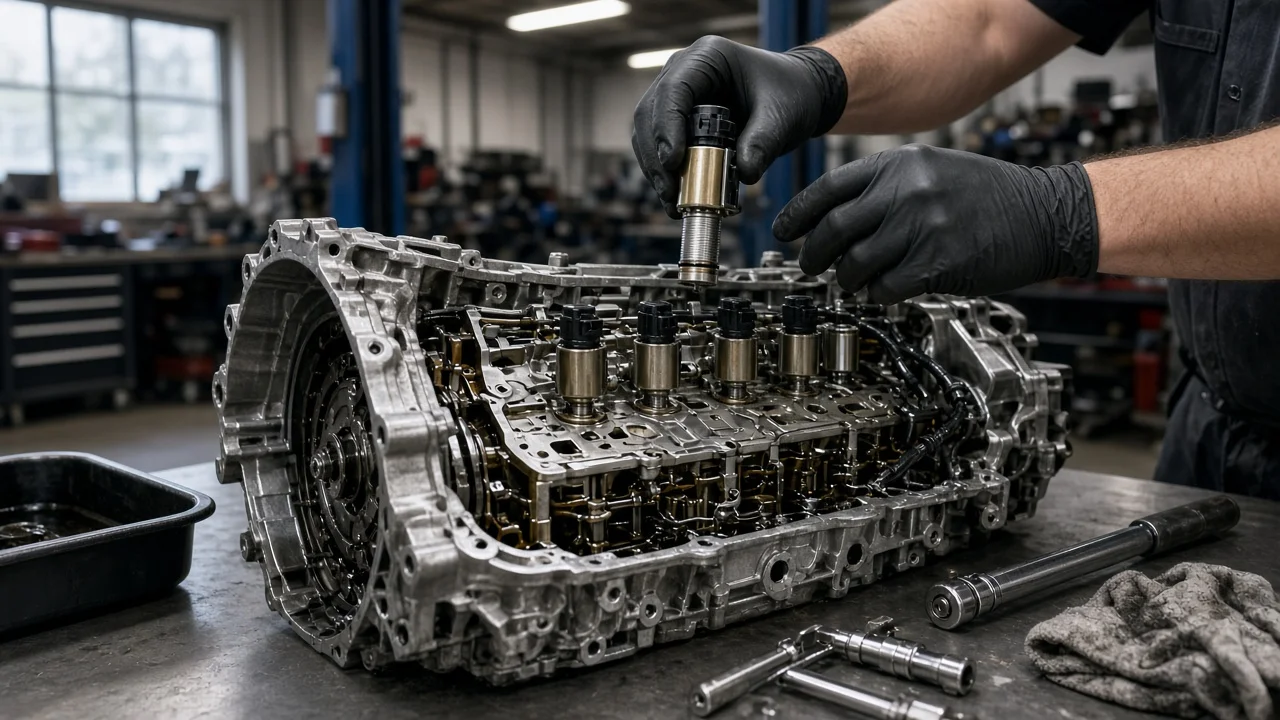
The 2004 Acura TL was offered with a 3.2-liter V6 and either a five-speed automatic or a six-speed manual. Only the automatic uses shift solenoids. On the five-speed automatic, several electrically operated shift solenoid valves control gear selection. Honda and Acura service information identifies them by letter. Separate pressure control solenoids and torque converter lock-up control work alongside them. As on other Honda-built automatics of this era, the solenoids mount on the outside of the transmission case rather than inside an oil pan.
To identify the specific solenoid you need, combine three pieces of information. First, the stored diagnostic trouble code, which names the solenoid by letter. Second, the part number printed or stamped on the solenoid body. Third, a parts lookup by your VIN. A code pointing to a solenoid circuit tells you where the control module detected an electrical fault. It does not prove that the solenoid itself has failed.
How the shift solenoids control gear changes
Each shift solenoid valve is a small electromagnet that opens or closes a hydraulic passage when the control module energizes it. Different on and off combinations send pressurized fluid to the clutch packs that make up each gear. The pressure control solenoids vary how firmly those clutches apply. They affect shift quality rather than which gear is selected.
The control module checks shaft speed sensors and, on many Honda automatics, pressure switches to confirm that a commanded shift actually happened. It also monitors the solenoid circuits for open, shorted or out-of-range readings. When something does not match, it stores a code and may switch the transmission into a fail-safe mode that limits the available gears. That is why a single fault can show up as slipping, flaring, harsh engagement or the car staying in one gear.
What changes the diagnosis
Transmission type is the first variable. A TL with the six-speed manual has no shift solenoids, so shifting complaints on that car point to the clutch, the clutch hydraulics, the linkage or the gearbox internals. You can confirm your transmission type from the shifter, the original window sticker or the identification on the transmission case.
On automatic cars, the type of code matters. A circuit code reports a low, high or open electrical condition on a named solenoid. That points toward the solenoid coil, its connector, the wiring or the module. A performance, gear ratio or shift error code means the transmission did not respond as commanded. That can come from a sticking solenoid, low or contaminated fluid, a faulty pressure switch or internal clutch wear. Read the full code description rather than relying on the number alone. Mileage, service history and whether the problem appears only when the car is hot or cold also change the likely cause.
What the owner can check
Start with a scan tool that reads transmission codes, not just generic engine codes. Record the exact codes and freeze-frame data before clearing anything. Then check the fluid level and condition using the procedure for this model, with the transmission at the specified temperature. Honda and Acura automatics of this period are sensitive to fluid specification. The original factory fluid was Honda ATF-Z1, which has since been superseded by Honda ATF DW-1. An incorrect or generic fluid can cause shift complaints on its own.
With the battery disconnected, inspect the solenoid connectors and harness. Look for corrosion, fluid inside the connector, broken locking tabs and chafed wires. The service manual gives a resistance specification for each solenoid. Compare your measurement to that range, not to a figure from another vehicle. If a solenoid tests within specification and the wiring is sound, look elsewhere for the problem.
When you buy a replacement, match the part number on the old solenoid and confirm it with a VIN-based catalog lookup. Some solenoids are sold individually and others as an assembly, and aftermarket listings sometimes group different years or models together. Replacement usually means removing the mounting bolts, fitting new seals, reconnecting the harness and correcting the fluid level. Access varies depending on which solenoid is involved.
Limitations and next step
Symptoms alone cannot confirm that a shift solenoid has failed. You need a code reading and basic electrical checks. Watch for slipping under load, burnt-smelling fluid or heavy debris on the drain plug magnet. These suggest internal wear that a new solenoid will not fix, and replacing parts in that situation can waste money.
Several situations call for a transmission specialist or an Acura dealer. These include codes that return after the solenoid and wiring have tested good, missing service manual specifications, and repairs that may need learned values reset or a software update. A shop can run active solenoid tests with factory-level equipment and check for service bulletins that apply to your VIN. Depending on what the diagnosis confirms, repair options range from a solenoid or harness repair to a rebuilt or replacement transmission.