2003 Range Rover Transfer Case Shift Motor Identification
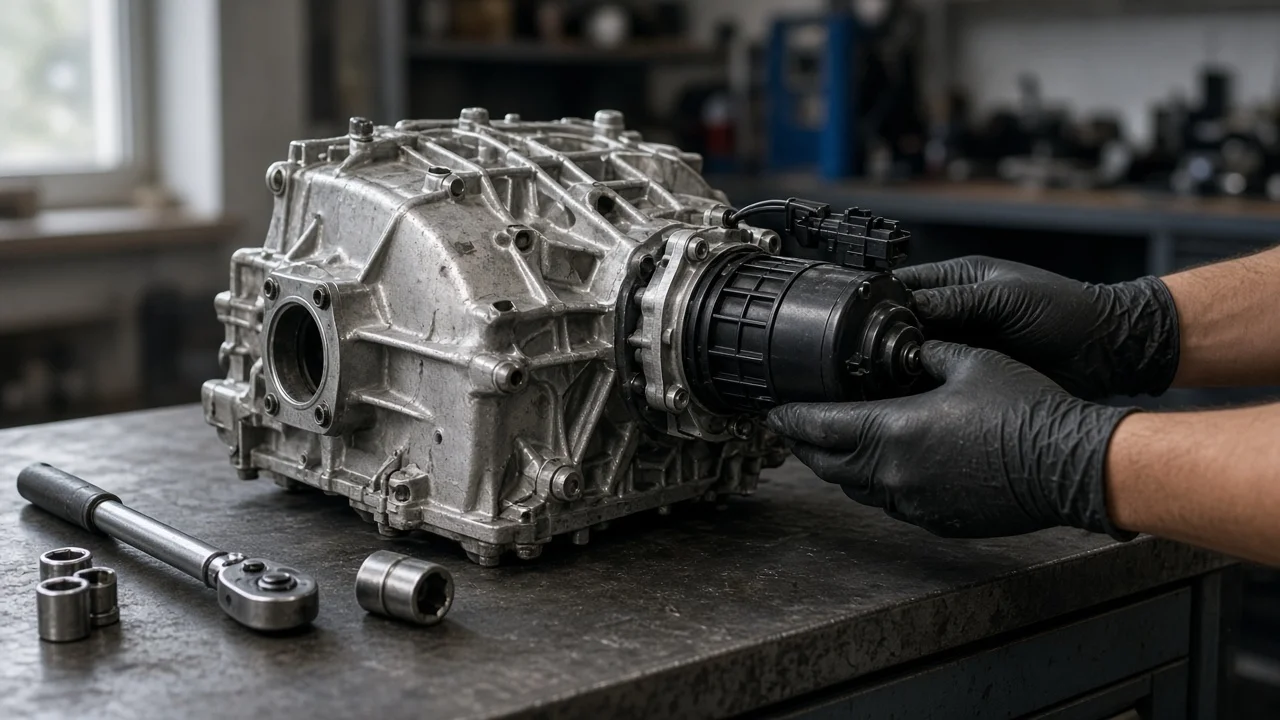
If your 2003 Range Rover will not change between high and low range, shows a transfer box warning, or seems stuck in neutral, the electric shift motor on the transfer case is a common suspect. Before buying a replacement, you need to confirm which vehicle you actually have, which motor it uses and whether the motor is really the cause. This guide explains how to identify the part and the system around it, and how to narrow down the fault.
Which shift motor a 2003 Range Rover uses
A 2003 model year Range Rover sold in the United States is the third-generation full-size model, known by the internal code L322. It replaced the earlier P38A, and its transfer case is a two-speed unit that changes range electrically. The range change is handled by a shift motor mounted on the transfer case and controlled by a transfer case control module, so there is no mechanical range lever like on older Land Rover models.
The important qualification is that the correct motor is identified by the vehicle, not by the model year alone. Land Rover made running changes during L322 production, and parts catalogs tie the transfer case and its motor to the VIN and build date. Treat the part number printed on the existing motor and a VIN-based parts lookup as the authority; a listing that simply says it fits a 2003 Range Rover is not enough proof of fitment.
How the range change system works
When you press the high/low switch on the center console, the request goes to the transfer case control module rather than directly to the motor. The module checks whether the shift is allowed, using inputs such as vehicle speed and the automatic transmission's selected position. The exact conditions are described in the owner's handbook, and a shift that is requested outside them is simply refused or delayed.
If the conditions are met, the module powers the shift motor. The motor turns a shift shaft inside the transfer case, which moves a selector to engage high range, low range or neutral. A position sensor associated with the motor reports back where the shaft actually is. The module compares the requested position with the reported one, and if they do not agree within the expected time, it stores a fault and alerts the driver through the instrument cluster.
This feedback loop explains why a shifting problem is not always a failed motor. A weak electrical supply, a damaged connector, a sensor signal error or a mechanical problem inside the transfer case can produce the same complaint from the driver's seat.
What changes the answer
The first variable is the exact vehicle configuration. Owners sometimes search for a 2003 Range Rover part when the vehicle is actually a different Land Rover model from the same year, such as a Discovery or Freelander, which use different drivetrains. Market also matters: production dates and specifications for vehicles sold outside the United States may differ, and an imported or grey-market vehicle should be checked by VIN rather than by assumption.
The second variable is the history of the transfer case itself. If the transfer case has been replaced, the motor fitted to it may not match what the original build specification shows. Service history and receipts help here, as do the identification labels on both the transfer case and the motor. A previously replaced motor may also be a remanufactured or aftermarket unit with its own part marking.
Operating conditions affect the symptoms. A system that shifts normally when warm but fails when cold, or that faults after the battery has been run down, points toward electrical or sensor causes. A motor that runs but the range does not change suggests a mechanical issue in the transfer case or the motor's internal drive.
What the owner can do
Start by confirming identity. Check the VIN on the dashboard plate or door frame and the registration documents; in a standard 17-character VIN, the tenth character indicates the model year. Then look at the shift motor on the transfer case and record any part number or label text. Photograph it before removing anything, because labels can be dirty or partly worn.
Before condemning the motor, check the basics. A healthy, fully charged battery matters on this vehicle, since low voltage can cause electronic modules to log faults. Inspect the motor connector and nearby wiring for corrosion, damage or poor contact. Note exactly what happens: whether there is a message, whether the gear indicator behaves unusually, and whether you hear the motor run when a shift is requested.
Have the fault codes read with a diagnostic tool that can communicate with the Land Rover transfer case module, not just a basic engine code reader. Stored codes help separate a motor fault from a sensor, wiring or module problem. If replacement is needed, follow the manufacturer's service procedure, because the motor's position and the transfer case shift shaft position generally need to be aligned when fitting, and the system may need to be checked or reset with the diagnostic tool afterward. If the vehicle is stuck in neutral, do not drive it and do not tow it in a way the owner's handbook does not permit. Arrange transport that matches the handbook guidance for the transfer case condition.
Limitations and next step
This article does not list part numbers, torque values, shift conditions or replacement intervals, because those must come from the manufacturer specifications for your specific VIN. The shift motor has no general maintenance schedule interval; it is replaced on condition after diagnosis. Symptoms described here are typical patterns, not a substitute for an inspection of the actual vehicle.
The practical next step is a VIN-based parts lookup through a Land Rover dealer or a specialist parts supplier, combined with a proper diagnostic scan. If codes point to the module, wiring or internal transfer case parts, or if you lack the tool needed to align and verify the system after replacement, a Land Rover specialist is the safer choice than replacing parts by trial and error.