Identifying the Pressure Control Solenoid on a 2003 Pontiac Montana
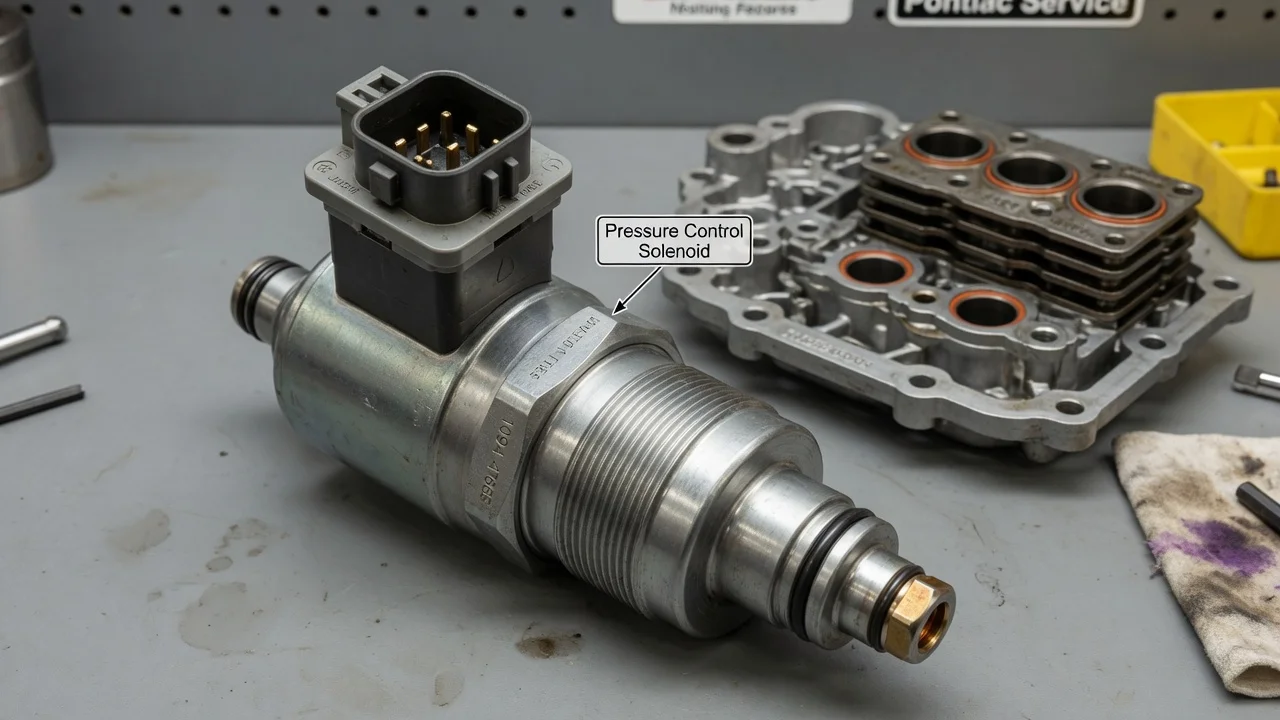
If your 2003 Pontiac Montana shifts harshly, slips between gears or has stored a transmission code, the pressure control solenoid is often one of the first parts people suspect. The solenoid does fail, but its symptoms overlap with fluid problems, wiring faults, valve body wear and computer issues. This guide explains what the solenoid is, where it sits in the van's transaxle, how it behaves when it fails, and how to decide whether it is actually the cause before you spend money on it.
Where the solenoid is and how to identify it
The 2001 through 2003 Montana with the 3.4L V6 uses GM's 4T65-E, an electronically controlled four-speed automatic transaxle. Its pressure control solenoid, often shortened to PCS, is a variable force solenoid bolted to the control valve body inside the transaxle. The valve body sits behind the side cover on the end of the transaxle that faces the driver's side of the vehicle, so the solenoid cannot be seen from under the hood or under the van. You find it only after removing that cover. Once exposed, it is a cylindrical electrical solenoid with a two-terminal connector fed by the internal wiring harness, held in place by a retainer, with O-ring seals and a small inlet screen. Several other solenoids and switches live nearby, so identify the part from the valve body diagram in the service manual for your transaxle rather than by its appearance alone.
The important qualification is that a harsh shift or a transmission code does not prove this solenoid has failed. It tells you where to start looking. The steps below are meant to separate a genuine solenoid fault from the many problems that produce similar shift behavior.
How the pressure control solenoid works
The powertrain control module decides how much hydraulic pressure the transaxle needs at any moment and controls the solenoid by varying the electrical current sent to it. The solenoid converts that current into a hydraulic signal acting on the pressure regulator valve, which sets line pressure. Line pressure is what squeezes the clutches and bands together during each shift and holds them applied once the shift is done. The module raises pressure under heavy throttle or load and lowers it during light cruising so shifts stay smooth, and it gradually adjusts its commands over time to compensate for wear.
On this transaxle, removing current from the solenoid makes line pressure go to its maximum. That design is deliberate: if the circuit opens or the module stops controlling it, the transmission defaults to high pressure and firm or harsh shifts rather than slipping and burning clutches. A solenoid that sticks, a worn valve bore or a clogged inlet screen can cause the opposite, with low or erratic pressure showing up as flares between gears, soft shifts or delayed engagement into drive or reverse. Keep in mind that the shift solenoids, not the PCS, decide which gear the transmission is in. The PCS mainly governs how firmly each shift happens, so a transmission that will not upshift at all usually points elsewhere.
What changes the diagnosis
Start by confirming the exact transmission type and configuration. Front-wheel-drive Montanas and the all-wheel-drive Versatrak versions use the 4T65-E family, but calibrations and some internal parts can differ between builds. The regular production option codes on the van's service parts identification label, plus the identification tag on the transaxle case, tell a parts counter or shop exactly which unit you have. The 2001 and 2003 model years share this transaxle family; verify the code for any other year rather than assuming the same part fits. Fitment matters, because a solenoid that looks right can still be the wrong calibration.
Fluid specification and service history also change the picture. These vans were originally filled with Dexron III, which GM later superseded with Dexron VI; check the owner's manual and use the fluid it calls for. A transaxle that has run on the wrong fluid, gone a long time without service or been overheated while towing can produce pressure-related symptoms with a perfectly good solenoid.
Diagnostic codes need careful reading. P0748 indicates an electrical fault in the pressure control solenoid circuit, which could be the solenoid coil, the internal harness, the case connector, the external wiring or the module driver. P1811 means the module has reached its maximum adjustment because a shift is taking too long. Low line pressure from the PCS can cause that, but so can low fluid, leaking seals, a worn accumulator or worn clutches. A clean scan does not clear the solenoid either, because a mechanically sticking valve usually sets no electrical code. Note whether symptoms appear only when the fluid is hot or only when it is cold, since that pattern is useful to whoever diagnoses the van.
What you can check before buying parts
Check the fluid level and condition using the procedure in the owner's manual, which for this transaxle is done with the fluid at operating temperature. Fluid that is low, dark, burnt-smelling or carrying visible debris points to problems the solenoid will not fix. Then scan for stored codes with a tool that reads transmission data, not just generic engine codes, and record the freeze frame information. If your scan tool shows commanded PCS current and line pressure related data, watching it during a test drive can reveal whether the module is commanding unusual pressure.
Write down the shift behavior in detail: which shift is affected, whether it is harsh, soft or delayed, and under what temperature and load. Inspect the external wiring connector on the transaxle case for corrosion, bent pins, damage or transmission fluid wicking into the harness, all of which can set circuit codes without the solenoid itself being bad. Collect any service history you have, including past fluid changes and repairs.
Repair options depend on what the checks show. If the fault is confined to the solenoid, it can be replaced along with its seals and screen, but access through the side cover in the minivan is tight and the job is far more involved than replacing an external sensor; follow the service manual procedure for your configuration. If the valve body bores are worn, a valve body repair or replacement may be needed instead. Buy parts by VIN and transaxle code. After any repair, clear the module's learned adjustments if your scan tool supports it, or allow them to relearn through normal driving.
Limitations and next step
Symptoms and codes alone cannot confirm a failed pressure control solenoid. A line pressure test with a gauge, compared against the factory specifications for your transaxle, together with electrical checks of the solenoid and its circuit, is what separates a solenoid fault from wiring, module or internal mechanical problems. Those specifications vary by application, so use the service information for your exact van rather than general figures.
Get professional help if codes return after the wiring checks out, if the fluid is burnt or full of debris, if the van slips under load, or if you are not equipped to support the powertrain and work inside the transaxle. Internal damage can make a solenoid replacement a wasted repair. Before visiting a transmission shop or ordering parts, gather the year, VIN, stored codes, fluid condition, service history and your notes on shift behavior so the diagnosis starts from facts instead of guesses.