2003 Miata Camshaft Position Sensor Location
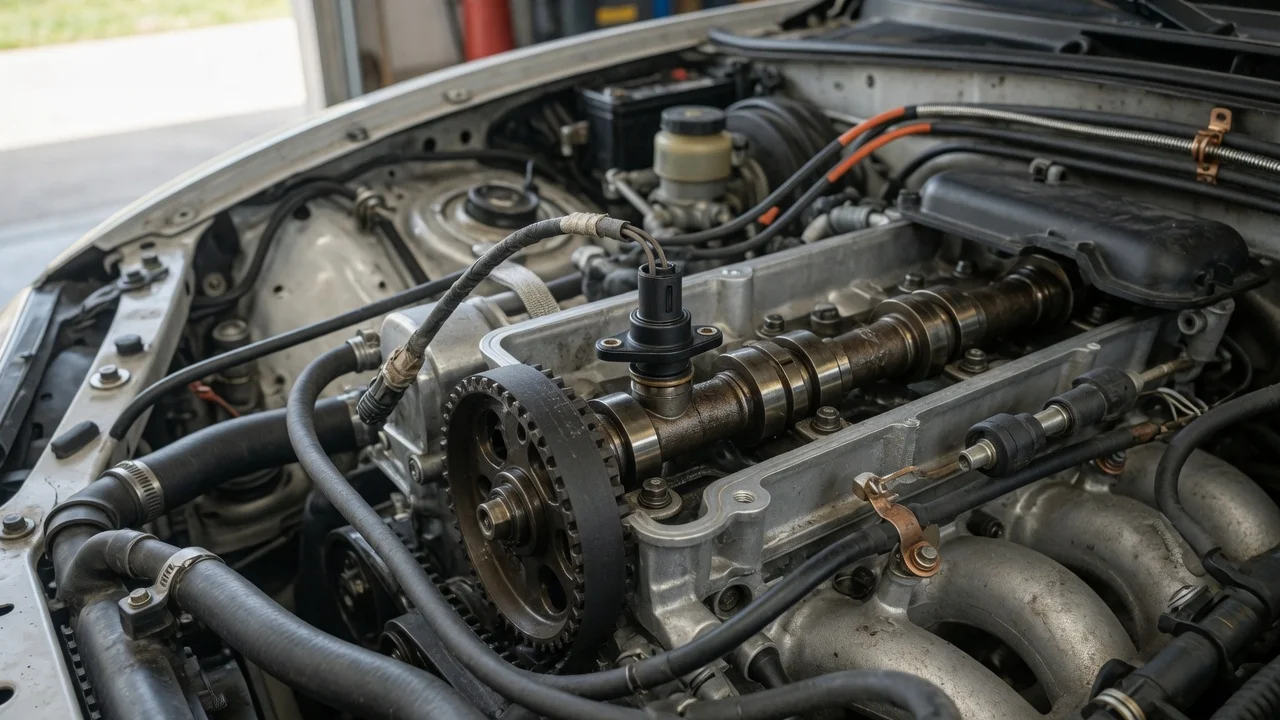
Direct answer
On a 2003 Miata, the camshaft position sensor is mounted at the rear of the cylinder head. The relevant configuration is the North American 1.8-liter BP-series engine used in the NB generation. Exact positioning can change with engine configuration, but for the standard 2003 model the sensor sits on the intake side at the back of the valve cover area.
Scope and qualification
The 2003 Miata belongs to the NB generation, sold mainly with the 1.8-liter four-cylinder engine. Turbocharged or modified Mazdaspeed variants have a related layout, but minor routing and mounting differences can apply. If the engine has been swapped or the ignition system changed, the original location description may require confirmation from documentation specific to that configuration.
How to recognize the sensor
The camshaft position sensor is a compact electrical component with a small connector and a mounting bolt. It is usually positioned near the rear intake-side portion of the cam cover. The sensor reads the camshaft rotating assembly so the engine control system can maintain proper ignition and fuel timing.
Do not confuse the camshaft position sensor with the crankshaft position sensor. The crankshaft sensor is mounted lower, closer to the crankshaft pulley or front lower timing area. The camshaft sensor is up high at the rear of the head, and the two components serve different engine timing signals.
Location cues and inspection tips
Look behind the intake-side cam cover, near the firewall. On a factory 2003 example, the sensor is accessed from above after removing or moving any nearby intake plumbing that obstructs the rear of the head. It is held by a small fastener and has a wiring connector that must be released carefully before removal.
Replacement and ownership notes
A failing camshaft sensor can cause rough running, stalling, hard starting, or an intermittent no-start condition. Before replacing the part, inspect the connector and wiring for oil contamination, corrosion, or damage. A sensor with a cracked body or loose connector can produce the same symptoms.
When installing a replacement, keep the mounting surface clean and tighten the fastener to the specified value from the applicable workshop documentation. Route the wiring clear of hot or moving components. Diagnostic trouble codes should be confirmed with a scan tool before assuming the sensor itself has failed.