2003 Lincoln Town Car Torque Converter Shudder Diagnosis
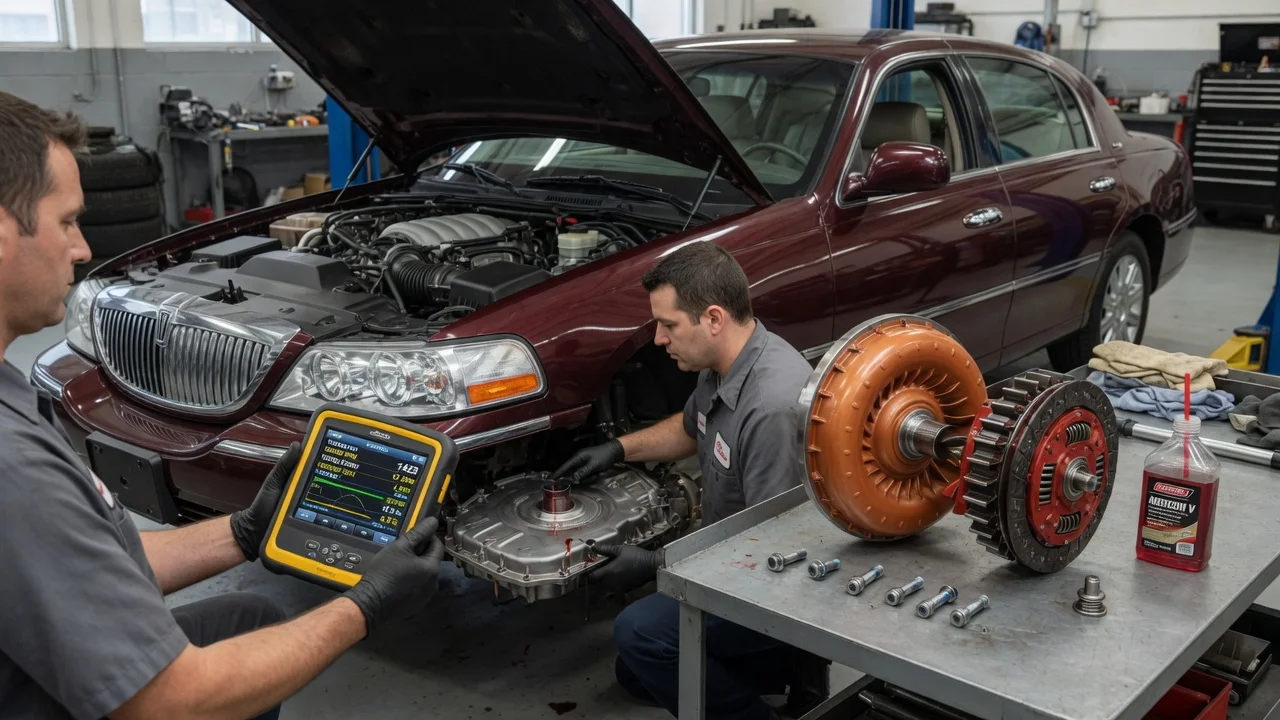
A shudder that feels like rolling over rumble strips at a steady cruising speed is a common drivability complaint on the 2003 Lincoln Town Car, and the torque converter clutch is a frequent suspect. Frequent is not the same as confirmed. Engine misfires, driveline vibration and fluid condition can all produce a similar feeling. This guide covers how to describe the symptom accurately, which causes fit which observations, and what to check before anyone replaces a converter or transmission.
Know the transmission and configuration
The 2003 Town Car pairs the 4.6-liter V8 with a four-speed automatic driving the rear wheels. For this model year Ford used the 4R75E, an electronically controlled development of the earlier 4R70W. Confirm the actual transmission type from the identification tag on the case, a VIN-based dealer lookup or the service history, especially if the car has ever received a used or rebuilt unit, because parts fitment and some test values depend on the exact transmission. Inside the torque converter is a lockup clutch that the powertrain control module applies at cruise to eliminate slip, using a solenoid in the valve body. Fluid specification directly affects how smoothly that clutch engages. Ford specified Mercon V for this transmission; confirm the requirement in the owner's manual or service information, since the wrong fluid or badly worn fluid changes the friction behavior of the lockup clutch.
Establish the symptoms
Converter-related shudder usually shows up at light throttle and moderate road speed, once the transmission reaches its upper gears and the lockup clutch begins to apply. It often feels like a rapid vibration through the seat and floor, sometimes with a low drone. Write down the road speed, the approximate engine rpm, whether you are accelerating gently, holding speed or climbing a grade, and whether the engine is fully warm. Note whether the shudder stops when you press the accelerator harder or lift off completely, how long each episode lasts, and whether it happens every drive or only occasionally. Precise notes make the later checks far more useful than a general description of a vibration.
Record associated signs as well: a check engine light, steady or flashing, a rough idle, hesitation, and any change in shift behavior such as harsh engagement, delayed upshifts or engine flare between gears. Look for fluid spots under the car and notice any burnt smell. Then review recent changes. A fluid flush or change, new tires, driveshaft or U-joint work, engine mount replacement, or spark plug and ignition coil work shortly before the shudder started is an important clue, and so is the absence of any fluid service over a long period.
Distinguish plausible causes
The torque converter clutch itself can shudder when its friction lining is worn or glazed, when the fluid has lost the friction characteristics the clutch needs, or when apply pressure is unstable because of a sticking solenoid, a worn valve body bore or low line pressure. Observations that support this group: the shudder appears only in the speed and load window where lockup applies, it is consistent from drive to drive in that window, and it stops when lockup releases. These causes are hard to separate from one another without measurements, which is why a converter diagnosis should not rest on feel alone.
An engine misfire under load is the most common imitator. The 4.6-liter V8 uses individual ignition coils, and a weak coil, worn spark plug or vacuum leak can misfire mainly under light-throttle cruise. When the converter is locked, it no longer cushions engine pulses, so a misfire feels like shudder and can seem to disappear when lockup releases. Stored or pending misfire codes, a rough idle or a stumble that also occurs during acceleration support this cause. Driveline problems are the third group: worn U-joints, driveshaft imbalance, a rear axle issue, failed engine or transmission mounts, or tires that are out of round. Vibration that follows road speed regardless of lockup, throttle or gear, and continues while coasting, points this way rather than at the converter.
Checks in a useful order
Start with observations any owner can make safely. Check the fluid level and condition using the procedure in the owner's manual, which specifies the temperature, gear selector position and level ground required for an accurate reading. Note whether the fluid is dark, smells burnt, looks milky or carries visible debris. Inspect for leaks at the pan, cooler lines and rear seal. Read diagnostic codes with a basic OBD-II scanner, including pending codes, and save them before anything is cleared. On a clear road with no traffic close behind, reproduce the shudder and then touch the brake pedal just enough to activate the brake lights without slowing the car; the brake signal normally commands the converter clutch to release. Note whether the shudder stops at that moment.
The next tests require tools, specifications or a qualified technician. A capable scan tool can show commanded converter clutch apply alongside engine speed and transmission speed data, revealing whether the clutch is slipping or cycling during the shudder, and it can display misfire counts per cylinder while driving under load. A line pressure test with a gauge, compared against the specification for this transmission, checks the hydraulic supply. The converter clutch solenoid and its circuit can be tested for resistance and wiring faults. On a lift, the technician can inspect U-joints, driveshaft runout, mounts and tires. These steps take time, but they are far cheaper than removing the transmission for a converter that was not the problem.
Interpret the findings
Diagnostic codes narrow the field without naming a part. A torque converter clutch performance code such as P0741 or Ford's P1744 means the module detected that lockup did not behave as commanded; the cause could be fluid, the solenoid, the valve body or the converter. Misfire codes mean the engine should be repaired first, followed by a retest, before any transmission work. If the brake-tap test stops the shudder, the problem is tied to the lockup event, but that result alone does not separate a slipping converter clutch from a misfire that only becomes noticeable when the converter is locked. If the shudder continues with lockup released or while coasting, the driveline and tires deserve attention before the transmission.
When the fluid is old or degraded and no hard faults appear, a fluid service with the correct specification is a common first step, and some technicians perform it before condemning the converter. If the shudder fades and stays gone, worn fluid was likely a major factor. If it returns quickly, the converter clutch or its hydraulic control becomes the stronger suspect, and slip data plus a pressure test should confirm it. Heavy friction material or metal in the pan suggests wider internal wear, which can change the repair from a converter to a rebuild. Replacing the converter without correcting a faulty solenoid or valve body can bring the shudder back.
Urgency and next action
Stop driving and arrange inspection if the check engine light flashes, which indicates a misfire severe enough to damage the catalytic converter, or if you notice slipping, engine flare between gears, delayed or missing engagement, a burning smell, an active fluid leak, loud clunks or vibration that grows suddenly worse. A mild, intermittent shudder without warning lights is less urgent, but it tends to progress, and continued slip adds heat to the fluid. There is no reliable way to predict how long the car can be driven safely, so schedule the diagnosis rather than waiting for the symptom to change.
Bring the shop the VIN, mileage, transmission identification, service history including fluid changes and the fluid used, saved codes with freeze frame data, your notes on when the shudder occurs and the result of the brake-tap test. Repair options range from ignition repairs and a fluid service to solenoid or valve body work, converter replacement, or a rebuilt or replacement transmission. Ask the technician to explain which test results support the recommended repair and whether a less invasive step should come first.