Identifying a 2003 Honda Pilot Transmission Shift Solenoid
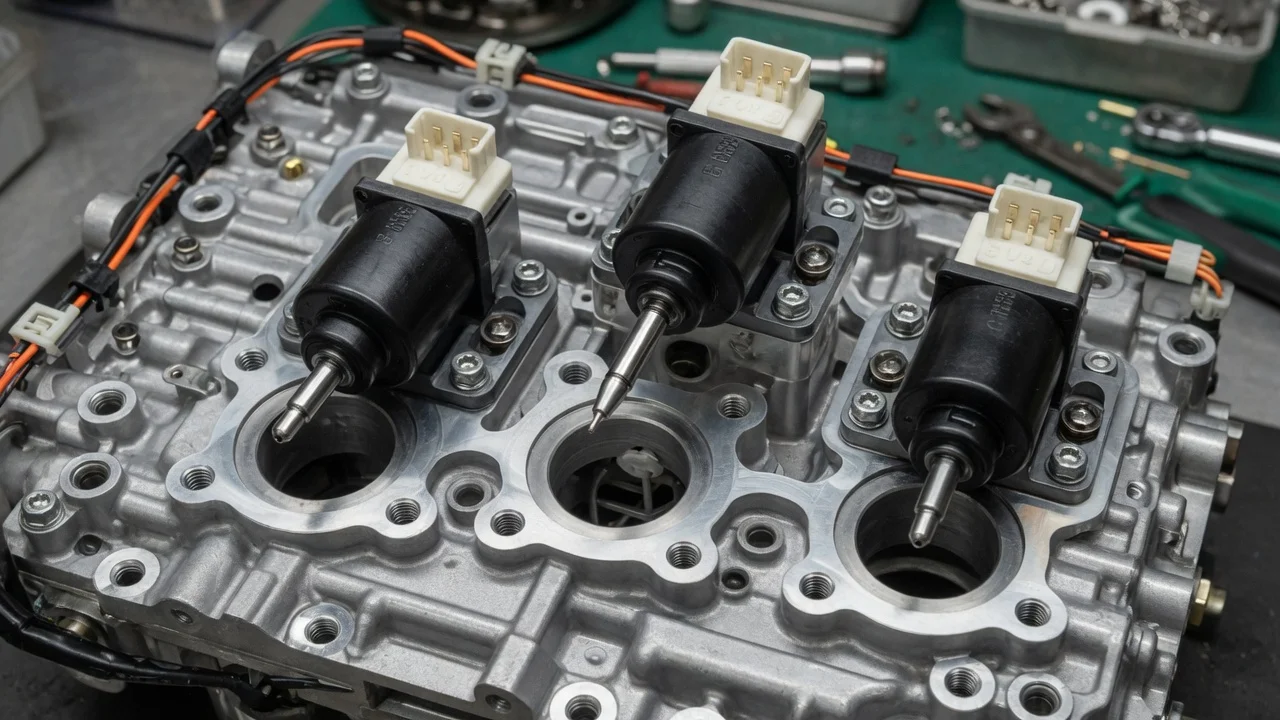
If your 2003 Honda Pilot shifts harshly, holds a gear, or blinks the D indicator, a shift solenoid is one possible cause. It is not the only one. This guide explains which solenoid parts this five-speed automatic uses, how they work, what changes the diagnosis, and how to confirm the right part before you spend money on a repair.
The short answer
The 2003 Pilot uses a Honda five-speed automatic transmission controlled by the powertrain control module. It has more than one solenoid. There are several on/off shift solenoid valves, usually labeled A, B and C in Honda service information. There are also linear pressure control solenoids and a torque converter lock-up control circuit. Saying "the shift solenoid" is ambiguous. To identify the correct part, you need the stored diagnostic code, the solenoid letter or circuit it points to, and a parts lookup tied to your VIN.
On Honda automatics of this era, the solenoid valves mount on the outside of the transmission case rather than inside a conventional oil pan. That makes them reachable without a full teardown. Access still varies with the component and the surrounding hardware. A solenoid code tells you where to start testing. It does not confirm that the solenoid itself has failed.
How the shift solenoids work
Honda's design does not use a planetary gearset with bands. Instead, it uses parallel shafts with a separate hydraulic clutch for each gear. The control module chooses a gear from vehicle speed, throttle position, engine load and other inputs. It then switches the shift solenoids on and off in specific combinations. Those combinations move shift valves in the valve body, which route fluid pressure to the clutch for the selected gear.
The linear solenoids handle a different job. They control how much pressure reaches a clutch during the shift, which affects how firm or soft the shift feels. The lock-up circuit controls torque converter clutch engagement at cruising speed. This split matters for diagnosis. An on/off shift solenoid problem tends to cause wrong-gear or missing-gear behavior. A pressure control problem more often causes harsh engagement, slipping or flare between gears.
What changes the diagnosis
Several conditions produce the same shift behavior as a bad solenoid. Low or degraded fluid can cause it. So can a clogged solenoid screen, a chafed harness, a corroded connector, a faulty speed sensor, worn clutch packs or internal valve body wear. The transmission may also enter a fail-safe mode and hold one gear to protect itself, which feels like a solenoid that is stuck. Electrical codes and performance codes also mean different things. Generic codes such as P0753, P0758 and P0763 describe electrical faults in the shift solenoid A, B and C circuits. Ratio or slip codes describe a mechanical or hydraulic result and can have many causes.
Service history also changes the picture. A transmission that has had regular fluid changes with the correct Honda fluid is a different case from one with original fluid, aftermarket universal fluid, or a previous rebuild of unknown quality. Prior repairs, transmission replacement, or recall work done at a dealer can also change which parts are installed. That is why fitment should be confirmed by VIN and not by model year alone.
What the owner can do
Start with an OBD-II scan and write down every stored and pending code, including the exact wording. Note the shift behavior in detail. Record whether the problem happens cold or warm, which gear change is affected, whether the D indicator flashes, and whether the vehicle seems to start off in a higher gear. Then check the fluid level and condition using the procedure in the owner's manual. This transmission was originally specified for Honda ATF Z1, which Honda has since superseded with ATF DW-1. Using a fluid that does not meet the Honda specification can cause shift complaints of its own.
If a code points to a specific solenoid circuit, inspect the connector and wiring at that solenoid for damage, oil intrusion or corrosion. Measuring solenoid resistance against the factory specification can help separate an open or shorted coil from a wiring or module problem. Use published values only, not guesses. Some technicians also remove a solenoid to check its O-rings and inlet screen for debris. Metal or clutch material on a screen points toward internal wear, and a new solenoid alone would not fix that.
When buying parts, look up the solenoid by VIN and by the letter or function shown in the diagnostic information. Shift solenoids, linear solenoids and lock-up components differ in connector, mounting and function, and they are not interchangeable. Your repair options range from a single solenoid with new seals, to a solenoid assembly, to valve body or full transmission work if testing shows internal damage.
Limitations and next step
This overview cannot replace the factory service manual for your exact transmission code. That manual has the solenoid locations, resistance values, torque figures and diagnostic flowcharts. Symptoms and generic code definitions narrow the search but do not prove which part has failed. Replacing a solenoid on a hunch can leave the real problem in place, whether it is wiring, fluid, sensors or worn clutches.
Get professional help if the Pilot is stuck in one gear, slips under load, shows debris in the fluid, or sets codes again after basic electrical checks. A transmission specialist or Honda dealer can read live data, command the solenoids individually and run a pressure test. A dealer can also check your VIN for open recalls or service bulletins that apply to this transmission. With that information, you can choose between a targeted solenoid repair and a larger transmission repair.