Identifying a 2003 Honda Civic Transmission Shift Solenoid
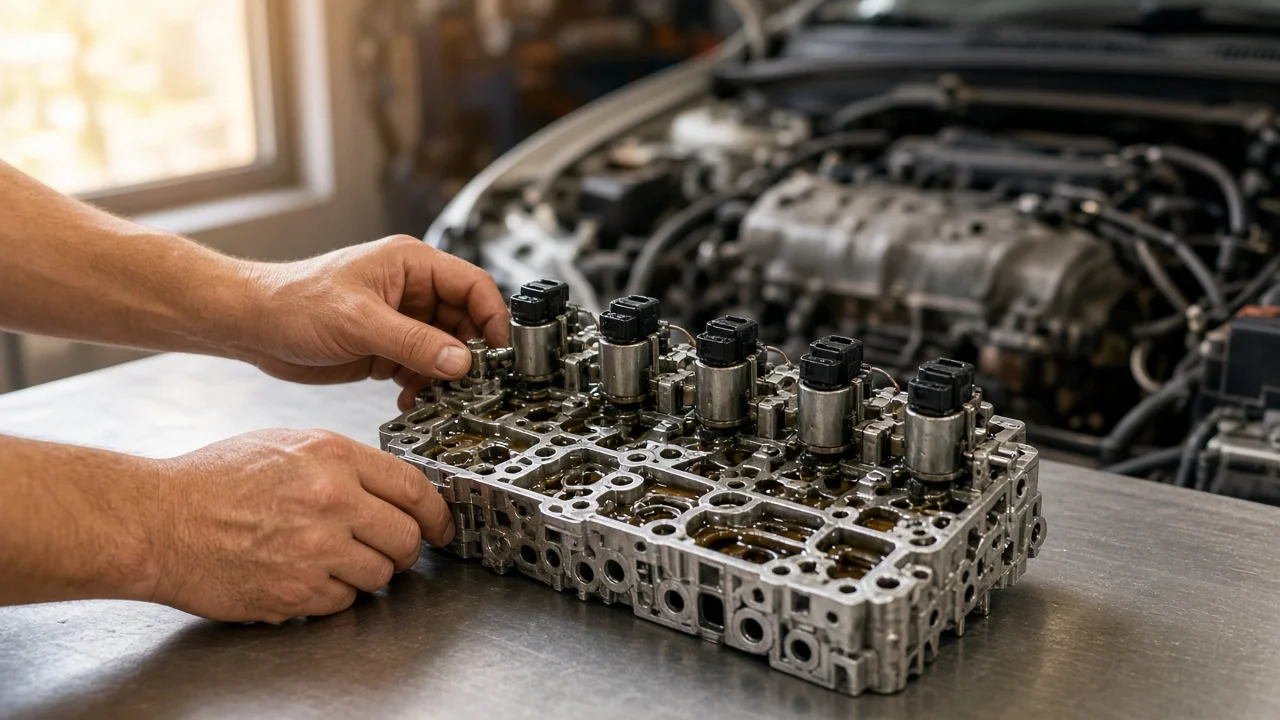
On a 2003 Honda Civic, shift solenoids only matter if the car has a conventional automatic transmission. Before you buy a part or blame one, confirm which transmission the car has, which solenoid a fault code actually names, and whether the symptom could come from something else. This guide explains how to identify the right solenoid, how it fits into the shift system, and what you can reasonably check before paying for repairs.
The short answer
Most 2003 Civic sedans and coupes with an automatic, such as the DX, LX and EX trims, use an electronically controlled four-speed automatic. The engine computer shifts it through a group of solenoid valves: shift solenoids that select the gears, a lock-up solenoid for the torque converter clutch, and pressure control solenoids that manage how firmly the clutches apply. On Honda automatics of this design, these solenoids bolt to the outside of the transmission case rather than sitting under an oil pan, so they can often be reached without opening the transmission.
To identify a specific shift solenoid, start with the diagnostic code. It usually names the solenoid by letter, such as A, B or C. The service information for that exact transmission code then shows where that solenoid sits and which connector feeds it. The replacement part should be matched by VIN or Honda part number, not by model year alone. Not every 2003 Civic qualifies. Manual-transmission cars have no shift solenoids, and the CVT used in some HX models and in the Civic Hybrid works differently, so four-speed automatic solenoid advice does not carry over to them.
How the shift solenoids control gear changes
The powertrain control module watches vehicle speed, throttle position, engine load, coolant and fluid temperature, and selector position. From those inputs it decides which gear the car should be in. It then switches the shift solenoids on or off in specific combinations. Each solenoid is an electrically operated valve that opens or blocks a passage for pressurized fluid. That fluid moves shift valves inside the transmission, and those valves send pressure to the clutch pack for the selected gear.
The lock-up solenoid controls the torque converter clutch, which locks the engine to the transmission at cruising speed. The pressure control solenoids vary clutch pressure electronically so that shifts are neither harsh nor soft. A solenoid can fail electrically, through an open or shorted coil, a damaged connector or chafed wiring. It can also fail hydraulically, by sticking from debris or varnish or because a small filter screen is clogged. Keep the limits in mind, though. Even a perfectly working solenoid cannot fix a worn clutch pack, low fluid or a failing torque converter, and all of these can produce similar shift behavior.
What changes the answer
Transmission type comes first. A four-speed automatic, a CVT and a manual gearbox each need a different diagnostic path, a different fluid specification and different parts. Within the automatic, several transmission codes were used across the generation. The transmission code, usually shown on a label or stamping on the case, settles fitment more reliably than trim level.
The kind of diagnostic code matters just as much. In the generic OBD-II scheme, codes from P0750 through P0770 cover shift solenoids A through E. Some of those codes report an electrical circuit fault. Others report a performance problem, meaning the commanded gear was not achieved. A circuit code points to the solenoid, its connector, the wiring or, less often, the control module. Gear ratio and slip codes more often point to fluid condition or internal wear. Honda-specific codes add more detail, but reading them requires a scan tool that covers manufacturer transmission data.
Operating conditions and service history narrow things down further. Note whether the problem appears only when cold, only after highway driving, or only on one particular shift. Check records for fluid changes, the type of fluid used, earlier solenoid replacements and any rebuild. This generation's automatic has a known reputation for internal wear. On a high-mileage car with slipping or flare, the case for a broad diagnosis is strong, and you should not assume the solenoid is at fault.
Checks an owner can make
Check the transmission fluid level and condition. Follow the exact procedure in the owner's manual, because Honda specifies the temperature and timing for the dipstick reading. The four-speed automatic originally called for Honda ATF Z1, which Honda has since superseded with Honda ATF DW-1. A CVT needs its own Honda CVT fluid. Generic or multi-vehicle fluids are a common cause of shift complaints in these transmissions. Dark fluid, a burnt smell or visible debris points toward internal wear, not just a solenoid problem.
Read stored and pending codes with a scanner that can access transmission data, and save any freeze frame information. On many Honda automatics of this era, a blinking D or D4 indicator means the computer has stored a transmission fault. Write down the shift behavior in detail: which gear change is affected, whether the car starts in the wrong gear, whether the engine flares between shifts, and how warm the car was at the time. A good technician can use these notes to separate a solenoid problem from a mechanical one.
With the engine off, inspect the solenoid connectors and wiring for oil intrusion, corrosion, broken locking tabs or chafing. If you have a multimeter and the service information, you can measure solenoid resistance at the connector and compare it with the published specification. Do not rely on numbers from forums. If a part is needed, confirm fitment by VIN or part number, since solenoid assemblies can differ between transmission codes.
Repair options and what each one solves
Replacing a solenoid fixes a confirmed solenoid fault and nothing more. If a code points to a circuit, repair any damaged connector or wiring first, because a new solenoid on a broken harness will set the same code again. If debris is suspected, inspect or replace the solenoid screens or filters where the design includes them. A fluid service with the correct fluid can help when the old fluid is degraded or the wrong type. On Hondas this often means repeated drain-and-fill cycles, not a single change. If fluid analysis, slip codes or road testing show internal wear, a rebuild or a replacement transmission is the realistic option, and a solenoid alone will not restore normal shifting.
Limitations and when to get professional help
A symptom alone cannot confirm a failed solenoid. Harsh shifts, delayed engagement, a stuck gear or flaring can come from solenoids, wiring, fluid, valve body problems or worn clutches. Exact locations, connector pinouts, resistance values and fluid capacities depend on the transmission code, so use factory service information for your specific car. A transmission shop can command each solenoid with a bidirectional scan tool, check line pressure and road test with live data. These steps confirm or rule out a solenoid with far more certainty than a parts swap.
If the car slips badly, will not move or overheats its fluid, limit driving to avoid further internal damage. Bring the VIN, any codes and freeze frame data, a description of the fluid's condition, your notes on shift behavior and the service history to the appointment. With that information, a professional can quickly decide whether a solenoid replacement, a wiring repair or a larger transmission repair is the right choice.