Ford F-350 Transfer Case Shift Motor Identification
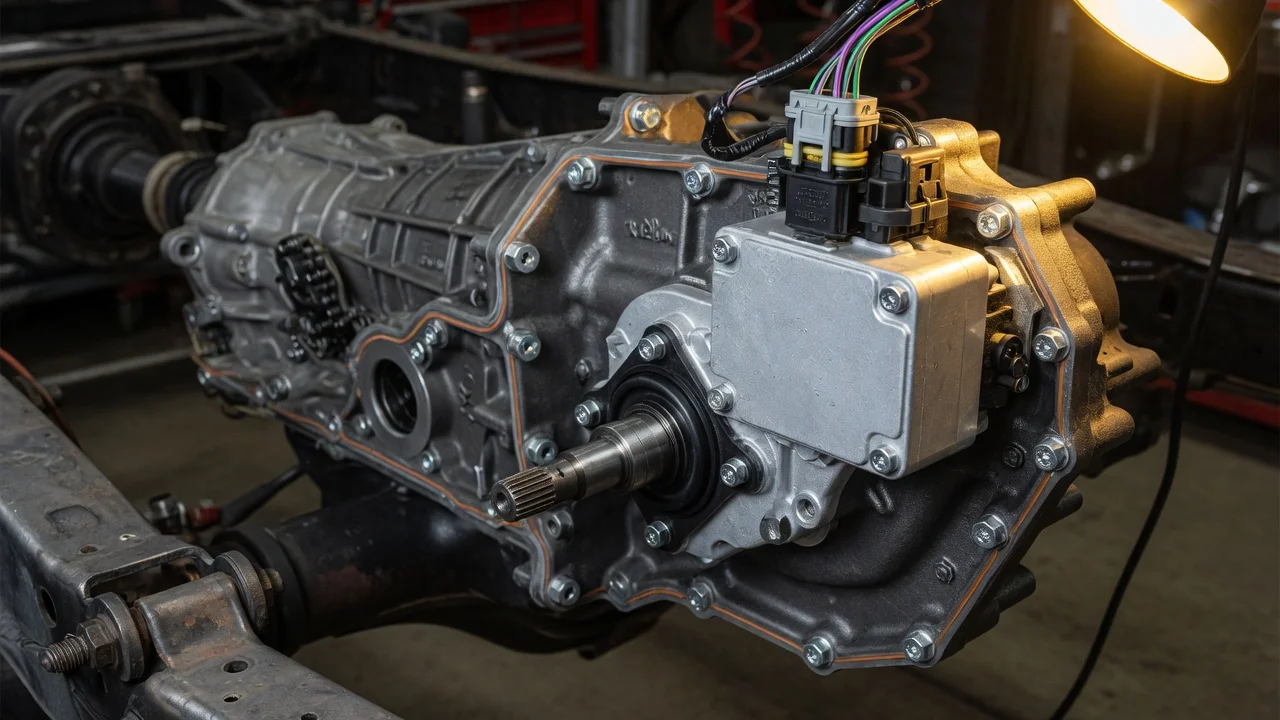
When a 2003 F-350 won't shift into or out of four-wheel drive from the dash, owners often suspect the transfer case shift motor. That motor only exists on trucks built for electronic shifting, so before ordering a part, confirm which 4x4 setup your truck has. Then match the motor by part number, not by model year alone. This guide explains how to identify the right motor, how it fits into the 4x4 system, and what to check before replacing it.
Which shift motor fits a 2003 F-350
A 2003 F-350 Super Duty 4x4 came with one of two shift arrangements. Trucks with a floor-mounted transfer case lever shift mechanically and have no shift motor. Trucks with a rotary 4x4 selector on the dashboard use electronic shift-on-the-fly, and only those have a motor bolted to the outside of the transfer case.
If your truck has the dash selector, the correct replacement is the motor specified for your exact vehicle configuration. You can identify it in two ways: read the part number on the motor already installed, or have a parts counter or dealer look it up by VIN. Do not assume a motor listed for another Ford truck will fit just because the connector or mounting pattern looks similar. Confirm the fit by part number before buying.
How the shift motor works
On electronic shift trucks, the dash selector sends a request to a control module. The module powers the shift motor, which rotates a shift shaft inside the transfer case between two-wheel drive high, four-wheel drive high and four-wheel drive low. A position sensor in the motor assembly reports where the shaft is. The module uses that signal to stop the motor in the right place and to light the correct indicator. Because the motor and sensor are serviced together, a sensor fault can look exactly like a motor that has stopped turning.
The motor handles only the transfer case. The front wheels also have to be connected through the front hubs, and that happens separately. A truck that shows a 4x4 indicator but still drives only the rear wheels may have a hub engagement problem rather than a bad shift motor. Low range has its own conditions, such as vehicle speed and transmission position, which are described in the owner's manual. If the truck refuses a low-range shift because those conditions weren't met, the motor has not failed.
What changes the answer
The biggest variable is shift type: a lever-shift truck needs no motor. On a dash-selector truck, the next question is whether the transfer case is still the original unit. Over two decades, many of these trucks have had transfer cases replaced or swapped, sometimes from a different model or year. The service history and the identification tag on the transfer case itself tell you more than the original build sheet does. If the case has been changed, the motor needs to match the case now installed.
Part numbers can also be superseded over time, so the number on your old motor may now cross-reference to a newer one. That is normal, but confirm the supersession through the parts supplier rather than guessing. Aftermarket motors are sold for this application, and connector style, mounting hardware and included seals can differ from the original. Compare them against your existing unit before installation.
Operating conditions matter too. Trucks used in road salt, deep water, mud or long periods without engaging four-wheel drive are more prone to corroded connectors and seized shift mechanisms. These conditions can cause symptoms that look like a failed motor, even when the motor itself is fine.
What the owner can do
Start by confirming that the truck has the dashboard 4x4 selector. Then get under the truck and find the motor on the transfer case. Clean the housing gently and record any part number or label. While you are there, record the transfer case identification tag. With those numbers and your VIN, a parts supplier can confirm the correct motor without guesswork.
Before buying a motor, do a basic inspection. Check the relevant fuse in the owner's manual. Unplug the motor connector and look for green corrosion, bent or pushed-back pins, and damaged wiring along the harness. Then have a helper turn the selector while you listen near the transfer case. Note what the 4x4 indicators do: a light that flashes, stays on or never comes on is useful information for whoever diagnoses the system.
Your observations narrow down the cause. If the motor clearly runs but the truck doesn't change range, suspect the internal shift mechanism, the transfer case or the front hubs. If the motor is completely silent, check power, ground, the connector and the control signal before blaming the motor. A seized motor or shift shaft points toward the motor assembly or the transfer case, and is worth a closer look before you order parts.
Limitations and next step
There is no universal replacement interval for a transfer case shift motor. It is replaced when testing shows it has failed, not on a fixed maintenance schedule. Exact wiring colors, pin assignments, expected voltages and module diagnostic procedures belong to the factory service information for your specific truck. Use that information, or a scan tool that can read the 4x4 control system, rather than generic values.
Get professional help in these situations: the truck is stuck in four-wheel drive, the transfer case makes grinding or clunking noises, fluid is leaking, or electrical testing shows a problem in the module or wiring rather than the motor. Avoid driving a part-time 4x4 system engaged on dry pavement while you sort out the problem, because it binds the driveline. Your next step is to collect the motor part number, the transfer case tag and the VIN, and have the correct part confirmed before you buy it.