2003 Ford F-150 4WD Actuator Fitment: How to Match the Right Part
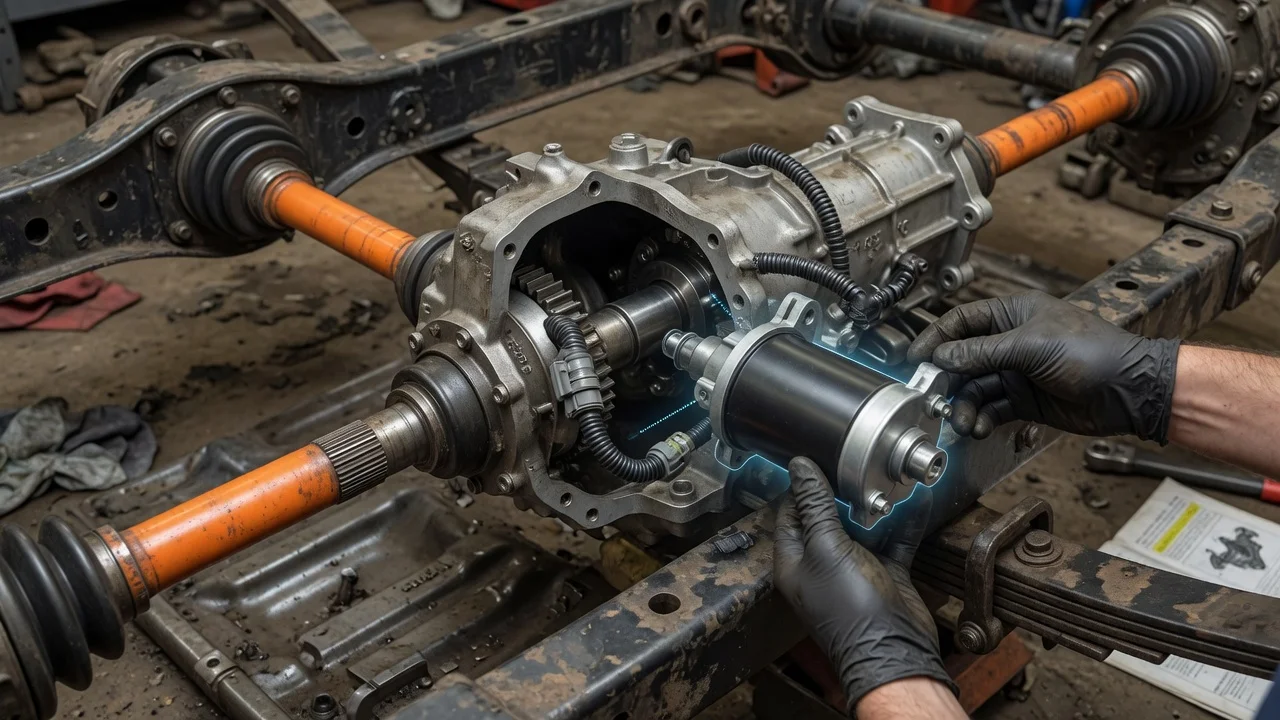
Buying the right 4WD actuator for a 2003 Ford F-150 depends less on the model year than on how your truck shifts into four-wheel drive. That one year includes trucks with an electronic dash selector, trucks with a floor lever, and many cab, engine and trim combinations. This guide explains which actuator you are probably looking for, what decides fitment and how to confirm the part before you order.
Short answer: it depends on how your truck shifts
No single 4WD actuator fits every 2003 F-150 4x4. Owners searching for this part usually mean one of two components. The first is the electric shift motor on the transfer case, used on trucks with a rotary 4WD selector on the dash. The second is the vacuum-related hardware that engages the front hubs. A truck with a floor-mounted transfer case lever does not use an electric shift motor, so a shift motor ordered for it will not fit.
The reliable approach is to identify the shift system first. Then match the part to the transfer case and your VIN, not just to the year and model name. A replacement advertised as fitting a 2003 F-150 4WD may still be limited to certain configurations in the listing details, and most fitment mistakes start there.
How the 4WD engagement system works
On electronic-shift trucks, turning the dash selector sends a request to the truck's control electronics. They power the shift motor on the side of the transfer case, which turns the shift mechanism inside the case. An internal position sensor, often called the encoder, reports where the mechanism ended up. If the reported position does not match the request, the 4WD indicator may flash, stay off or show the wrong mode.
The front wheels also have to be connected to the axle. On most trucks of this generation, the front hubs are engaged by vacuum. A solenoid controls that vacuum, and lines run out to each wheel end. A worn shift motor, a faulty encoder, a vacuum leak and a damaged hub actuator can all cause the same complaint: four-wheel drive will not engage. That is why replacing whichever part is easiest to reach is a common and expensive mistake.
What changes the correct part
The first divider is the shift method: electronic shift-on-the-fly with a dash knob, or a manual floor lever. Among electronic-shift trucks, the transfer case model matters next. The shift motor has to match the case it bolts to and the harness connector it plugs into. Cab style, engine and trim usually do not change the actuator on their own. Catalogs sometimes split listings by production date, though, so a truck built early or late in the model run can fall on either side of a split.
Watch the year overlap as well. The 2004 F-150 Heritage continued the previous design, while the redesigned 2004 F-150 used different hardware. Do not assume a part listed for a 2004 truck fits yours, or the reverse. Used parts from a donor truck add uncertainty, because the donor's configuration and service history are rarely documented. Operating conditions matter too. Mud, road salt and water crossings tend to corrode connectors and age vacuum lines, and that damage may be the real fault.
How to confirm fitment before you buy
First, check the dash and floor to confirm the shift method. Then find the identification tag on the transfer case and record what it says. Add your VIN and the production date from the driver door jamb label. Give all of this to the parts supplier or dealer, and ask them to confirm the part number against your exact vehicle configuration rather than just the year and model.
If possible, compare the old part with the replacement side by side. Check the mounting bolt pattern, connector shape and pin count, and the shaft or drive feature that engages the transfer case. For vacuum parts, compare fitting sizes and line routing. Before installing a new actuator, inspect the fuses, wiring, connectors and vacuum lines. A new motor will not fix a broken wire or a cracked hose.
Signs that point to the actuator
A few observations can narrow the fault before you spend money. On electronic-shift trucks, have a helper turn the selector while you listen near the transfer case. A brief motor sound suggests power is reaching the motor. Silence can point to the motor, its power supply or the selector switch. An indicator that flashes or never changes fits a position-reporting problem, but it does not prove which part failed. If the transfer case shifts but the front wheels do not drive, look at front hub engagement and its vacuum supply before blaming the shift motor.
Keep a record of what you tested and what you replaced. That service history saves time if the problem returns, and it keeps a mechanic from repeating checks you have already done.
Limitations and when to get help
This guide covers how to identify the right actuator, not every possible drivetrain failure. Exact part numbers, connector details, torque values and any setup steps depend on your truck. Take them from the manufacturer specifications or a parts catalog matched to your VIN. Nothing here replaces testing the electrical circuit or vacuum system on the vehicle itself.
Get professional help if the transfer case is stuck between modes, if you hear grinding or clunking during engagement, if the wiring shows heat damage, or if a new actuator does not fix the symptom. A shop with a scan tool and factory wiring and vacuum diagrams can check the electronic controls and the front engagement together. That is usually faster and cheaper than replacing parts one at a time. Unless your owner documentation lists the actuator in the maintenance schedule, replace it only when testing shows it has failed.