Identifying the Pressure Control Solenoid on a 2003 Buick Rendezvous Transmission
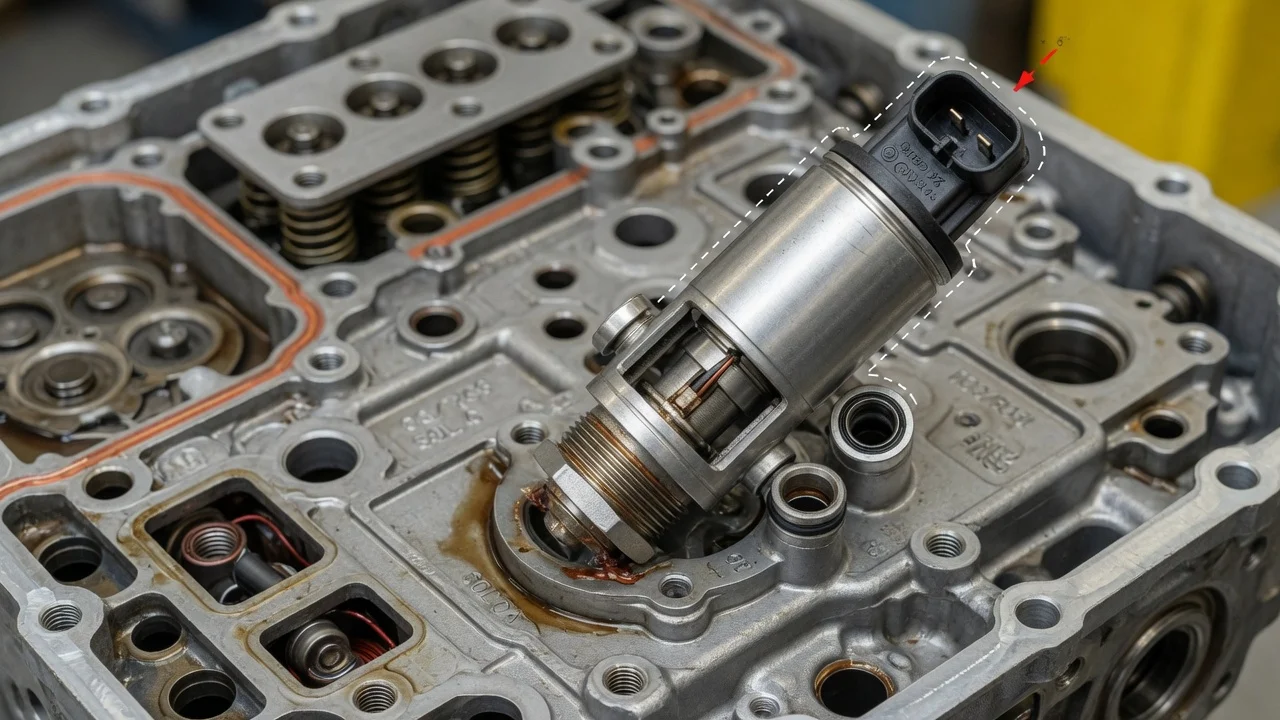
On a 2003 Buick Rendezvous, the transmission pressure control solenoid is an electronically controlled valve inside the automatic transaxle. It sets line pressure on command from the powertrain control module. It becomes a suspect when shifts turn harsh, slippery or erratic, but a symptom alone does not prove the solenoid has failed. This guide covers what the part is, where it sits, how it works and how to confirm a fault before buying anything. Most of it also applies to 2004 through 2006 models.
The short answer: what it is and where it sits
Across its production run, the Rendezvous used GM's 4T65-E four-speed automatic transaxle in both front-wheel-drive and all-wheel-drive versions. The pressure control solenoid is mounted on the valve body. The valve body sits behind the large side cover at the driver's-side end of the transaxle, not in the bottom pan that holds the filter. The solenoid connects electrically through the transmission's internal wiring harness, which exits through a connector on the case. The basic design is shared by the 2004, 2005 and 2006 Rendezvous. Parts suppliers can still list different part numbers within that span, so confirm fitment against your transmission identification rather than the model year alone.
Getting to the solenoid means draining fluid and removing the side cover. On this crossover the cover sits close to the frame rail and the left-side chassis components. Depending on the procedure, access may require removing the wheel and splash shield and supporting or shifting the powertrain. That makes it a moderate to difficult job for a home mechanic, and many owners leave it to a shop once the diagnosis is confirmed.
How the pressure control solenoid works
The powertrain control module calculates the line pressure the transaxle needs from several inputs: throttle position, engine load, vehicle speed, gear range and fluid temperature. It then sends a varying electrical current to the pressure control solenoid. The solenoid converts that current into a hydraulic signal that adjusts the pressure regulator valve, which raises or lowers line pressure throughout the transmission. In this GM design, more current produces less pressure. With no current, the system defaults to maximum line pressure. This fail-safe protects the clutches from slipping when the electrical control is lost.
Line pressure determines how firmly the clutches and bands apply. Too little pressure lets them slip, which shows up as flared upshifts, delayed engagement or a sense that the engine revs without pulling. Slipping also generates heat and wear. Too much pressure causes harsh engagements and firm, banging shifts. The module also learns over time, adjusting its commands to compensate for normal wear. A mechanical or electrical problem can therefore show up gradually before it becomes obvious.
What changes the diagnosis
Start by identifying the exact configuration. A 2003 Rendezvous came with the 3.4-liter V6, while some later trims offered a 3.6-liter engine, and front-wheel-drive and all-wheel-drive models differ in driveline hardware. Read the regular production option codes on the service parts label, usually in the glove box, and the identification tag on the transaxle case. These codes tell a parts counter or technician which transmission build you have. Check the fluid specification as well. These transaxles were originally filled with Dexron III, which GM has since superseded with Dexron VI. Confirm the current recommendation in your owner's manual or service information before topping off or changing fluid.
The type of fault also matters. An electrical problem in the solenoid circuit, such as an open or short, usually sets a diagnostic trouble code, commonly P0748 for pressure control solenoid electrical. The module then typically commands maximum line pressure, producing harsh shifts. A solenoid that sticks mechanically because of debris or internal wear may set no code at all, causing erratic pressure while still testing normal electrically. Several other faults produce similar symptoms: low or degraded fluid, a worn valve body bore, a damaged internal harness, a leaking case connector, a module problem or worn clutches. Service history helps narrow this down. Overheated, overdue or contaminated fluid points toward wider internal wear rather than a single bad part.
What the owner can do first
Check the fluid level and condition using the procedure in your owner's manual, which normally specifies a level surface and fluid at operating temperature. Note whether the fluid smells burnt, looks dark or carries visible debris. Then record shift behavior in detail. Note which shifts are affected, whether the problem appears cold or hot, and whether it is constant or intermittent. Scan for diagnostic codes with a tool that reads transmission data, and write down any codes and freeze-frame information before clearing anything.
Inspect the external case connector and the harness near the transaxle for fluid wicking, corrosion, chafing or loose locks. An enhanced scan tool can display commanded and actual pressure control solenoid current. A shop can compare those values against a line pressure check when the service procedure calls for one. These tests separate a solenoid fault from wiring, module or hydraulic problems far more reliably than symptoms alone.
Repair options depend on what the testing shows. If the solenoid itself is confirmed faulty and the fluid is clean, replacing it along with a new side cover gasket and the correct fluid is a reasonable fix. If the fluid is burnt or full of debris, or the clutches are already slipping, a new solenoid alone is unlikely to last. In that case a valve body repair, an overhaul or a remanufactured transaxle may be the realistic choice. After any repair, the adaptive shift values may need a reset or relearn with a scan tool, as the service procedure directs.
Limitations and next step
Symptoms and trouble codes point toward a circuit or system, not a guaranteed failed part. Resistance values, current readings and pressure specifications must come from service information for your specific transmission build. Generic figures can mislead. Professional help makes sense in several situations: when access requires supporting the powertrain, when codes involve several solenoids or the internal harness, when slipping continues after basic checks, or when you lack a scan tool that shows transmission data.
As a next step, gather the VIN, the option codes, any stored codes, your fluid observations and your notes on shift behavior. Give them to a transmission shop and ask the technician to verify the pressure control solenoid fault before replacing it. That keeps the repair matched to the actual cause and avoids paying for a part your Rendezvous may not need.