2002 Pontiac Grand Prix Pressure Control Solenoid Location
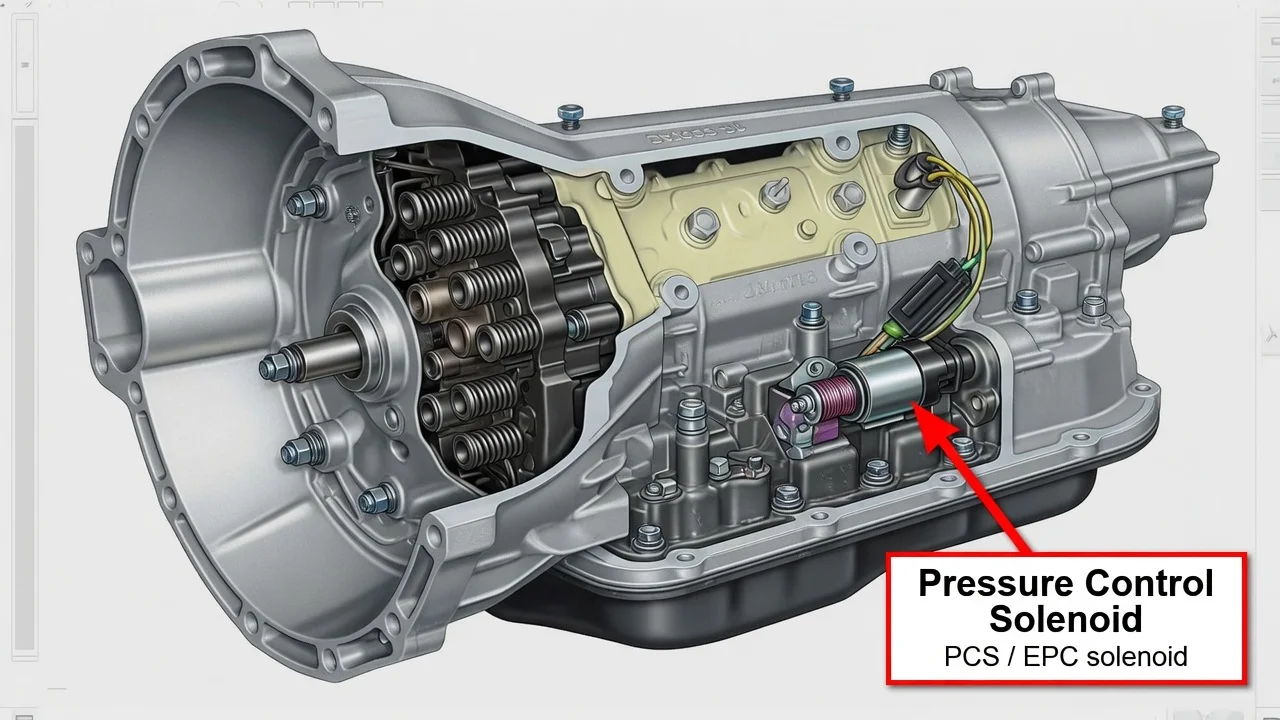
On a 2002 Pontiac Grand Prix, the pressure control solenoid is not an external part you can reach from under the hood. It sits inside the automatic transaxle, mounted on the control valve body behind the side cover. That location explains why replacing a small part can become a substantial job, and why the diagnosis should be confirmed first. This guide covers where the solenoid is, what it does, what affects the work, and the sensible steps an owner can take.
Where the Pressure Control Solenoid Is Located
Every 2002 Grand Prix came with GM's 4T65-E four-speed automatic transaxle. The supercharged GTP used a heavy-duty version of the same unit. In this transmission type, the pressure control solenoid is attached to the control valve body. The valve body is mounted on the end of the transaxle that faces the driver's side of the car and is enclosed by the side cover, sometimes called the valve body cover or channel plate cover. Because the transaxle is mounted sideways in this front-wheel-drive car, that cover faces the left front wheel well and frame rail.
You cannot see the solenoid until the fluid is drained and the side cover is removed. Once the cover is off, the solenoid is visible on the valve body, held in place by a retainer and plugged into the transaxle's internal wiring harness. That harness runs to the main electrical connector on the transaxle case, where the powertrain control module (PCM) wiring connects. In practical terms, the solenoid is inside the transaxle, on the valve body, behind the driver-side cover.
How the Solenoid Controls Line Pressure
The PCM sets transmission line pressure by varying the electrical current it sends to the pressure control solenoid. The solenoid converts that current into a regulated hydraulic signal, which acts on the pressure regulator valve. The PCM raises or lowers line pressure based on throttle position, engine load, fluid temperature and the gear being selected. This is the main reason one shift feels firm and another feels smooth. Correct line pressure lets the clutches apply fully without slipping and without a harsh bang.
If the PCM detects a problem in the solenoid circuit, it can store a diagnostic code such as P0748, which indicates an electrical fault in the pressure control solenoid circuit. Depending on the fault, the PCM may fall back to high line pressure to protect the clutches, which usually feels like harsh, firm engagements and shifts. A solenoid that sticks mechanically or is restricted by debris can instead cause soft, delayed or erratic shifts, sometimes without any code. These same complaints can also come from low or degraded fluid, worn clutches, valve body bore wear, damaged wiring, a poor connector or a PCM issue. A symptom points to an area to test, not to a confirmed failed part.
What Changes the Job on Your Car
The 2002 Grand Prix was offered with a 3.1-liter V6, a 3.8-liter V6 and a supercharged 3.8-liter V6 in the GTP. The solenoid's position on the valve body is the same in principle across these versions. Surrounding components, available clearance and internal parts can differ, though, especially with the heavy-duty unit. Before buying parts, confirm fitment using the VIN or the transmission identification, not just the model year.
Access is the main variable. Service procedures for this layout typically involve raising and securely supporting the car, removing the left front wheel and inner splash shield, and draining the fluid before removing the side cover. Depending on the version and the procedure followed, there may not be enough room to remove the cover in place. In that case the engine is supported and the left side of the subframe is lowered, or other components are moved aside. Follow the factory service information for your configuration rather than a general description.
Service history also matters. A transaxle that has been rebuilt, had valve body work or received aftermarket shift-correction parts may not match the original configuration. Records of fluid changes, prior repairs and earlier codes help a technician decide whether the solenoid is a realistic suspect or whether wear elsewhere is more likely.
What the Owner Can Do
Start with a scan tool that can read transmission codes and data, not only generic engine codes. Write down every stored and pending code along with any freeze-frame data. Then check the fluid level and condition using the procedure in the owner's manual or service information. The factory fluid specification for this transaxle was Dexron III, which GM has since superseded with Dexron VI. Low fluid, a burnt smell, dark color or visible debris changes the diagnosis considerably.
Record the shift behavior in detail. Note whether the problem appears cold or hot, on specific upshifts or downshifts, or when shifting into drive or reverse, and whether it is constant or intermittent. Inspect the visible wiring harness and the transaxle connector for damage, corrosion, chafing or fluid inside the connector. These observations help a technician separate an electrical fault from a hydraulic or mechanical one.
Repair options depend on what testing shows. If the solenoid itself is confirmed faulty, replacing it with a correctly matched part, installing a new side cover gasket and refilling with the specified fluid may solve the problem. A fault in the internal harness calls for harness replacement. Valve body wear may require valve body service, and internal clutch damage points to an overhaul or replacement transaxle. After any repair, clear the codes and road test the car. Depending on available tools and the procedure, the transmission's adaptive shift values may also need to be reset.
Limitations and When to Get Professional Help
This article describes the general layout and logic of the system. It does not replace the service manual for your vehicle, which provides the exact removal steps, fastener torque values, electrical test specifications and fluid fill procedure. A circuit code identifies a circuit problem, not necessarily a bad solenoid. Wiring, connectors and the PCM all have to be ruled out with proper electrical testing against the published specifications.
Consider a transmission specialist if shifts stay harsh or slip without clear codes, if the fluid is burnt or contains metal debris, or if access requires supporting the engine and lowering the subframe. A specialist can measure actual line pressure with a gauge and compare it with commanded values, which is the most direct way to show whether the pressure control solenoid is the cause or whether the problem lies elsewhere in the transaxle.