2002 Ford F-150 Brake Fluid Level Sensor: Identification and Location
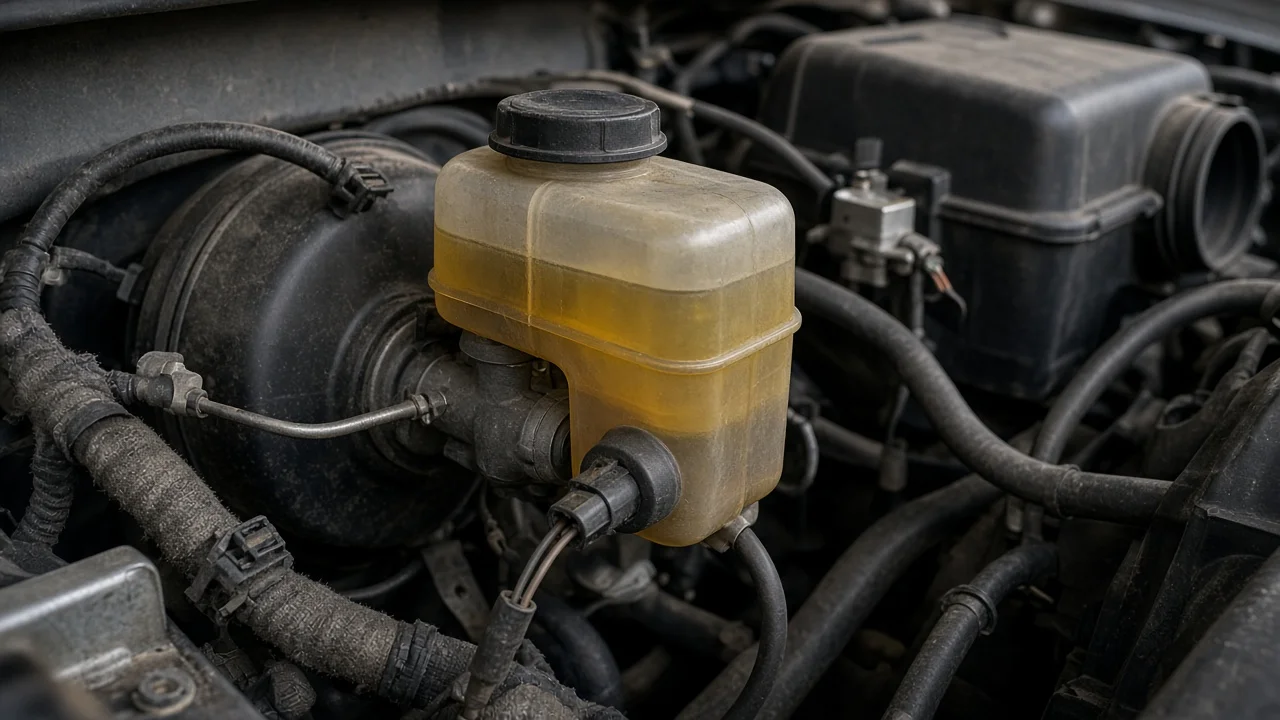
On a 2002 Ford F-150, the brake fluid level sensor is a float-operated switch built into or attached to the brake master cylinder reservoir. When the fluid drops low enough, it signals the red BRAKE warning lamp on the instrument cluster. This guide explains how to find and recognize the sensor, why it turns on the light, what can make your truck differ, and what to check before replacing parts or driving further.
Where the sensor is and how to recognize it
The master cylinder sits on the driver's side of the engine compartment, mounted to the front of the vacuum brake booster at the firewall. The reservoir on top is translucent plastic, so you can see the fluid against MIN and MAX marks molded into its side, and its cap usually lists the fluid specification. The level sensor is normally the only electrical part on that reservoir. Look for a small connector with a short wiring pigtail plugged into the reservoir body or the area near the cap. That connector, not the metal pressure lines leading away from the master cylinder, is the sensor connection.
Identification comes with a qualification. Reservoir designs are not identical across every truck of this generation, and on some the switch is a separate plug-in part while on others it is integrated with the reservoir and serviced as an assembly. Before buying a part, confirm vehicle fitment with your VIN, because a sensor that looks similar may not seal or connect correctly in a different reservoir.
How the fluid level sensor works
Inside the reservoir, a float rides on the fluid surface. As the level falls toward the minimum mark, the float drops and operates a switch, completing the circuit to the red BRAKE warning lamp. The same lamp also lights when the parking brake is applied, and on some configurations an anti-lock brake fault can affect it as well. A single lamp can therefore have several causes, and the level sensor is only one of them.
The sensor only reports level. It does not measure fluid condition, moisture content or line pressure. Fluid level also drops gradually and normally as brake pads wear, because the caliper pistons move outward to follow the thinner friction material and more fluid stays in the calipers. A light that appears after many miles may point to pads approaching their wear limits rather than a leak, but a leak still has to be ruled out before you assume that.
What changes the answer on your truck
Cab style and drive type do not move the master cylinder, but the brake configuration can change the reservoir and how the warning circuit is wired. Depending on trim and options, these trucks may have rear-only or four-wheel anti-lock brakes with different hydraulic control hardware, and the SVT Lightning used its own brake package. A previous owner may also have installed an aftermarket or remanufactured master cylinder whose reservoir differs from the original, sometimes with no working sensor fitted at all.
Operating conditions matter too. Fluid shifts when the truck is parked on a steep slope or during hard braking and cornering, so a borderline-low level can make the light flicker briefly before it stays on. The level also rises when worn pads are replaced and the caliper pistons are pushed back, which is why a reservoir topped up to MAX on worn pads can overflow during a later brake job.
What you can check yourself
Park on level ground with the engine off. Release the parking brake completely and note the lamp behavior with the key on. Wipe the reservoir clean and read the level against the marks. If it sits between MIN and MAX and the parking brake is fully released, the light more likely comes from the switch, its connector, the wiring or the parking brake switch than from low fluid. Inspect the sensor connector for corrosion, a broken latch or a chafed wire.
If the fluid is low, find out why before topping it up. Check pad thickness where it is visible, then look behind each wheel, at each caliper, along the steel and flexible lines, and at the rear of the master cylinder where it meets the booster for any wetness. Note rotor condition while you are there. Add only the brake fluid type specified on the cap or in the owner's manual, from a sealed container, and avoid overfilling. Brake fluid absorbs moisture and damages paint, so keep the cap off only briefly and wipe spills right away.
Treat the light as a safety warning, not just a possible sensor fault. If the pedal feels soft, sinks toward the floor, the truck pulls to one side, or the level keeps dropping, stop driving and have the brakes inspected. A low-fluid condition can mean a hydraulic leak that reduces braking ability.
Limitations and when to get professional help
This article describes the general layout and operation of the sensor for this model year. It cannot confirm the exact part, connector shape or wiring on a particular truck. For circuit tests, connector pin identification, specification values and replacement steps, use the factory service information for your VIN. Any multimeter test of the switch should follow that procedure rather than an assumed open or closed state.
Get professional help if you find a leak, if pad or rotor wear is at or near the wear limits, if the warning lamp stays on after the fluid level and parking brake are confirmed correct, or if the master cylinder or reservoir must be replaced. Those jobs can require bleeding the system and, with anti-lock brakes, specific procedures. A brake technician can confirm whether the cause is the sensor itself or a hydraulic problem that needs attention first.