Acura RL 2002 Steering Angle Sensor Guide
Direct Answer and Scope
For the 2002 Acura RL, the steering angle sensor is an electronic component mounted in the steering column that measures the rotation angle and turning direction of the steering wheel. It sends that signal to the vehicle stability assist system and related modules. The essential qualification is that the 2002 RL predates widespread steering-angle-based stability control on some later models, so not every 2002 RL may use the sensor for the same functions as a modern car. In this generation, the steering angle sensor is primarily associated with the optional or standard Vehicle Stability Assist system, and its exact behavior can vary depending on trim and market. A failed or miscalibrated sensor typically sets a diagnostic trouble code and may illuminate the VSA warning light, but it usually does not prevent normal power steering operation.
What the Steering Angle Sensor Does
The steering angle sensor measures how far the steering wheel is turned relative to a neutral center position. It also detects the direction of rotation. The sensor commonly uses a combination of optical, magnetic, or contact-based elements inside a clock spring or column-mounted module. The signal is used by the Vehicle Stability Assist system to compare the driver's intended direction, based on steering input, with the vehicle's actual yaw rate and lateral acceleration. If the car is not following the intended path, VSA can reduce engine output or apply individual brake pressure. The steering angle sensor is therefore an input device, not an actuator. It does not apply steering force or change steering feel directly.
Location and Identification
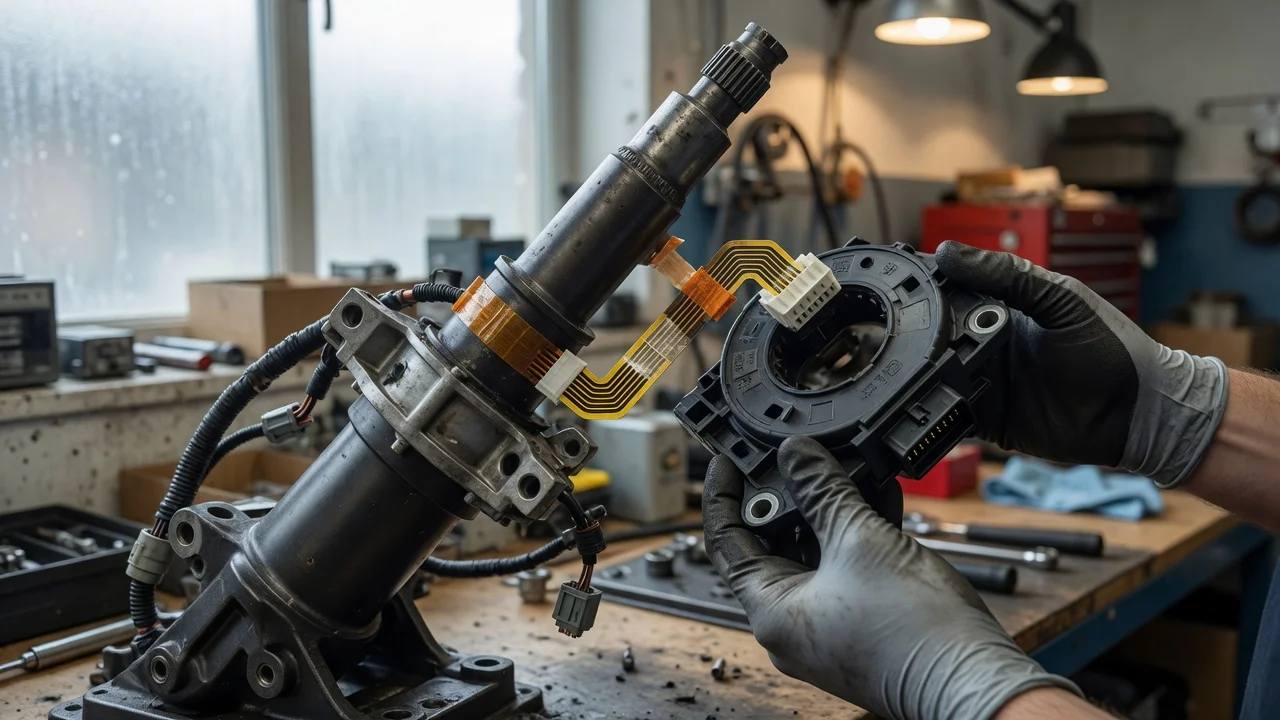
On the 2002 Acura RL, the steering angle sensor is located in the steering column area, typically integrated with or mounted near the combination switch assembly behind the steering wheel. It may be combined with the clock spring or installed as a separate ring-shaped component around the steering shaft. Identification can be difficult without disassembly because the sensor is not visible from the engine bay. The component generally has a small electrical connector and may be labeled with a Honda or Acura part number. Before replacing it, verify the exact configuration for the specific trim, since different column assemblies may use different sensor mounting styles.
Symptoms and Failure Signs
A failing or uncalibrated steering angle sensor on a 2002 Acura RL can produce several symptoms. The most direct sign is an illuminated VSA warning light or a stored diagnostic trouble code related to the steering angle sensor circuit or signal. In some cases the VSA system may disable itself, meaning stability assistance is unavailable until the fault is corrected. Drivers may notice that the VSA activates unexpectedly during normal driving, such as applying brake pressure or reducing throttle without apparent need. Other reported symptoms include intermittent VSA warning lights, a steering wheel that is slightly off-center after alignment, or failure of related systems like adaptive cruise control if equipped. A steering angle sensor fault does not normally cause a heavy or stiff steering wheel because the hydraulic power steering system is separate.
Diagnostic Process
Diagnosis starts with retrieving diagnostic trouble codes from the VSA or ABS module using a compatible Honda or Acura scan tool. A generic OBD-II scanner may not read all steering angle sensor codes. The relevant codes can indicate an open circuit, short circuit, implausible signal, or missing calibration. A technician may then view live data from the steering angle sensor while turning the steering wheel from lock to lock. The reported angle should change smoothly from a negative value to a positive value with the wheel centered near zero degrees. Erratic jumps, fixed values, or readings that do not match actual wheel position point to a sensor or wiring fault. Calibration can sometimes be performed with the scan tool or by following a specific procedure, such as driving straight at a set speed, but the exact method varies.
Replacement and Calibration Considerations
Replacement of the steering angle sensor generally requires removing the steering wheel and possibly the combination switch or clock spring assembly. Because the sensor is located near the airbag, the airbag system must be handled according to safety procedures, including disconnecting the battery and waiting the specified time before disconnecting airbag components. A new steering angle sensor usually requires calibration or center position learning with a dedicated scan tool after installation. If calibration is not performed, the VSA system may continue to set a fault code or activate incorrectly. Some replacement sensors are supplied with a locking pin or centering tab that must remain in place until the sensor is mounted, then removed before calibration. Confirm the correct replacement part for the 2002 RL and the specific column variant before ordering.
Known Gaps and Practical Limits
The available coverage does not include exact torque specifications, wiring pinouts, or a step-by-step removal procedure for the 2002 Acura RL steering angle sensor. Factory service information is required for those details. The coverage also does not specify whether every 2002 RL in every market was equipped with Vehicle Stability Assist, so the presence and function of the steering angle sensor may depend on the original options. If no VSA-related warning light or diagnostic code is present, other steering, ABS, or wheel speed sensor problems should be ruled out before attributing a driveability issue to the steering angle sensor.