2001 Dodge Ram 1500 4WD Actuator Fitment: How to Match the Right Unit
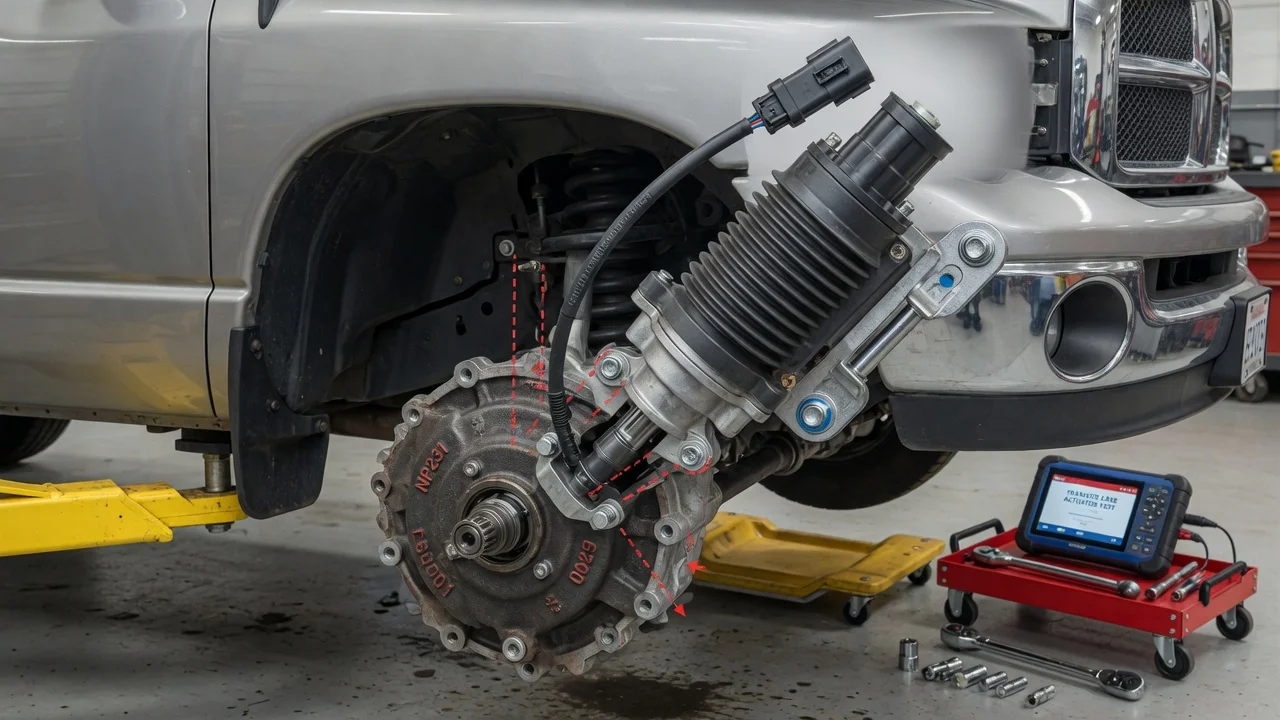
If the front wheels on your 2001 Dodge Ram 1500 4x4 stop pulling when the transfer case is shifted into four-wheel drive, the front axle actuator is one of the first parts worth checking. Finding a replacement that actually fits depends on your exact vehicle configuration, not just the model year printed on a parts listing. This guide explains what the actuator does, which details decide fitment and how to confirm the right unit before you spend money on it.
Which actuator fits a 2001 Ram 1500 4WD
The 2001 Ram 1500 four-wheel-drive truck does not rely on locking front hubs. Instead, its front axle uses a center axle disconnect, and the actuator mounted on the axle housing next to the differential is what engages and releases that disconnect. A correct replacement therefore has to match the disconnect design used on your axle, the way the actuator is operated (vacuum or electrical), its mounting flange and bolt locations, and the way it engages the shift mechanism inside the housing.
A part listed for a 2001 Ram 1500 4WD is a reasonable starting point, but the most reliable fitment check is a direct comparison with the unit already on your truck. Keep in mind that 2001 was the last year of this body style for the 1500. The redesigned 2002 Ram 1500 uses a different front suspension and front drive layout, so actuators for 2002 and later trucks should not be assumed to interchange. The heavier-duty 2500 and 3500 models from the same years use different front axles as well, so their parts need to be confirmed separately rather than treated as a substitute.
How the front axle disconnect works
In two-wheel drive, the actuator holds a sliding shift collar in its released position. That leaves the front axle shaft on one side split into two sections, so the front wheels can roll freely without driving the front differential gears and front driveshaft through their full rotation. This reduces drag and wear on front driveline parts during normal road driving.
When you move the transfer case lever into 4HI or 4LO, a switch on the transfer case signals the system, and the actuator slides the collar across so the two shaft sections lock together. Torque from the front driveshaft can then reach both front wheels. On a vacuum-operated setup, engine vacuum is routed through a solenoid to the actuator; on an electrical setup, the actuator is powered directly through a wiring connector. Either way, the actuator only moves the collar. A worn collar, damaged splines, a leaking vacuum line or a failed transfer case switch can produce the same no-engagement symptom as a bad actuator, which is why diagnosis matters before buying.
What changes the fitment answer
The biggest variable is how the actuator on your particular truck is operated. Trucks from this generation are known to differ in actuation method depending on production, so do not assume your 2001 uses the same style as another truck of the same year. A quick visual inspection usually settles it: vacuum hose connections point to a vacuum-operated unit, while an electrical connector points to an electrically operated one. Buying the wrong type means it will not connect to your truck's system at all.
Other details also change the answer. Only four-wheel-drive trucks have this actuator, so a 2WD Ram 1500 will not show it in any parts lookup. The axle identification tag and your VIN help confirm which front axle the truck left the factory with. Service history matters too: a previous owner may have installed a non-original actuator, replaced the axle, or fitted an aftermarket kit that changes or eliminates the disconnect. Lifted trucks or trucks used hard off-road may also have damaged mounting areas or hardware, and those operating conditions can affect whether a standard replacement bolts up cleanly.
What the owner can do before buying
Start with a careful inspection. With the engine off and the truck safely supported, locate the actuator on the front axle and note its connection type, mounting bolts and overall shape. Look for cracked or disconnected vacuum hoses, a corroded or loose electrical connector, broken mounting hardware and signs of gear oil seeping around the actuator. Then think about how the symptom appears. If the front driveshaft turns in four-wheel drive but the front wheels do not pull, the disconnect is a likely suspect. A grinding or ratcheting noise from the front axle area when engaged can suggest the collar is only partially moving.
When you shop, use your VIN for the parts lookup and compare the listing photos and description against your existing unit for connection type, flange shape and bolt positions. Check whether the replacement includes a new seal or gasket, since a poor seal can lead to leaks. Removing the actuator may let some axle gear oil out, so plan to check and top up the front axle fluid afterward using the type listed in the manufacturer specifications. Actuators are generally replaced when they fail rather than at a set point in the maintenance schedule, but front axle fluid service is worth checking against your owner's manual while the area is open.
Limitations and next step
No general guide can guarantee fitment for every 2001 Ram 1500 4WD, because production differences and later modifications are common on trucks of this age. A new actuator also will not fix a worn shift collar, damaged axle splines, a vacuum leak elsewhere in the system, a faulty transfer case switch or a wiring fault. If a replacement does not restore engagement, the problem lies elsewhere in the system and needs further diagnosis.
If the inspection shows damage inside the disconnect housing, a bent shift fork or anything that requires opening the axle, a qualified technician with access to the factory service information is the better route. Otherwise, the practical next step is simple: identify the actuator type on your truck, confirm the axle and configuration with your VIN, compare the replacement side by side with the original, and only then order the part.