2001–2003 Chevy Impala Pressure Control Solenoid: How to Identify It
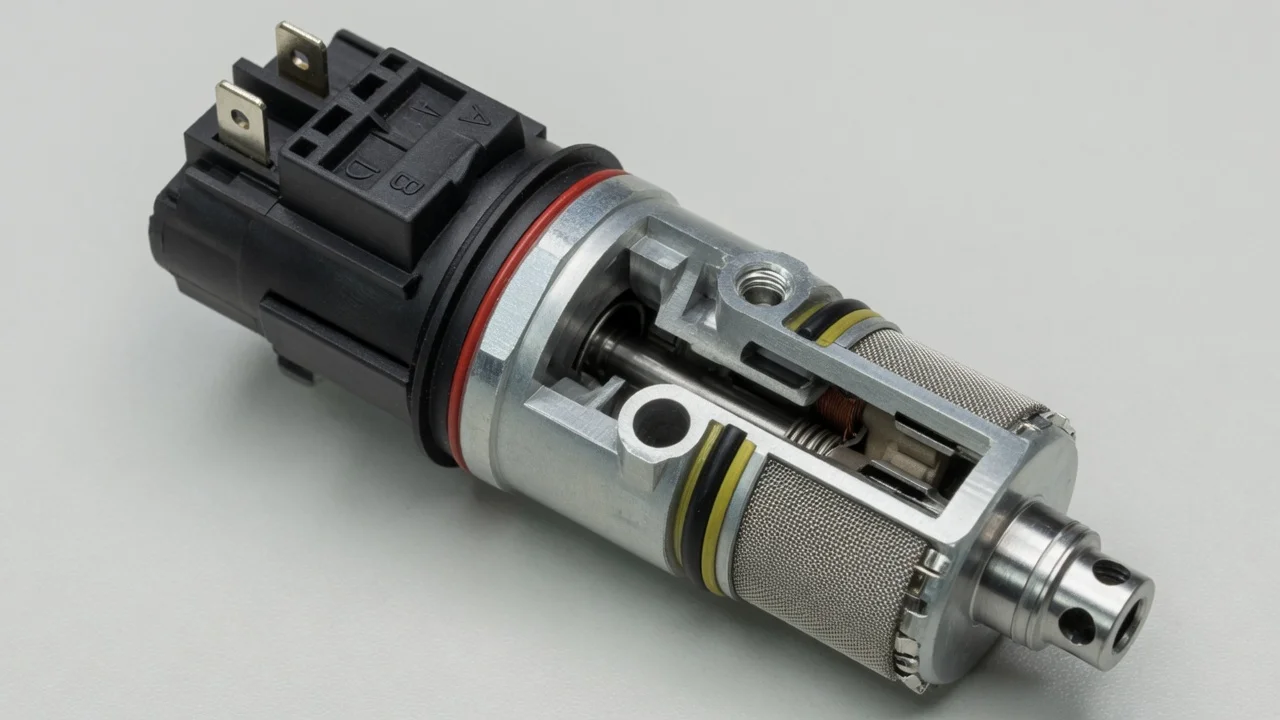
If your 2001, 2002 or 2003 Chevy Impala shifts harshly or has stored a transmission code, the pressure control solenoid usually comes up early in the conversation. This guide explains which part that is, where it sits in the transaxle, how it differs from the other solenoids, and how to confirm fitment and narrow down the fault before buying anything.
The short answer: what the part is and where it sits
Every 2001–2003 Impala left the factory with the same transmission type: the 4T65-E four-speed automatic transaxle, paired with either the 3.4L or the 3.8L V6. Its pressure control solenoid, often abbreviated PCS, is an electronically controlled valve that sets main line pressure inside the transmission. It is mounted on the valve body, behind the side cover on the driver's side of the transaxle, and it plugs into the internal wiring harness rather than into a connector you can reach from under the hood.
Visually, the PCS is a cylindrical solenoid with a small electrical connector and a fluid passage protected by a fine filter screen, held in a bore of the valve body by a retainer. It is a different part from the two shift solenoids, which are simple on/off valves, and from the torque converter clutch solenoid. Parts listings may also call it a force motor or variable force solenoid; for this transmission, those names refer to the same component.
How the pressure control solenoid works
The powertrain control module varies the electrical current sent to the PCS. The solenoid converts that current into a regulated hydraulic signal that acts on the pressure regulator valve, which in turn sets line pressure. Line pressure determines how firmly the clutches and bands apply during each shift and how well they hold under load, so the PCS has a direct effect on shift feel.
On this design the relationship is inverse: more current lowers pressure, less current raises it. If the circuit opens or the module stops driving the solenoid, pressure goes to maximum. That fail-safe protects the clutches from slipping but produces hard, abrupt shifts. The module also adjusts commanded pressure over time based on how long each shift takes, so shift behavior can change as internal parts wear even when the solenoid itself is working correctly.
What changes the answer for your car
Within the 2001–2003 range the basic transmission is the same, but GM revised 4T65-E internal parts during production, and solenoid part numbers were superseded over time. Engine, model year and build date can affect which valve body and solenoid your car has. The dependable way to confirm fitment is the VIN or the RPO codes on the Service Parts Identification label, together with the identification tag on the transmission case. Matching only by photo or a generic Impala listing is how owners end up with a connector or body that does not fit.
People searching for a 2011 Impala pressure control solenoid end up in the same transmission family, because the 2011 car with the 3.5L or 3.9L V6 also uses a 4T65-E. That does not make the parts interchangeable with a 2001–2003 unit, since the later transmission received further revisions. The 2012 and 2013 cars with the 3.6L moved to a six-speed with a different control layout, so treat any later model year as its own fitment question.
Condition matters as much as configuration. The original fill was Dexron III, and Dexron VI supersedes it for service; follow the fluid specification for your vehicle. Low, burnt or contaminated fluid can clog the PCS screen or let pressure fall regardless of the solenoid's health. A high-mileage transmission with no record of fluid service is also more likely to have valve body wear that produces symptoms similar to a solenoid problem.
What the owner can do
Start with the fluid: check level and condition using the procedure for your vehicle, with the transmission at operating temperature, and note any burnt smell or visible debris. Then read diagnostic codes with a scan tool that can access transmission data, not only generic engine codes. A P0748 code points to the PCS electrical circuit, which includes the solenoid, the internal harness, the case connector and the control module. Codes for long or slow shifts point to a hydraulic or mechanical problem that the PCS may or may not be part of.
Record shift behavior in detail. Harsh shifts on every gear change, starting the moment the car is driven, fit the maximum-pressure default described above. A flare or slip on one particular shift, or a problem that appears only when hot, suggests looking elsewhere as well. If your scan tool shows commanded and actual PCS current, compare them while driving. Inspect the external transmission connector for fluid intrusion, corrosion or loose pins, since a wiring fault can set the same electrical code as a failed solenoid.
If testing points to the solenoid, repair options include replacing the PCS alone, replacing it along with the other solenoids while the side cover is off, or addressing valve body wear at the same time. The job involves draining fluid and removing the side cover, and access next to the frame rail is tight, so additional disassembly may be needed. Plan on a new side cover gasket and the correct fluid. Afterward, shift adapts may need to be reset with a scan tool and relearned through normal driving.
Limitations and next step
This guide identifies the part and outlines a diagnostic path; it does not replace the factory procedure for your VIN. Resistance values, current specifications, torque values and the exact disassembly sequence depend on the transmission build, so take them from the service information for your vehicle. A failed PCS is one possible cause of harsh or erratic shifting, not the default conclusion.
Get professional help when codes return after a wiring repair, when the fluid shows heavy debris or a burnt smell, when the car slips or loses a gear, or when you do not have a scan tool that can read transmission data and reset adapts. A transmission shop can measure line pressure with a gauge, which separates a solenoid fault from valve body wear or internal leakage before money is spent on parts.