2000 Jeep Grand Cherokee Rear Axle Bearing: Choosing the Correct Part
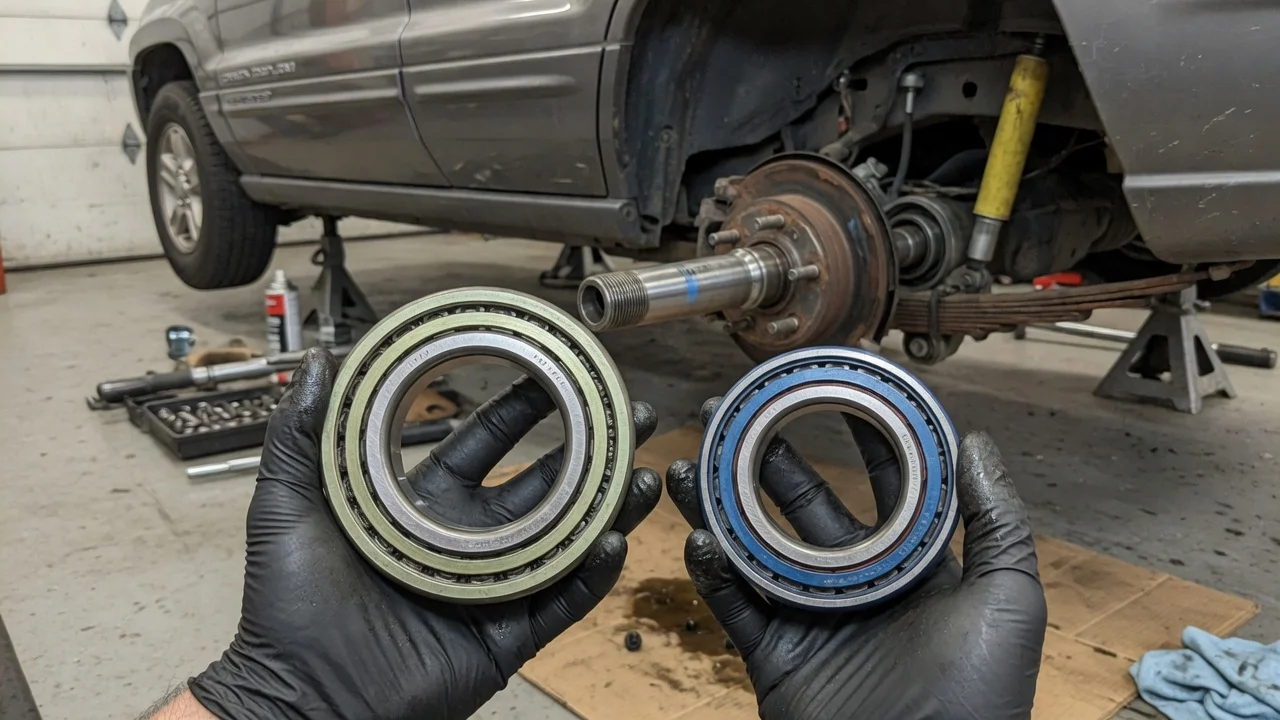
A rear axle bearing on a 2000 Jeep Grand Cherokee usually gets replaced once it starts to growl, leak or show play. Ordering the right part is harder than it looks. The rear axle fitted to this model year varied with trim and options, and the bearing, seal and axle shaft work as a set. This guide explains how to match the part to your vehicle configuration and what to budget for beyond the bearing itself.
Define the job the bearing must do
On this Jeep, each rear axle bearing supports the vehicle's weight at that corner. It also keeps the axle shaft centered in the housing tube so the outer seal can hold gear oil in. In the common semi-floating design, the rollers ride directly on a machined section of the axle shaft instead of on a separate inner race, and that affects which replacement you need. Before buying anything, confirm the noise or leak actually comes from the axle end. A worn bearing usually makes a hum or growl that rises with road speed and may change when the load shifts in turns. Cupped tires, a failing pinion bearing or worn differential gears can sound similar. Signs that point to the axle end include gear oil on the inside of the wheel, the brake components or the backing plate, and play or roughness you can feel when you check the shaft with the wheel off.
Also think about how the vehicle is used. A daily driver on paved roads, a Jeep that tows and one that regularly crosses water or mud each put different demands on the seal and bearing. Water that gets into the axle through a damaged seal or vent contaminates the oil and shortens bearing life. Your operating conditions should therefore guide whether you replace one side or both and how closely you inspect the fluid.
Check compatibility with your axle
The 2000 Grand Cherokee did not use a single rear axle across the range. Depending on trim and drivetrain options, the rear axle is commonly a Dana 35 or a Dana 44, and bearing dimensions differ between axle types. The model year alone is not enough to order the correct bearing. You need to identify the axle itself.
The most reliable way to identify it is the tag or stamping on the axle housing or cover bolts. Combine that with the build information tied to the VIN, which a dealer parts department can usually decode. The shape of the differential cover and its bolt count give a quick visual clue, but confirm them against the tag. This matters most on a used vehicle, where the axle may have been swapped. Note whether the differential is open or limited-slip, because that changes the fluid requirements for the job. When comparing listings, check the bearing's inner diameter, outer diameter and width against the published part data for your axle, and choose a seal made for the same axle and bearing. If you are also replacing the shaft, confirm its length, spline count and retention design.
Features that affect the choice
Most rear axle bearings for this application are roller bearings pressed into the housing tube. The differences that matter between products are dimensional accuracy, the quality of the rollers and cage, and whether a seal is included or sold separately. Some kits bundle the bearing with a matching seal, which lowers the risk of pairing parts made to different specifications. Labels such as heavy duty, premium or OE quality prove nothing on their own. Look instead for clearly stated dimensions, a listed axle application, a manufacturer that publishes part numbers and a stated warranty.
The second decision is the axle shaft. Because the rollers run directly on the shaft, a pitted, grooved or discolored bearing surface will quickly ruin a new bearing. If that surface is damaged, you have two options. One is a replacement shaft. The other is a repair bearing designed to ride on a different, unworn section of the shaft, usually paired with a matching seal. Repair bearings can save the cost of a shaft, but they must be specified for your axle, and you still need to inspect the shaft where the new bearing will run. Use a standard bearing only when the shaft surface is smooth and within the manufacturer specifications.
Limitations and ownership costs
The bearing is rarely the only expense. On C-clip axles, removing the shaft usually means draining the differential, removing the cover and pinion shaft, and pushing the axle shaft inward to release its retaining clip. The old bearing comes out of the tube with a slide hammer and bearing puller. The new one goes in with a driver that presses evenly on the outer race. Budget for new axle seals, a differential cover gasket or sealant, and fresh gear oil of the type and quantity listed in the service information. Limited-slip differentials may need a friction modifier or a specific fluid, so confirm the requirement for your axle before refilling. If oil has soaked the brake pads or parking brake shoes, those parts may also need attention, since contaminated friction material generally should be replaced rather than cleaned.
A new bearing cannot fix problems elsewhere in the axle. It will not quiet worn ring and pinion gears, straighten a bent shaft or housing, or stop a leak from a cracked vent or a pinion seal. There is no universal replacement interval. The practical approach is to inspect the axle during fluid service, follow the maintenance schedule for your vehicle and its operating conditions, and pay attention to new noises or leaks. If the job needs tools you do not own, include rental or shop labor in your budget. Keep the receipts and part numbers in the service history for future reference.
Build a practical shortlist
Start by recording the axle tag information, the differential type and whether the shaft surface is usable. Then compare candidate parts on a few points. The listed application should match your identified axle, not just the model year. The inner diameter, outer diameter and width should be published and agree with your axle's requirements. The seal should match the bearing type, whether standard or repair. The manufacturer and part number should be clearly stated, and you should be able to read the warranty terms before purchase. The kit contents should be explicit, so you know whether you need to buy seals, clips or gaskets separately.
Add the consumables to the same order: a differential cover gasket or sealant, the correct gear oil and any required friction modifier. If one side failed from age and mileage, it can make sense to replace both rear bearings and seals at once. The other side has seen the same service life, and the axle will already be open. If the failure came from water getting in or a damaged seal on one side, inspect the opposite side carefully before deciding. A shortlist built this way rests on verified fitment rather than marketing claims, and the finished repair will match the vehicle as it was actually built.