2000 Jeep Cherokee Rear Axle Bearing: Identify the Axle and Correct Part
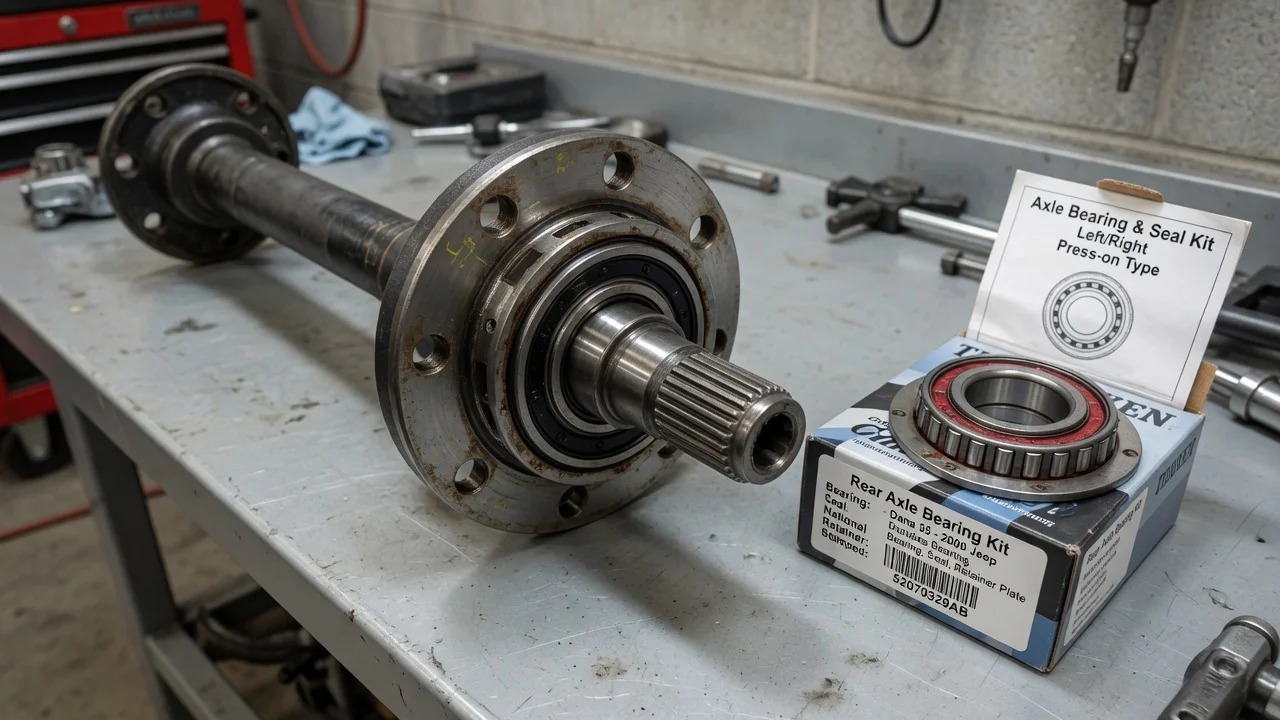
A worn rear wheel bearing on a 2000 Jeep Cherokee usually shows up as a growl from the back of the vehicle or gear oil on the brake parts. Before ordering a replacement, you need to know which rear axle your Cherokee has, because the bearing and seal are specific to the axle. This guide explains how to identify the axle, how the bearing works, and how to buy the correct part the first time.
Which Bearing Fits Your 2000 Cherokee
The 2000 Cherokee (XJ) was built with more than one rear axle. Most came with the Dana 35, and some had the Chrysler 8.25, which was more common with towing packages and certain drivetrain combinations. Both are generally C-clip designs, but they use different bearings and seals. A bearing that fits one will not fit the other, so the model year alone does not identify the part.
Start with your axle, not with a generic year listing. Confirm whether you have a Dana 35 or a Chrysler 8.25, then order the bearing and seal for that axle. If the axle has been swapped or rebuilt with aftermarket shafts, also confirm what was installed, since non-original shafts can change the bearing you need.
How the Rear Axle Bearing Works
In a C-clip rear axle, the axle shaft goes through the housing tube. A C-shaped clip inside the differential keeps the shaft in place. Near the outer end of the tube, a roller bearing is pressed into the housing. The rollers ride directly on a machined area of the axle shaft, so the shaft acts as the bearing's inner race. Just outside the bearing, a seal keeps gear oil in the tube and away from the brakes.
This matters for repairs. When the bearing fails, the rollers often pit or groove the surface of the shaft they run on. A new bearing on a damaged shaft can wear out quickly or stay noisy. When the seal fails, gear oil can reach the rear drum brakes and contaminate the shoes, which affects braking as well as the bearing.
What Changes the Correct Part
The axle model matters most. To identify it, look at the differential cover and any identification tag. The Dana 35 cover has an irregular, somewhat oblong shape. The Chrysler 8.25 cover is closer to round. Many axles also have a tag under a cover bolt or a stamping on the tube showing the gear ratio and other build information, but tags are often missing or hard to read on older Jeeps. A dealer parts department can sometimes confirm the original axle from the VIN, though this cannot tell you whether a previous owner replaced the axle.
Other factors also matter. A limited-slip differential, such as the Trac-Lok, changes how the shaft is removed and which lubricant is correct. If the shaft is worn where the rollers ride, you can buy a repair bearing that rides on a different part of the shaft, or you may need to replace the shaft. Aftermarket or upgraded shafts may need their own bearing type. Heavy towing, deep water crossings, and off-road use speed up wear and water contamination, but they do not change which part fits.
What the Owner Can Do
First, confirm the symptoms. A failing rear bearing usually hums or growls, and the noise changes with road speed rather than engine speed. It may get louder or quieter when you turn and the load shifts from side to side. With the rear wheels safely off the ground and the vehicle properly supported, check for play or roughness when you rock or spin the wheel. Look behind the brake drum and on the backing plate for gear oil. Wet brake shoes or oily residue usually mean the seal has leaked.
Next, identify the axle using the cover shape and any tag. If the paperwork does not match the vehicle, trust what is actually installed. Plan to replace the bearing and seal together, and ask about the side that is not making noise, since both bearings have the same age and service history. After you remove the shaft, inspect the bearing surface. If you see pitting or a groove, decide between a repair bearing and a new shaft before you reassemble. If gear oil reached the brakes, plan to clean or replace the brake parts too.
When you finish, refill the differential with the lubricant listed in the manufacturer specifications for your axle, including friction modifier if the axle has a limited-slip unit. Follow the factory service procedure for removing the C-clip and pressing in the bearing, and use the factory torque values.
Limitations and When to Get Help
Visual identification is a good starting point, but it is not conclusive on a vehicle this old. Covers, axles, and shafts may have been replaced. Noise that sounds like a wheel bearing can also come from tires, the differential pinion bearings, or worn gears. This article does not give universal replacement intervals, because bearing life depends on operating conditions, lubricant condition, and seal health more than mileage.
Get professional help if you cannot confirm the axle, if you do not have a press or the right tools for removing the bearing, or if a limited-slip differential makes shaft removal unclear. Also get help if the brakes were contaminated and you are not confident restoring them. A shop can confirm the axle, measure the shaft, and diagnose noise that does not match the bearing. Bring your vehicle configuration details and any maintenance records so they can order the correct parts.