2000 Jeep Cherokee Brake Booster Check Valve: Choosing the Correct Part
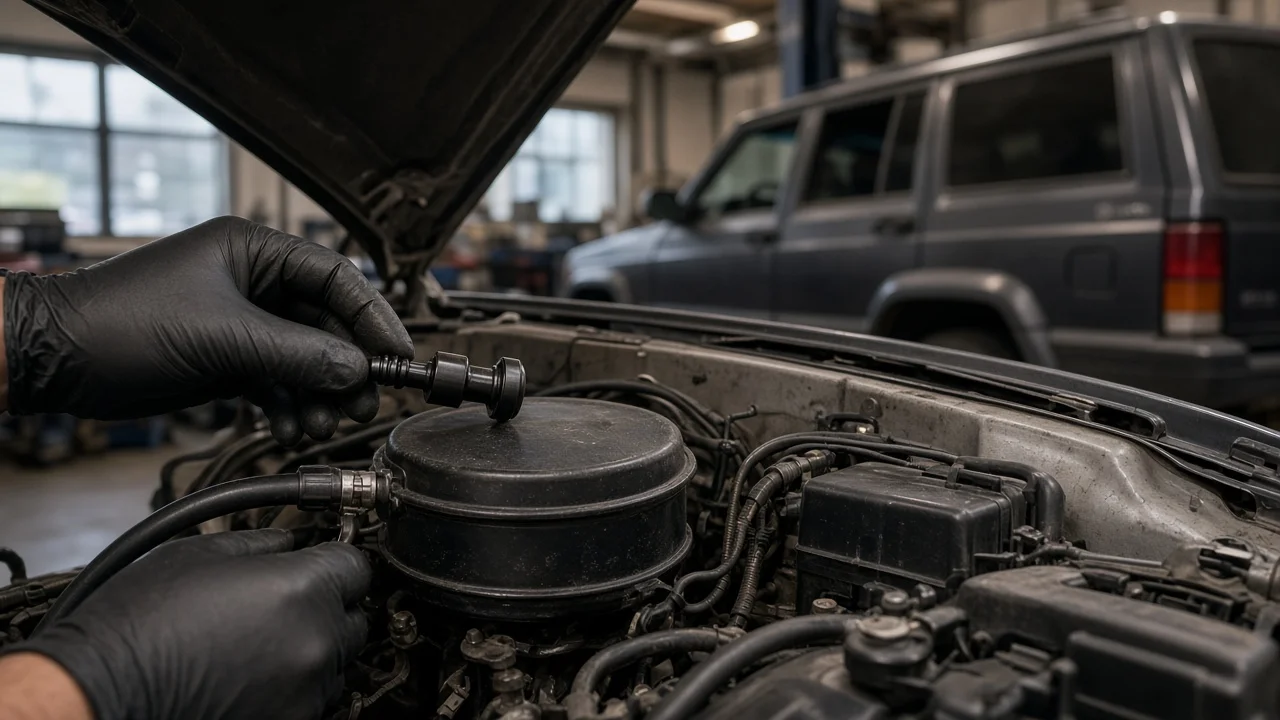
A hard brake pedal on a 2000 Jeep Cherokee often sends owners looking for a new brake booster check valve. This small one-way valve keeps vacuum stored in the power brake booster, so assist is still there when engine vacuum drops. Choosing the right replacement involves three steps. First, confirm the valve is actually at fault. Then match the part to your engine and booster connection. Finally, understand what a new valve cannot fix. This guide covers only that part and the decisions around it.
Define the job the check valve must do
The vacuum booster uses intake manifold vacuum to multiply the force of your foot on the pedal. A hose runs from the intake manifold to the booster, and the check valve sits in that path. The valve lets the engine pull air out of the booster and closes when manifold vacuum falls, such as under heavy throttle or after shutdown. This holds a vacuum reserve inside the booster and keeps air and fuel vapor from flowing back into it. When the valve leaks or sticks, the reserve is lost or never builds properly.
Several symptoms point toward the valve. The pedal may feel firm on the first stop after the Jeep has been parked. Assist may disappear after only one press with the engine off, or fade during hard acceleration. Other symptoms usually point elsewhere. A hiss under the dash when you press the pedal suggests a leaking booster diaphragm. A soft or spongy pedal is a hydraulic issue, such as air in the brake fluid, a caliper problem or a master cylinder fault. Grinding, pulsation or pulling usually means brake pads, brake rotors or friction material worn past their wear limits. A hard pedal increases stopping distance. If assist is weak or missing, limit driving and have the brakes inspected by a professional.
Two simple checks help confirm the diagnosis before you buy. For the reserve test, run the engine, shut it off, wait a short time, then press the pedal several times. You should get a few assisted applications before the pedal turns hard. For the direction test, remove the valve and blow through each end. Air should pass in only one direction, toward the engine side. A valve that flows both ways, or blocks both ways, needs replacement. While it is out, inspect the hose for cracks, soft spots and collapsed sections.
Check compatibility for your Cherokee
Start with the model name, because vehicle fitment errors are common here. The 2000 Cherokee (XJ) and the 2000 Grand Cherokee (WJ) are different vehicles with different brake parts, and catalogs list them separately. Next, confirm the engine, since the 2000 Cherokee was offered with both a four-cylinder and a six-cylinder engine. Hose routing and the manifold connection can differ between them, so check the engine code on your VIN or the engine itself rather than relying on memory. Also confirm the drivetrain and trim if a listing asks for them.
Then look at the physical interfaces on your Jeep. Note whether the valve pushes into a rubber grommet in the booster shell or sits inline in the hose. Measure the hose inside diameter at both connections and note the angle of the valve's outlet. Check whether the grommet is sold with the valve or separately. Photograph the original part in place before removing it, and compare it side by side with any candidate. A Jeep with an earlier booster replacement or modified vacuum plumbing may not match the factory catalog listing. In that case, the part you remove is the better reference.
Features that affect the choice
A few features genuinely matter. The flow-direction marking should be clear, because a valve installed backward blocks vacuum to the booster. The barb size and outlet angle should match your hose, so it seals without forcing or kinking. A fresh grommet is worth having, since the original rubber is often hardened and can leak even around a new valve. Some sellers offer the valve as an assembly with a preformed hose. That option makes sense if your hose is old, swollen or cracked. Molded plastic valves are common in original-style designs and work fine when the dimensions are correct.
Marketing labels such as premium, heavy duty or upgraded say nothing about how well a valve seals or how long it lasts. More useful evidence includes a listing that names the exact year, model and engine, and a part number that cross-references to the original equipment number. Clear photos of both ports and stated hose dimensions also help. Any replacement hose should resist engine heat and oil exposure, because under-hood rubber is what usually ages first on this system.
Limitations and ownership costs
Installation is usually a hand-tool job. Release the hose clamps, then ease the valve out of its grommet without pushing the grommet into the booster. Fit the new grommet and valve in the correct orientation and reconnect the hose. Avoid sealants, which can be drawn into the booster. Afterward, start the engine and listen for a hiss at the valve and hose. Check that the idle is steady, then repeat the engine-off reserve test to confirm assist holds.
A new check valve has clear limits. It will not fix a torn booster diaphragm, an internal master cylinder leak or low engine vacuum caused by an intake or engine problem. It also cannot help with worn pads or rotors, low or contaminated brake fluid, or a sticking caliper. The part itself is inexpensive. The real cost risk is misdiagnosis: buying a valve, then a hose, then a booster without testing between steps. Keep in mind that a leaking grommet or hose is also a vacuum leak, which can affect idle quality.
Ongoing maintenance is minimal. A practical habit is to inspect the valve, grommet and hose whenever the brakes are serviced. Follow any inspection guidance in the vehicle-specific service information for your Cherokee.
Build a practical shortlist
Use a short checklist for each candidate. Is it listed for the 2000 Cherokee XJ, not the Grand Cherokee? Does the listing name your engine? Does it match your mounting style, either grommet-mounted or inline? Do the hose size and outlet angle match? Is a grommet included, and is the flow-direction mark visible? Does the part number cross-reference to the original? Does the seller accept fitment returns? A candidate that fails any of these points comes off the list, whatever its price or brand. Comparing two or three options against these criteria is more reliable than any best-product ranking.
Run the reserve and direction tests before ordering, so the shortlist reflects the actual fault. If the old valve passes and the hose is sound, the problem is likely elsewhere. In that case, shift your attention to the booster, the master cylinder or a professional brake diagnosis rather than a second valve.