Identifying a 2000 Honda Odyssey Transmission Shift Solenoid
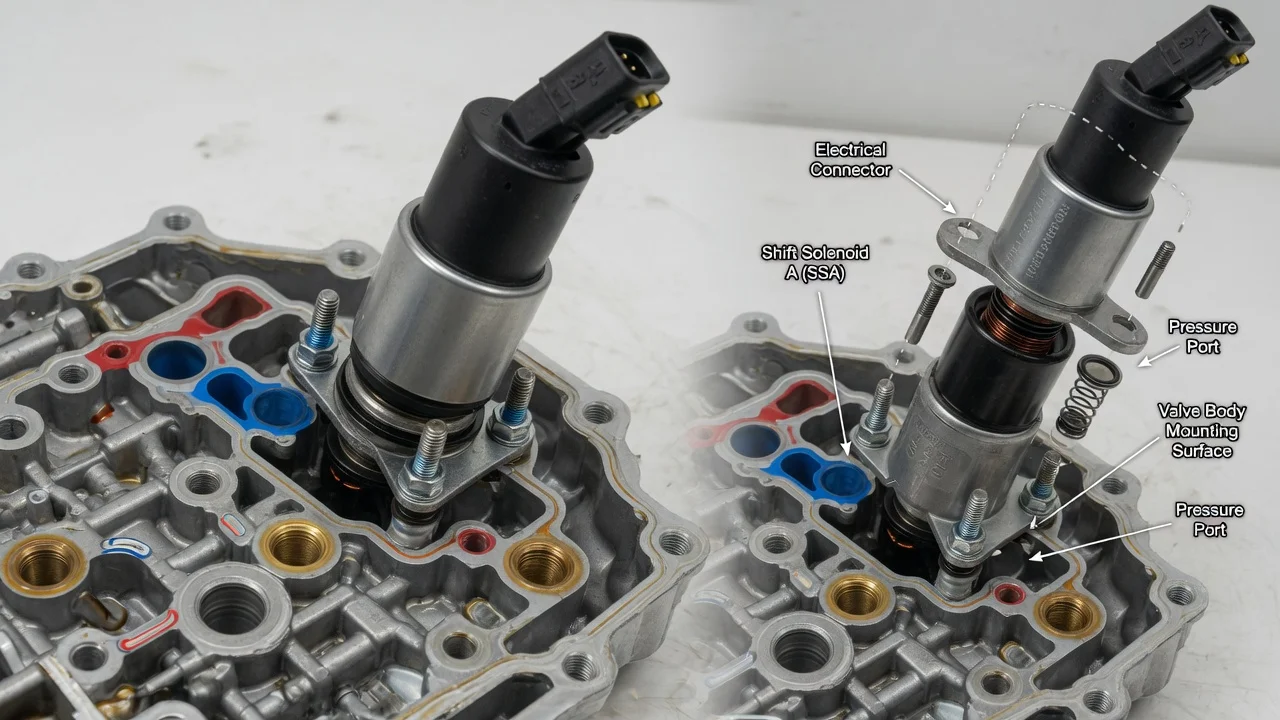
If your 2000 Odyssey shifts late, holds one gear or shows a blinking D4 light, a shift solenoid is one possible cause, but it is not the only one. Finding the right solenoid starts with confirming which transmission the van actually has and then matching stored diagnostic codes to a specific solenoid circuit. This guide explains what the solenoids do, which details change the answer, what an owner can check safely and when a transmission specialist should take over.
The short answer
The 2000 model year belongs to the second-generation Odyssey, and the early vans of that generation use a four-speed automatic. Honda moved the Odyssey to a five-speed automatic for the 2002 model year, so parts and procedures for later vans should not be assumed to fit a 2000. Confirm the transmission type from the identification label or stamping on the case, or by VIN, before buying anything.
On Honda automatics of this period, the shift solenoids are electrically operated valves bolted to the outside of the transmission housing rather than hidden inside a pan. They are identified by letter, typically A, B and C on Honda four-speed units of that era, and they are separate from the lock-up control solenoid and the linear solenoid that manages clutch pressure. To identify the specific part, combine three things: the letter named in the diagnostic code, the confirmed transmission code, and the part number printed on the existing solenoid or its assembly.
How the shift solenoids work
The engine control module on this van also manages the transmission. It reads vehicle speed, throttle position, engine speed and other inputs, then switches the shift solenoids on or off in set combinations. Each combination routes pressurized fluid through the valve body to the shift valves, which in turn apply the clutches for a particular gear. In other words, a gear is not selected by one solenoid alone but by the pattern of all of them together.
The control module watches both the electrical circuits and the result. If a solenoid circuit is open or shorted, it can log an electrical fault for that letter. If the circuits look normal but the input and output shaft speeds do not match the gear it commanded, it may log a gear ratio or shift performance fault instead. When a serious fault is detected, the system may fall back to a limited set of gears so the van can still be driven slowly, which is why some owners notice the van stuck in one gear after a fault appears.
What changes the answer
The type of code matters most. Generic OBD-II codes for shift solenoid A, B and C circuits fall in the P0750 to P0764 range, and those point toward the electrical side: the solenoid coil, its connector, the wiring or, less often, the control module. A gear ratio code points elsewhere. It can be caused by a sticking solenoid, but also by worn clutches, low or degraded fluid, or a valve body problem, so it does not identify a failed part by itself. Some Honda-specific codes and freeze-frame data are only visible with a scanner that supports enhanced manufacturer data.
Fluid condition and service history also change the picture. These transmissions are sensitive to fluid type and cleanliness. Debris from clutch wear can restrict small passages and solenoid screens, so a solenoid may stick because of contamination rather than an internal defect. A van that has gone a long time without fluid changes, or that has had the wrong fluid added, deserves a closer look before any part is replaced.
Finally, consider prior work. A rebuilt or replacement transmission may not match the original part numbers, and aftermarket solenoids vary in fitment and quality. Damaged connectors, chafed harness sections and corrosion near the battery and transmission area can produce intermittent electrical codes that clear and return, mimicking a failing solenoid.
What the owner can do
Start by reading and recording every stored code, including pending codes, before clearing anything. Note the exact shift behavior: which gear change is affected, whether it happens cold or only after the van warms up, whether shifts are harsh, delayed or missing, and whether the engine speed flares between gears. Write down when the D4 indicator started blinking, if it did. This record is far more useful to a technician than a general description of rough shifting.
Next, check the transmission fluid level and condition using the procedure in the owner's manual, because Honda specifies how the engine and fluid temperature should be when reading the dipstick. Use only fluid that meets the Honda specification for this transmission; the original Z1 fluid has been superseded by Honda DW-1. Dark, burnt-smelling fluid or visible metallic particles suggest internal wear that a solenoid will not cure.
If the code names a solenoid circuit, inspect the connector and wiring at the solenoid for looseness, corrosion, broken locks or damaged insulation. A multimeter resistance check of the solenoid is a reasonable next step, but compare the result only with the value in the factory service information for your transmission code rather than a figure from another model. If replacement is justified, order by part number or VIN, replace the related seals or gaskets, top up with the correct fluid and confirm that the code does not return after a road test. Repair options range from wiring repair and solenoid replacement to a fluid service or, where wear is confirmed, a transmission rebuild or replacement.
Limitations and next step
A symptom or a single code does not confirm that a solenoid has failed. Circuit codes can come from wiring or the control module, and ratio codes often reflect mechanical wear inside the transmission. Replacing a solenoid on a transmission with slipping clutches may change nothing except the repair bill. Exact solenoid layout, test values and replacement steps also depend on the specific transmission code, so general guidance cannot substitute for the factory service information for your van.
Have a transmission shop take over if the van slips, flares between gears, engages harshly into drive or reverse, shows burnt fluid or debris, or keeps setting codes after basic electrical checks. Bring your list of codes, your notes on shift behavior and whatever service history you have. With that information, a technician can perform pressure and electrical tests to separate a solenoid fault from wiring or internal wear and give you an accurate repair recommendation.