Identifying a 2000–2002 Honda Accord Shift Solenoid
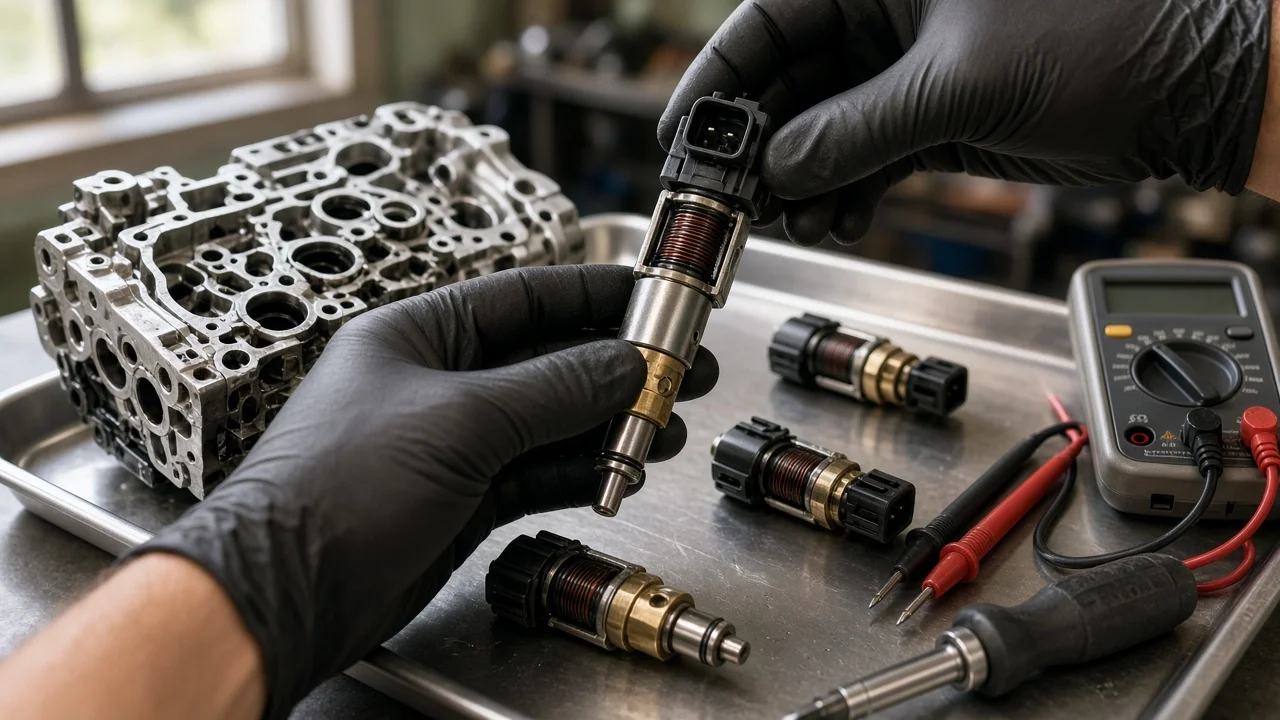
If your 2001 Honda Accord shifts harshly, holds a gear, or flashes its D4 light, the shift solenoid is a common suspect. Finding the right part for a 2000, 2001 or 2002 Accord depends on the engine, the transmission fitted, and which solenoid circuit the fault actually involves. This guide explains how to narrow it down before buying parts, and why a solenoid code does not automatically mean the solenoid itself has failed.
The short answer
On a 2000–2002 Accord with an automatic transmission, the shift solenoids are electrically switched valves that Honda groups into a shift control solenoid assembly, usually referred to as solenoids A and B. The assembly bolts to the outside of the transmission case, so it can be replaced without opening the transmission. Separate solenoids handle torque converter lock-up and clutch pressure control, and they are different parts. Cars with the five-speed manual gearbox have no shift solenoids at all.
The correct replacement depends on whether the car has the four-cylinder or the V6 engine and on the exact transmission fitted, because the parts are not interchangeable across every version. Use the VIN and the transmission identification code on the case when ordering. A parts catalog or dealer counter that decodes the VIN gives far more reliable fitment than a search by year and model alone.
How the shift solenoids work
The engine computer on these cars also manages the transmission. It reads vehicle speed, throttle position, engine speed and selector position, then switches the shift solenoids on and off. Each solenoid opens or closes a small hydraulic passage, sending transmission fluid pressure to the shift valves. Those valves in turn apply the clutch for the selected gear. The combination of on and off states across the solenoids determines which gear the transmission tries to engage.
Honda automatics of this period use clutch packs on parallel shafts rather than the planetary gear sets common in many other makes, so every shift depends on clean fluid and correct pressure. A solenoid can cause trouble in three broad ways: an electrical fault in its winding, a valve that sticks mechanically, or a passage restricted by debris in the fluid. When the computer detects an electrical problem, it typically stores a diagnostic code and may flash the D4 indicator. The transmission may then operate in a limited fallback mode, which owners often notice as being stuck in one gear.
Factors that change the diagnosis
Transmission type is the first variable. Four-cylinder and V6 Accords use different automatic transmissions, and the solenoid assemblies, mounting and connectors can differ between them. Confirm the transmission code before relying on any general description or part listing. The specific diagnostic codes matter next. In the generic OBD-II definitions, P0753 refers to a shift solenoid A electrical fault and P0758 to shift solenoid B. Lock-up and clutch pressure control faults carry their own codes, some of them Honda-specific, and point to different components.
An electrical code tells you the computer saw an abnormal circuit, not which piece of that circuit is bad. A corroded connector, chafed wiring or a poor ground can set the same code as a failed solenoid. The reverse also applies: poor shift behavior with no stored code often points away from the solenoid's electrical side and toward fluid condition, a sticking valve, or internal clutch wear. V6 Accords from this generation are widely reported to suffer internal transmission wear, and clutch material from that wear can clog solenoid passages. In that situation, a new solenoid may help briefly but will not cure the underlying problem.
Service history also changes the picture. Fluid that is overdue for replacement, low, or not the Honda-specified type can alter shift feel and accelerate wear. Knowing when the fluid was last changed and what was used helps separate a fluid-related complaint from a component failure.
What the owner can do
Start by reading stored codes with an OBD-II scanner and writing them down before clearing anything. Record the shift behavior precisely: which gear change is affected, whether it happens cold or only when warm, and whether the D4 light flashes. Then check the fluid level and condition using the procedure in the owner's manual, since Honda specifies a particular temperature and timing for an accurate reading. Dark fluid, a burnt smell or visible metallic particles suggest internal wear rather than a simple solenoid fault.
If a solenoid code is present, inspect the connector and harness at the solenoid assembly for corrosion, loose pins or damaged insulation. With the right equipment, the solenoid winding can be measured for resistance and compared with the specification in the factory service manual. A reading clearly outside that range supports replacing the solenoid. A normal reading shifts suspicion toward the wiring or the control side.
If you replace the assembly, clean the mounting surface and fit any new gasket or seal supplied with the part. Look for debris on the old unit and its mating surface, because that tells you something about the condition inside the transmission. Top up or service with Honda-specified automatic transmission fluid. These cars originally called for Honda ATF-Z1, which Honda has since superseded with ATF DW-1. Repair options range from a connector repair or solenoid replacement, through a fluid service, to a rebuilt or replacement transmission when wear is confirmed.
Limitations and next steps
A symptom alone cannot confirm a failed shift solenoid. Harsh shifts, delayed engagement and slipping can come from several sources, and some of them look identical from the driver's seat. Resistance specifications, connector pinouts and replacement procedures for your exact transmission are in the factory service manual, and those details should take priority over general guidance, including this article.
Seek professional diagnosis if codes return after a solenoid or wiring repair, if the transmission slips or flares between gears, or if the fluid shows debris or a burnt odor. A transmission shop can command individual solenoids with a scan tool that supports Honda functions, check line pressure, and judge whether the problem is in the control system or inside the transmission. That step costs less than replacing parts that were never the cause.