1998 Dodge Ram 4WD Actuator Vacuum Lines: How They Work and How to Check Them
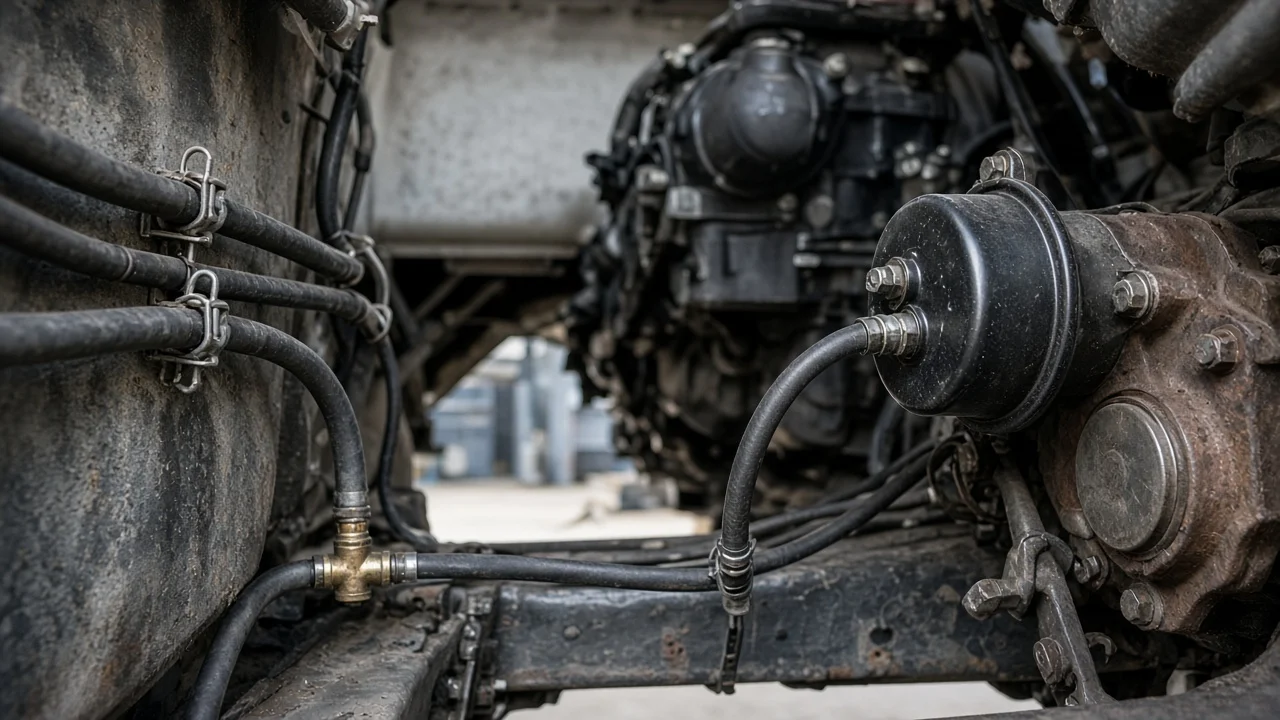
On a 1998 Dodge Ram with four-wheel drive, the transfer case does not engage the front axle by itself. A vacuum-operated actuator on the front axle also has to connect an axle shaft, and it depends on a small network of plastic vacuum lines. If those lines crack, slip off or leak, the transfer case can shift into 4WD while the front wheels stay unpowered. This guide explains how the system works, what varies between trucks, and how to check it.
Short answer: the lines carry engine vacuum to the axle disconnect
Most 1998 Ram 4x4s use a center axle disconnect, often called CAD, on the front axle. The vacuum lines carry engine vacuum from the intake side to a vacuum switch on the transfer case, usually through a one-way check valve. From the switch, the lines continue to a shift motor on the front axle housing. Moving the transfer case lever changes which line receives vacuum. The shift motor then slides a collar that couples or uncouples one front axle shaft. If 4WD has stopped working, check for a leaking or disconnected vacuum line first, because it is one of the most common causes. It is not the only one: the shift motor, the collar inside the axle and the indicator switch can also fail.
How the vacuum disconnect system works
A running engine produces vacuum in the intake manifold. A check valve in the supply line keeps vacuum stored in the system when manifold vacuum drops, such as under heavy throttle. The supply line runs to a vacuum switch on the transfer case, which the transfer case shift mechanism operates. From that switch, lines typically run along the frame to the shift motor on the front axle. One routes vacuum to engage the axle and the other routes vacuum to disengage it.
Inside the axle, the shift motor moves a fork and a sliding collar. When the collar is engaged, it locks the intermediate shaft to the outer axle shaft, so torque from the front differential reaches both front wheels. When it is disengaged, that side spins freely, so the wheels do not turn the front differential gears and driveshaft. Many trucks also have an electrical switch at the axle that turns on the 4WD indicator only when the collar actually moves. That makes the dash light a useful clue about whether the vacuum side is doing its job.
What changes the answer on your truck
Vehicle configuration matters. Axle and transfer case combinations varied across 1500, 2500 and 3500 models, engines and builds. Confirm routing details, the fittings at the transfer case and whether an indicator switch is present on your own truck rather than relying on a diagram for a different Ram. Some trucks also come from previous owners who removed the vacuum disconnect and installed a cable shifter or a permanent coupling. On those trucks the vacuum lines may be capped, rerouted or not used at all.
Operating conditions affect how the lines fail. The original lines are rigid plastic that becomes brittle with age. Heat near the exhaust, road salt, mud and repeated flexing near the axle all make cracks more likely. In cold weather an aging system may engage slowly or not at all, and water that has entered the shift motor can freeze. A vacuum leak elsewhere on the engine can also reduce the vacuum available. A symptom that appears only at idle or only after hard acceleration therefore points to different causes than one that is always present.
Inspecting the vacuum lines and actuator
Start by observing the system. Park on level ground, set the parking brake and keep the area around the truck clear. With the engine running, shift into 4WD high following the owner's manual procedure and watch whether the 4WD indicator comes on. Listen for hissing near the transfer case or along the frame rail, and notice any change in idle quality. If the light stays off, roll the truck slightly forward and back, because the collar teeth sometimes need to line up before they can slide into place.
Next, with the engine off, follow the lines by eye. Trace the supply line from the intake connection to the check valve, then to the connector at the transfer case switch, then along the frame to the axle shift motor. Look for split ends, brittle sections that snap when flexed gently, connectors pushed off their ports, and lines that are melted, kinked or crushed. Confirm that the check valve is installed in the correct direction and has not cracked.
A hand-held vacuum pump makes the test conclusive. Apply vacuum to each port of the shift motor. The actuator should move, and the gauge reading should hold steady. A reading that slowly drops suggests a damaged diaphragm in the actuator. Testing each line and the transfer case switch section by section in the same way shows exactly where vacuum is being lost.
Repair choices for leaking lines
You can fix a small, accessible leak by replacing the damaged section with vacuum hose or tubing of the same inside diameter, using connections that seal tightly. You can also replace the whole harness segment. The plastic is the same age along its full length, so a line that cracked in one spot often has other weak spots. For that reason, many owners replace the entire run from the transfer case to the axle at once. Route the new lines away from the exhaust and moving parts, and secure them to the frame so they cannot rub through.
If the lines hold vacuum but the actuator does not, replace the shift motor. If the lines and actuator both test good and the front wheels still do not drive, the problem is probably mechanical inside the axle, such as a worn or stuck collar or fork. Aftermarket cable conversions and disconnect delete kits remove the dependence on vacuum. They also change how the front axle behaves in 2WD, so weigh that against simply restoring the original system.
Limitations and next step
This guide describes the general design used on these trucks. It does not give the exact hose routing, fitting count or part numbers for every 1998 Ram, because those depend on the vehicle configuration and possibly on earlier repairs in its service history. Before ordering parts, check the manufacturer specifications and diagrams in the factory service manual for your model, or use a parts lookup by VIN.
Get professional help in any of these cases: the axle grinds or clunks when engaging, fluid is seeping around the shift motor, or the truck has to be lifted to reach the axle safely. A shop can confirm whether the fault is in the vacuum system, the electrical circuit or the axle itself. Repeatedly engaging a collar that only partially meshes can cause further axle damage. There is no fixed replacement interval for these lines. Inspect them whenever 4WD behaves unusually and as part of routine undercarriage checks in your maintenance schedule.