1998 Dodge Ram 1500 Transmission Speed Sensor Location
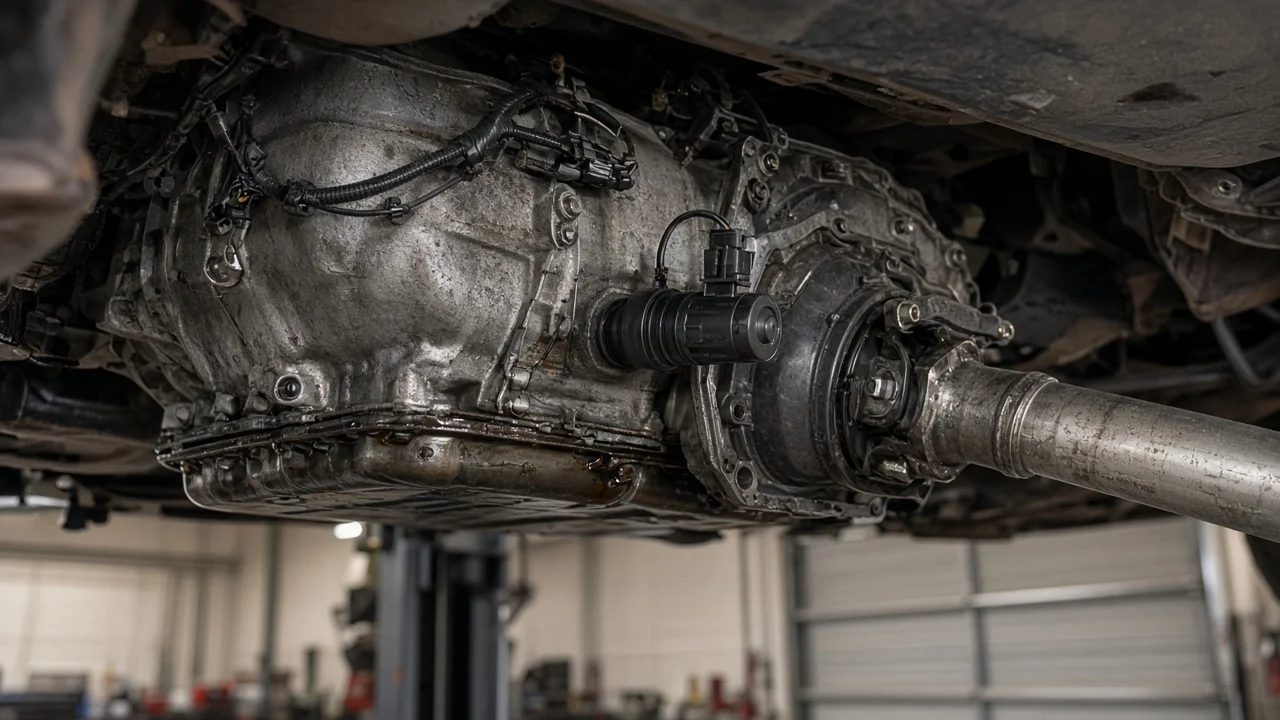
On a 1998 Dodge Ram 1500, the part most owners call the transmission speed sensor is the vehicle speed sensor, which reads output shaft rotation. Its location depends mainly on whether the truck is two-wheel or four-wheel drive, and the transmission type also matters. This guide covers where to look, how the sensor works with the automatic transmission, and how to confirm a fault before you buy a replacement.
Where the speed sensor sits on a 1998 Ram 1500
On two-wheel-drive trucks, the vehicle speed sensor is typically mounted on the transmission extension housing. This is the tail section where the driveshaft slides in. The sensor works together with the speedometer pinion adapter, either threaded into it or mounted alongside it. It is usually on the driver's side toward the rear of the housing, held by a bolt and retainer, with an electrical connector on top. On four-wheel-drive trucks, the transmission output feeds the transfer case, so the sensor and pinion adapter are normally on the rear housing of the transfer case instead. Either way, you reach it from underneath the truck. A flashlight and a short ratchet extension are usually all you need for access.
Parts catalogs, manuals and owners often use the names vehicle speed sensor, output speed sensor and transmission speed sensor interchangeably. Confirm which part a code or parts listing actually refers to. On the truck itself, trace the wiring harness along the transmission toward the tail. The sensor is the unit with a connector, located where the speedometer adapter enters the housing.
How the sensor works with the transmission
The sensor produces a pulsing signal whose frequency rises and falls with output shaft speed. A drive gear inside the housing turns the speedometer pinion, and the sensor converts that rotation into pulses the powertrain control module can read. The module uses this road speed signal for the speedometer, odometer and cruise control. On the RE-family automatics, it is also part of the information used to decide shift points and torque converter clutch engagement.
These automatics use electronically controlled governor pressure. A governor pressure solenoid and sensor inside the transmission, reached by removing the oil pan, regulate pressure based on the module's speed calculation. That is why a bad speed signal often shows up as a change in shift behavior, not just a dead or jumpy speedometer. Common complaints include staying in a low gear, late or harsh upshifts, and erratic shifting. The internal governor components are a separate diagnostic path from the external speed sensor, even though both affect shifting.
What changes the answer for your truck
Drivetrain is the biggest factor. Two-wheel drive puts the sensor on the transmission extension housing, while four-wheel drive moves it to the transfer case. Transmission type comes next. Most 1998 Ram 1500 trucks have a four-speed automatic from the RE family, commonly the 42RE or 46RE depending on engine and configuration. Some trucks have a five-speed manual instead. Manual trucks still have a vehicle speed sensor at the rear of the drivetrain, but it does not control shifting, so symptoms are limited to the speedometer, cruise control and engine computer functions.
The rear axle carries a separate wheel speed sensor for the rear-wheel anti-lock brake system, mounted on the differential housing. It is easy to confuse with the transmission sensor, so check which sensor a code or symptom points to. Tire size changes and axle ratio swaps also affect the reading. A speedometer that is consistently off by the same margin after such changes usually points to calibration or the pinion gear, not a failed sensor. Confirm fitment by drivetrain, transmission and build details rather than model year alone, because connectors and adapters can differ.
What you can check before replacing parts
Start with diagnostic codes. A scan tool will show stored codes, such as the generic P0500 for the vehicle speed sensor circuit. A tool with live data also lets you watch reported vehicle speed while the truck is driven, or while it is safely supported with the drive wheels off the ground. If the signal drops out, reads zero or jumps while the wheels turn steadily, that narrows the problem. However, a code identifies a circuit problem, not necessarily a failed sensor.
Inspect the connector and wiring at the sensor. On trucks of this age, common findings include corrosion, a broken lock tab, wires chafed against the transmission, and fluid soaking the connector. The pinion adapter is sealed with an O-ring, and a leak there can coat the connector. While you are underneath, check the transmission fluid level and condition using the correct procedure for your transmission. The fluid specification for these RE automatics is Mopar ATF+4, which supersedes the original ATF+3. Low fluid or the wrong fluid can cause shift complaints that mimic a sensor problem.
If the wiring and connector check out and the signal is still faulty, replacement is generally straightforward. Unplug the connector, remove the retaining bolt and pull the sensor and adapter assembly. Inspect the pinion gear teeth for damage before installing the new part with a fresh seal, and expect a small amount of fluid loss. Keep a note of the truck's service history, including prior transmission work, gear ratio changes or tire size changes. That context helps you or a shop weigh repair options.
Limitations and when to get help
Exact mounting, connector style and part numbers vary with drivetrain, transmission and build details. Treat this as a guide to where to look, not a specification for your particular truck. A factory service manual or a parts lookup by VIN gives the correct details. A dead speedometer combined with harsh shifting points toward the speed signal. The same symptoms can also come from wiring, the control module, the instrument cluster, the governor pressure components or internal transmission wear.
Have a transmission specialist test the system before more parts go in if any of these apply: the speedometer works but shifting stays erratic, the codes point to governor pressure, or a new sensor does not change the behavior. Driving for long with a faulty speed signal can cause poor shift quality and added wear, so find the actual cause promptly rather than living with the symptoms.